
The Van Life Coffee Handbook
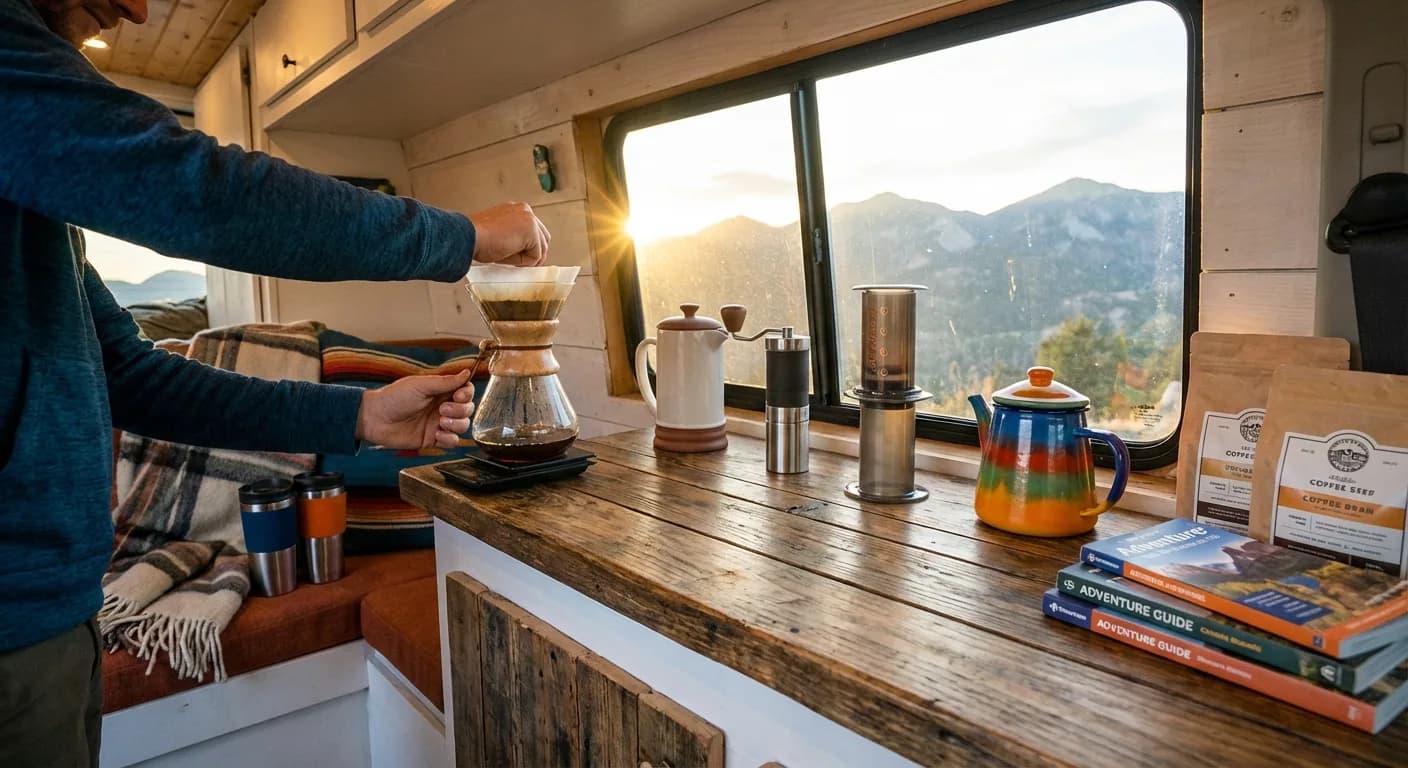
Table of Contents
- The Reality of Brewing in a Van
- Managing the Trinity: Space, Power, and Water
- The Best Van Life Coffee Gear: Top Recommendations
- Manual Grinding: The Silent Hero of the Road
- Immersion vs. Percolation: Which Method Wins?
- Heating Water Off-Grid: Propane vs. Electric
- Storage and Organization for Tiny Kitchens
- Sustainable Brewing and Waste Management
- Cleaning Your Gear with Minimal Water
- Advanced Techniques for the Roadside Barista
- Frequently Asked Questions
The Reality of Brewing in a Van
Life on the road is a series of compromises, but your morning coffee shouldn't be one of them. When you live in a van, your kitchen is often no larger than a standard office desk, and every square inch must be earned. The "Van Life Coffee Handbook" isn't just about finding a way to get caffeine into your system; it’s about mastering the ritual of brewing in a space that is constantly in motion. Unlike a traditional home kitchen, a van kitchen lacks the luxury of unlimited power, endless running water, and stable counter space.
Every piece of van life coffee gear you choose must pass a rigorous "vibration and volume" test. If it’s made of thin glass, it will shatter on a washboard road in Utah. If it requires 1,500 watts of power, it might trip your inverter and leave you with a dead house battery before noon. We focus on manual, non-electric methods because they are the most resilient. They work whether you are parked at a high-end campsite or boondocking five miles down a forest service road where the only "grid" is the one you brought with you.
Beyond the gear, van life coffee is about the environment. There is something profoundly different about sipping a perfectly extracted brew while looking out your back doors at the Tetons compared to drinking a lukewarm cup in a cubicle. However, that beauty comes with the responsibility of Leave No Trace (LNT) principles. How you handle your spent grounds and your gray water is just as important as how you dial in your grind size. This guide will walk you through the logistics, the gear, and the techniques to ensure your nomadic coffee game is second to none.
Managing the Trinity: Space, Power, and Water
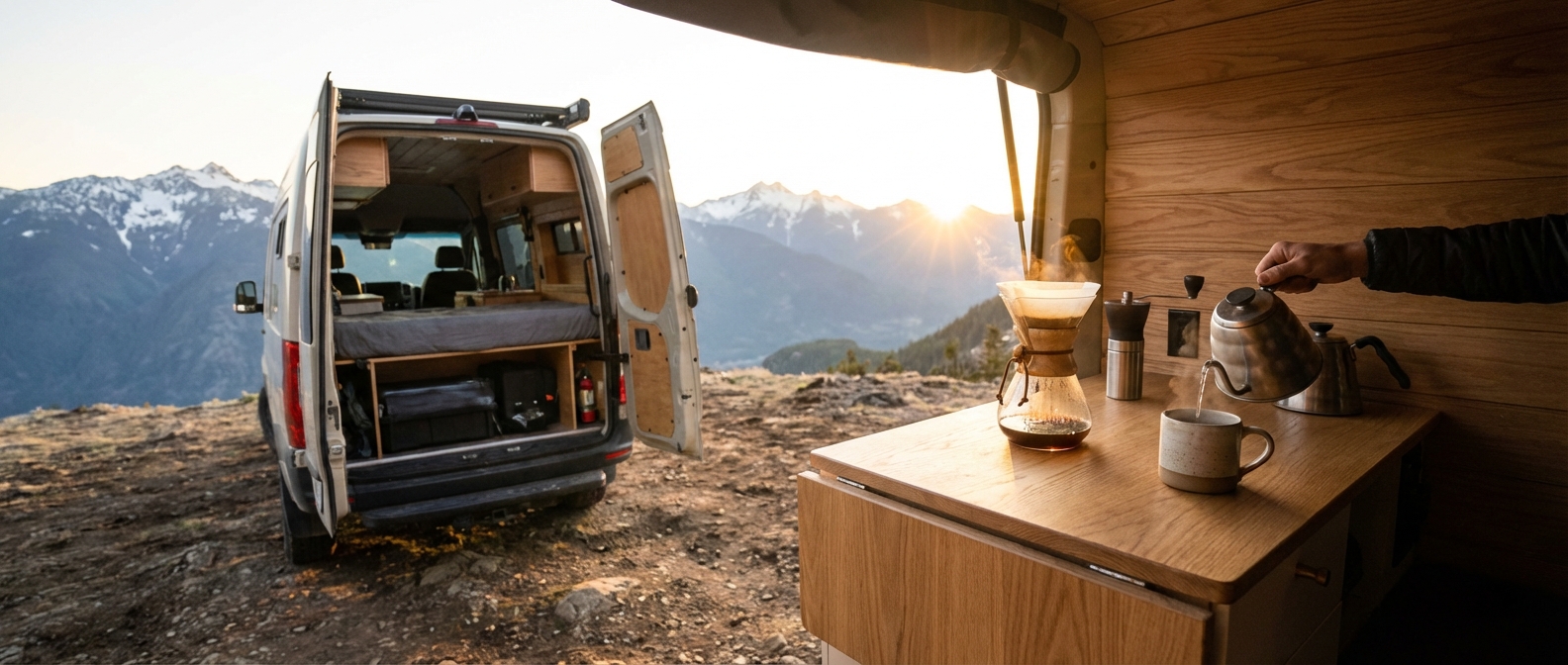
The three biggest hurdles to a great cup of coffee in a van are space, power, and water. Space is the most obvious; in a van, "one in, one out" is the law of the land. Your coffee gear needs to be either multi-functional or incredibly compact. We often recommend nesting systems where the grinder fits inside the brewer, or the brewer doubles as a travel mug. This prevents the "clutter creep" that can make a small living space feel claustrophobic after just a few days on the road.
Power management is the second pillar. While modern lithium battery setups are becoming more common, running a high-wattage electric kettle or an espresso machine is still a massive drain on your system. A standard electric kettle pulls about 100 to 120 amps from a 12V system through an inverter. Unless you have a massive solar array, this is often unsustainable for daily use. Manual brewing methods—like the AeroPress or a Moka Pot—rely on propane or butane stoves, which preserve your precious battery levels for lights, fans, and refrigeration.
Finally, water is your most precious resource. When you only have a 20-gallon fresh water tank, using two liters just to rinse a French press is a luxury you can't afford. Van life coffee gear must be easy to clean with minimal water. This is why the AeroPress is a cult favorite among nomads; the "self-cleaning" plunger design means you can wipe it clean with a single paper towel. Understanding these three constraints is the first step in building a coffee kit that works for your specific lifestyle, rather than against it.
The Best Van Life Coffee Gear: Top Recommendations
Choosing the right gear is a balancing act between durability and performance. You need equipment that can survive a fall from a countertop when you hit a surprise pothole, but you also want something that can produce a cafe-quality extraction. We have tested dozens of manual brewers in off-grid environments to find the ones that truly hold up to the rigors of travel.
{{PRODUCT_CARD:B0018RY8H6}}
The AeroPress Original is arguably the most iconic piece of van life coffee gear in existence. We recommend it because it is virtually indestructible, made of BPA-free plastic that won't shatter like glass or ceramic. It’s best for solo travelers or couples who value speed and easy cleanup. The immersion-style brewing produces a clean, grit-free cup that rivals expensive pour-overs, but with a fraction of the footprint.
The standout feature is the pneumatic pressure system, which allows you to brew a concentrated "espresso-style" shot or a full cup of Americano in under two minutes. The biggest drawback is that it only brews one cup at a time, which can be tedious if you are hosting friends at your campsite. Compared to a French press, the AeroPress is much easier to clean—you simply "pop" the compressed puck of grounds into the trash or compost, requiring almost zero water for rinsing.
{{/PRODUCT_CARD}}
{{PRODUCT_CARD:B0829V8BSB}}
For those who crave a more traditional, heavy-bodied cup of coffee, the Stanley Stay-Hot French Press is the gold standard for van life. We recommend this specifically because of its rugged, double-wall vacuum insulation and stainless steel construction. It is best for those who want to brew a large batch (48 oz) to last throughout the morning drive or for sharing with a partner.
The standout feature is the "no-break" factor; unlike glass carafes, you can drop this on a rocky trail and it will only gain a "character" dent. It keeps coffee hot for up to four hours, which is vital in cold-weather van life where temperatures drop rapidly once the heater is off. The drawback is the cleaning process; French presses require more water to rinse out the mesh filter and the bottom of the carafe. However, for the volume and durability it offers, many nomads find the trade-off worth it.
{{/PRODUCT_CARD}}
Manual Grinding: The Silent Hero of the Road
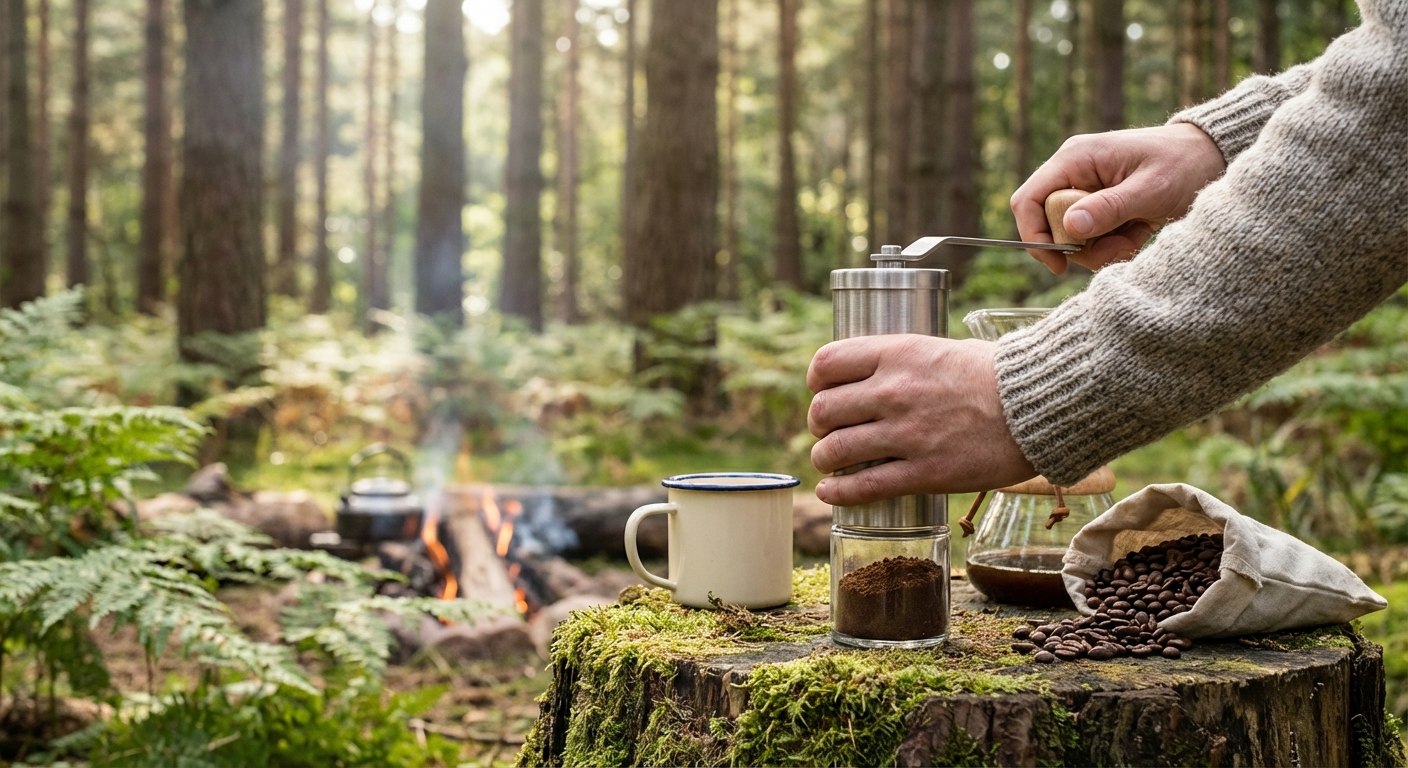
If you are still using pre-ground coffee, you are missing out on 50% of the flavor potential of your beans. In a van, a manual hand grinder is a non-negotiable piece of kit. Electric grinders are loud, power-hungry, and often quite bulky. A high-quality manual grinder, on the other hand, is silent—perfect for those early mornings when your partner is still asleep three feet away in the "bedroom." It also requires zero electricity, meaning you can grind beans at a picnic table or in the middle of a desert without a care in the world.
When selecting a manual grinder for van life, look for one with stainless steel burrs rather than ceramic. Steel burrs are faster, more consistent, and produce fewer "fines" (micro-dust that makes coffee taste bitter). You also want a grinder with a slim profile that can be tucked into a drawer or even stored inside the plunger of an AeroPress. The ritual of hand-grinding for 30 to 45 seconds also forces you to slow down and enjoy the process, which is what the nomadic lifestyle is all about.
The Impact of Grind Consistency on Small-Scale Brewing
In a small kitchen, you don't have the room for multiple brewers for different types of coffee. A versatile manual grinder allows you to switch between a coarse grind for your French press and a fine grind for your Moka pot with just a few clicks of a dial. This versatility is crucial for the "minimalist" nomad who wants to experience different coffee styles without owning five different machines.
Consistency is key because "boulders" (large chunks) and "fines" (dust) extract at different rates. If your grinder is inconsistent, your coffee will taste both sour and bitter at the same time. Investing in a mid-to-high-tier manual grinder (around the $100-$150 range) is often the single best upgrade you can make to your van life coffee gear setup. It’s a one-time purchase that significantly elevates every single cup you brew.
Immersion vs. Percolation: Which Method Wins?
Choosing between immersion (AeroPress, French Press) and percolation (Pour-over, Moka Pot) is a matter of both taste and logistics. Immersion brewing is generally more forgiving. Because the grounds sit in the water for a set amount of time, you don't need a fancy gooseneck kettle to control the flow. This is a huge advantage in a van where you might be pouring water from a heavy pot or a standard whistling kettle. Immersion methods also tend to produce a fuller body, which many people prefer when they are out in the elements.
Percolation methods, like the V60 or Chemex, require more technique and specialized gear. While a pour-over produces a beautifully clear and nuanced cup, it can be difficult to execute perfectly on a van's slightly unlevel countertop. If your van is parked on a 3-degree incline, your water flow will be uneven, leading to an unbalanced extraction. For this reason, many nomads stick to immersion methods or the Moka pot, which are less affected by the "levelness" of their mobile home.
The Moka Pot: The Van Lifer's "Espresso"
The Bialetti Moka Pot is a staple in the van life community for a reason. It is a stovetop percolator that uses steam pressure to push water through tightly packed grounds. The result is a viscous, intense coffee that serves as an excellent base for lattes or "faux-cappuccinos" if you have a hand-held milk frother.
{{PRODUCT_CARD:B00004RFRU}}
The Bialetti Moka Pot (3-cup) is our top pick for those who want "strong" coffee without the bulk of an espresso machine. We recommend it for its timeless design and aluminum construction, which conducts heat incredibly fast on a propane stove. It’s best for the "espresso lover" who doesn't mind a bit of a learning curve to avoid the "burnt" taste often associated with stovetop brewing.
The standout feature is its simplicity; it has only three parts and a safety valve. It’s compact enough to fit in the smallest of overhead cabinets. The primary drawback is that it can be finicky; if you leave it on the heat too long, the coffee becomes bitter. It also requires a heat source, so you can't brew with just a thermos of hot water. Compared to an AeroPress, it produces a much heavier, more "traditional" Italian-style coffee.
{{/PRODUCT_CARD}}
Heating Water Off-Grid: Propane vs. Electric
Heating water is the most energy-intensive part of the coffee process. In a van, you typically have three choices: a built-in propane stove, a portable butane burner, or an induction cooktop. Propane is the most common and efficient for most nomads. It’s reliable, works in freezing temperatures, and doesn't touch your battery bank. However, it does add moisture to the air (a byproduct of combustion), which can contribute to condensation issues inside the van during winter.
Electric heating via induction is the "holy grail" for those with massive solar and lithium setups. It’s clean, fast, and doesn't produce indoor moisture. However, a single boil can pull 10-15% of a 100Ah battery's capacity. If you are choosing an electric kettle, look for a "low-wattage" version (around 600-800W) rather than a standard 1,500W home model. This allows your inverter to handle the load more easily without overheating or tripping.
Integrated Systems: The Jetboil Advantage
For those who prioritize speed and efficiency above all else, integrated canister stoves like the Jetboil are a game-changer. These systems use a heat exchanger on the bottom of the pot to reach a rolling boil in under 100 seconds.
{{PRODUCT_CARD:B07NQD6N67}}
The Jetboil Flash is a piece of gear we recommend for the "minimalist" or "adventure" van lifer. It’s best for those who want coffee now and don't want to wait for a traditional stove to heat up. It’s also incredibly fuel-efficient, making it ideal for long-term off-grid trips where resupplying fuel is difficult.
The standout feature is the color-changing heat indicator that tells you exactly when the water is ready. It’s a self-contained unit; the burner and a small fuel canister nest inside the cup. The drawback is that it’s essentially a "one-trick pony"—it’s great for boiling water, but not for simmering or cooking complex meals. It’s also quite loud, sounding a bit like a miniature jet engine, which might be a consideration in quiet campgrounds.
{{/PRODUCT_CARD}}
Storage and Organization for Tiny Kitchens
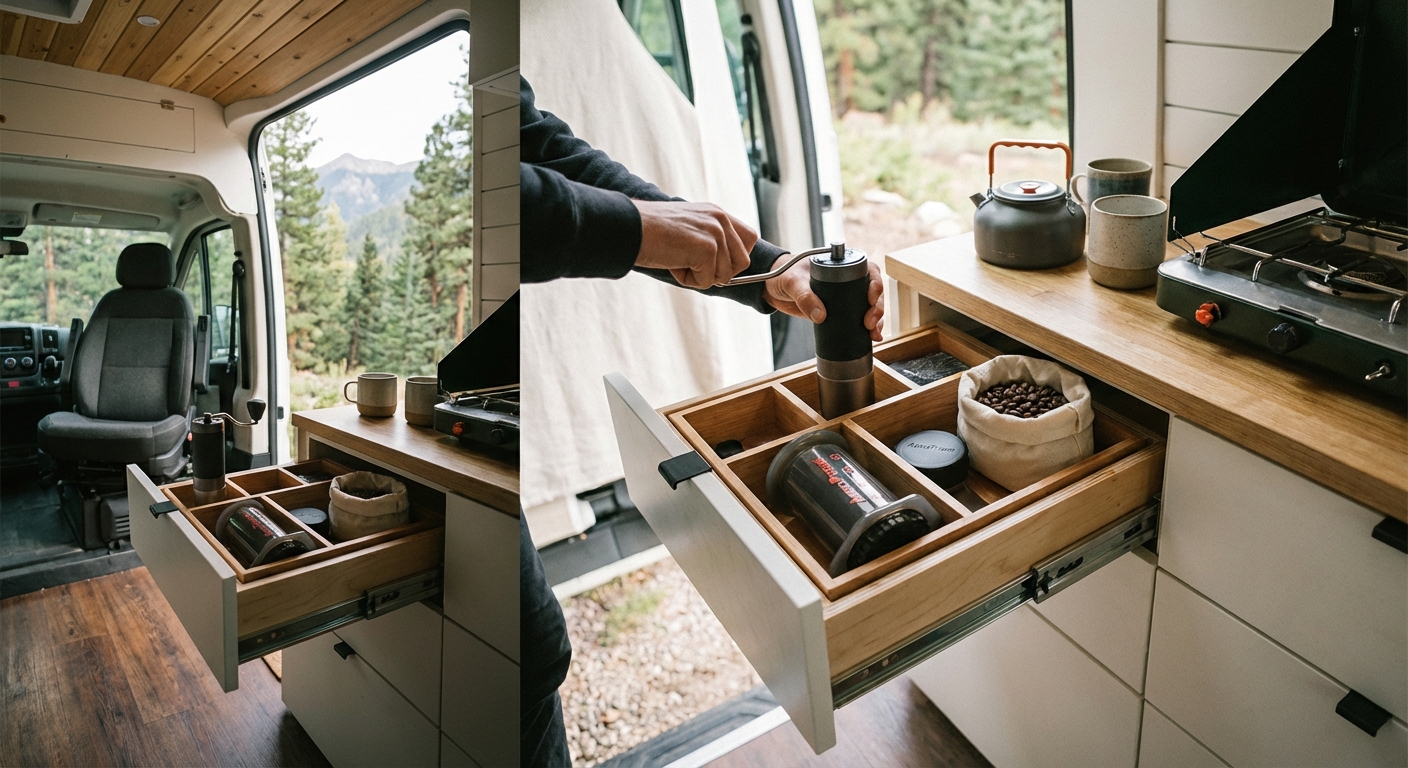
In a van, everything needs a "home." If your coffee gear is rolling around in a drawer, it will eventually break or become an annoying source of noise while driving. We recommend using foam inserts or soft-sided packing cubes to secure your gear. Many nomads use "Command Hooks" to hang mugs or small baskets for filters. Another popular trick is to use a dedicated "coffee box"—a small plastic bin that holds your brewer, grinder, beans, and scale—so you can pull the entire "cafe" out onto the counter or a picnic table in one motion.
Bean storage is also critical. Coffee beans are sensitive to light, heat, and oxygen—all of which are abundant in a van. Avoid storing your beans in the clear plastic hoppers of grinders or in direct sunlight. Instead, use an airtight, opaque container with a one-way CO2 valve. This keeps your beans fresh for weeks, which is vital when you are buying high-quality specialty coffee that you don't want to go stale before you finish the bag.
Sustainable Brewing and Waste Management
One of the less glamorous aspects of van life is dealing with trash. In a house, you throw coffee grounds in the bin and forget about them. In a van, those grounds can quickly start to smell or attract bugs if not managed correctly. If you are in an area where composting is available, coffee grounds are a "green" goldmine. However, if you are boondocking on public lands, you must follow Leave No Trace principles. Never dump your coffee grounds on the ground; they can be harmful to local flora and fauna and take a long time to decompose in arid environments.
Instead, use a small, dedicated "wet waste" container for your grounds. If you use paper filters, look for unbleached, compostable versions. Alternatively, switching to a metal mesh filter (available for the AeroPress and most pour-overs) eliminates paper waste entirely. While metal filters allow more oils into the cup (changing the flavor profile), they are the ultimate "zero-waste" option for the environmentally conscious traveler.
Cleaning Your Gear with Minimal Water
Cleaning is the bane of the van lifer's existence. To save water, adopt the "wipe, don't wash" philosophy. For an AeroPress, the rubber plunger wipes the chamber clean as you use it; a quick wipe with a damp cloth is usually all it needs. For a Moka pot or French press, wait for the grounds to dry slightly, then scrape them out with a silicone spatula into your trash. This removes 95% of the residue, meaning you only need a tiny splash of water and a drop of biodegradable soap to finish the job.
Another pro-tip is to use a spray bottle filled with a mixture of water and a little white vinegar. This is an excellent way to sanitize your gear and remove coffee oils without running the tap. Remember, every ounce of water you save on cleaning is an ounce of water you can use for your next brew. Managing your gray water tank is also easier when you aren't flushing large amounts of coffee silt down the drain, which can lead to odors and clogs over time.
Advanced Techniques for the Roadside Barista
Once you have the gear and the logistics sorted, you can start focusing on the chemistry. Altitude plays a massive role in brewing. If you are camping at 9,000 feet in the Rockies, water boils at around 194°F (90°C) instead of 212°F (100°C). This means you may need to increase your brew time or use a finer grind to compensate for the lower temperature. Most "standard" recipes are designed for sea level, so don't be afraid to experiment as you change elevation.
Using a small digital scale is also a "pro" move that takes up very little space. Measuring your coffee and water by weight rather than volume ensures that your coffee tastes the same every single morning, regardless of whether you are in a humid forest or a dry desert. A small, USB-rechargeable scale is perfect for van life as it doesn't require disposable batteries and can be tucked away easily.
Frequently Asked Questions
What is the best way to dispose of coffee grounds while living in a van? Disposing of grounds requires a balance of hygiene and environmental ethics. The best practice is to collect them in a small, sealed container (like an old yogurt tub or a dedicated compost bin) and dispose of them in a proper trash receptacle or a community compost pile when you reach a town. Never scatter them in the wild, as the high acidity and caffeine content can disrupt local soil ecosystems and attract wildlife to campsites.
If you are using an AeroPress, the "puck" is very dry and easy to manage. For French press users, try to strain the grounds through a fine-mesh sieve or use a spatula to scrape them out. Avoid washing grounds down your sink at all costs; they will settle in your gray water tank, create a foul "swamp" smell, and potentially clog your plumbing sensors or valves.
How do I keep my coffee beans fresh in a van with fluctuating temperatures? Temperature swings are the enemy of freshness. In a van, the interior can swing from 40°F at night to 90°F during the day. To protect your beans, store them in an airtight, vacuum-sealed container like an Atmos Vacuum Canister or an Airscape. Keep this container in the lowest, darkest part of your van—usually a floor-level cabinet—where temperatures remain most stable.
Avoid storing beans in the "garage" area or near the ceiling, where heat accumulates. If you buy coffee in bulk, consider splitting it into smaller portions and sealing the rest to minimize oxygen exposure every time you make a cup. While some people suggest freezing beans, this is rarely practical in a van with a tiny 12V fridge/freezer. Stick to buying smaller bags (12oz/250g) more frequently to ensure you are always brewing fresh roast.
Is it worth getting an electric kettle if I have a 2,000W inverter? It depends on your battery capacity and solar input. If you have 200Ah or more of Lithium (LiFePO4) batteries and at least 300W of solar, a low-wattage electric kettle can be a huge convenience. It’s faster and cleaner than propane. However, if you have Lead Acid or AGM batteries, the high current draw of a kettle can cause a significant voltage drop, potentially triggering your inverter’s low-voltage alarm even if the battery isn't empty.
For most van lifers, a high-quality stovetop kettle is the safer and more versatile bet. It works regardless of your battery state and can be used on a campfire if you run out of propane. If you are dead-set on electric, look for a "travel kettle" that pulls 600-800 watts; it will take longer to boil but is much kinder to your electrical system.
How do I prevent my glass coffee gear from breaking while driving? The short answer: don't use glass. Van life is inherently "bumpy," and even the most careful driver will eventually hit a pothole or a curb. If you must use a glass Chemex or French press, you need a dedicated, padded storage solution. Many nomads use "wrap-around" neoprene sleeves or even old thick socks to provide a cushion.
A better solution is to switch to stainless steel, silicone, or high-quality plastic (like Tritan). These materials are "rattle-proof" and won't leave you picking shards of glass out of your floor mat at 7:00 AM. If you are worried about the taste impact of plastic, modern BPA-free materials used in the AeroPress are specifically designed not to leach flavors, even at boiling temperatures.
Can I make espresso in a van without a $1,000 machine? True espresso requires 9 bars of pressure, which is hard to achieve without a pump. However, you can get very close with manual tools. The Flair Espresso Maker is a popular choice for "van-presso" enthusiasts; it’s a manual lever press that can actually achieve 9 bars of pressure. It’s bulky, but it produces authentic espresso with crema.
For a more compact and "van-friendly" option, the AeroPress or the Moka Pot produce a "concentrated coffee" that acts as an excellent substitute. While technically not espresso, when combined with a $15 hand-held battery-powered milk frother, you can make lattes and cappuccinos that are 90% as good as what you’d get in a cafe, with 10% of the gear.
What is the quietest coffee setup for stealth camping? If you are "stealthing" in a city and don't want to draw attention with the sound of a grinding motor or a whistling kettle, silence is key. A high-end manual grinder with sharp steel burrs is remarkably quiet—it makes a low "crunching" sound that won't be heard outside the van. Combine this with an AeroPress (which is silent) and a non-whistling pot to heat water.
Avoid using a Jetboil or any high-pressure butane stove if you are trying to be truly silent, as they produce a noticeable hiss. A standard propane stove on a low flame is much stealthier. Also, use a cloth or silicone mat on your countertop to dampen the sound of setting down metal carafes or grinders.
How do I deal with condensation caused by boiling water in the winter? Boiling water releases a significant amount of steam into a small space. In winter, this steam hits cold windows and walls, turning into liquid water that can lead to mold. To combat this, always crack a roof vent or a window while boiling water, even if it’s freezing outside. Using a kettle with a lid helps contain the steam until you are ready to pour.
If condensation is a major issue in your build, consider using an integrated heat-exchange pot (like a Jetboil) which boils water much faster, thereby reducing the total time steam is being released. After brewing, wipe down any damp surfaces immediately with a microfiber towel to prevent moisture from seeping into your wood or insulation.
Our Top Picks for 2026
We've spent hours researching and testing to find the absolute best options currently available.
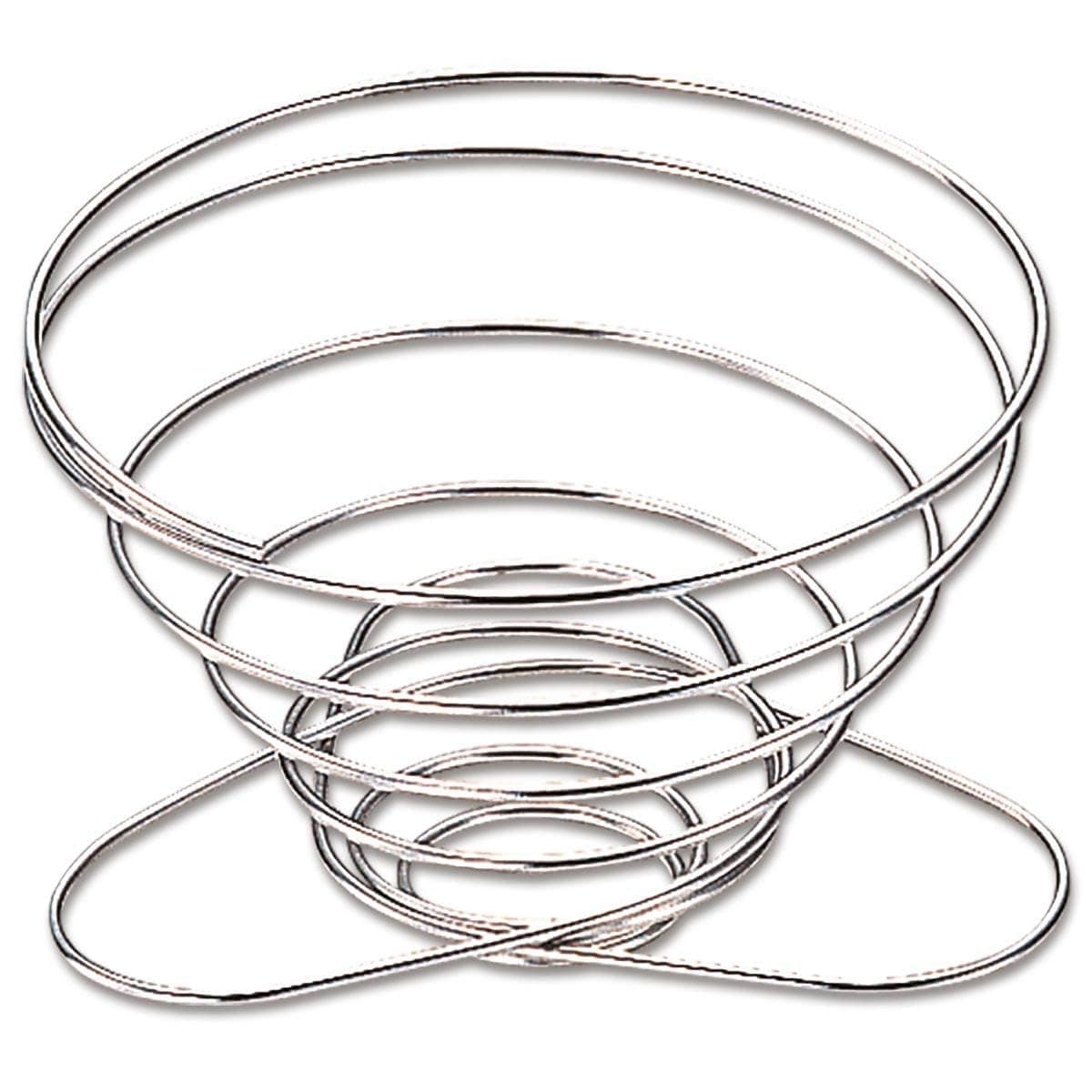
SOTO Compact Helix Coffee Maker - Portable Stainless Steel Pour Over Coffee Dripper for Travel, Camping, Bikepacking, and Home - Lightweight, Foldable, and Eco-Friendly Design One Size
- Ultra-Compact and Portable Design: The SOTO Compact Helix Coffee Maker features an innovative, space-saving design that makes it perfect for travel, camping, or small kitchens. Its lightweight and foldable origami structure allows for easy storage and portability, ensuring you can enjoy fresh coffee wherever you go.
- High-Quality Stainless Steel Construction: Made from premium 18-8 stainless steel, the stainless steel pour over coffee filter is built to last. Its durable construction ensures it can withstand the rigors of outdoor adventures while maintaining a sleek and stylish appearance.
- Effortless Brewing: Brew a perfect cup of coffee with minimal effort using the SOTO pour over coffee maker. Place it over your mug, add a filter and your favorite ground coffee, and pour hot water for a delicious, aromatic brew in minutes.

Vandroop Collapsible Pour Over Coffee Dripper, Silicone Reusable Pour Over Coffee Maker for Camping, Travel, Home&Office, Single Clever Coffee Dripper With 100 V60 Filter Paper #01(1-2 Cup) Black (With Filter Papers)
- HIGH QUALITY MATERIAL: The coffee dripper is made of high quality food-grade silicone. LFGB certified silicone has a long service life. 1-2 cup brewing capacity, and available for 1-2 people. ( Unfold size: Φ3.7in×3.1in, Fold size: Φ3.7in× 1.1in).
- EASY TO STORE AND CARRY: The coffee dripper is lightweight and collapsible. The foldable design can save a lot of space. It is only 1.1"H after folding, which is easy to store and carry. Perfect for your camping, travel, business trip, home and office.And comes with 100 sheets of V1 filter paper for convenience.
- MULTI-USE: Applicable to basket coffee filters or V60 paper cone filters. Reusable coffee filters with pedestals are suitable for most coffee cups and mugs.
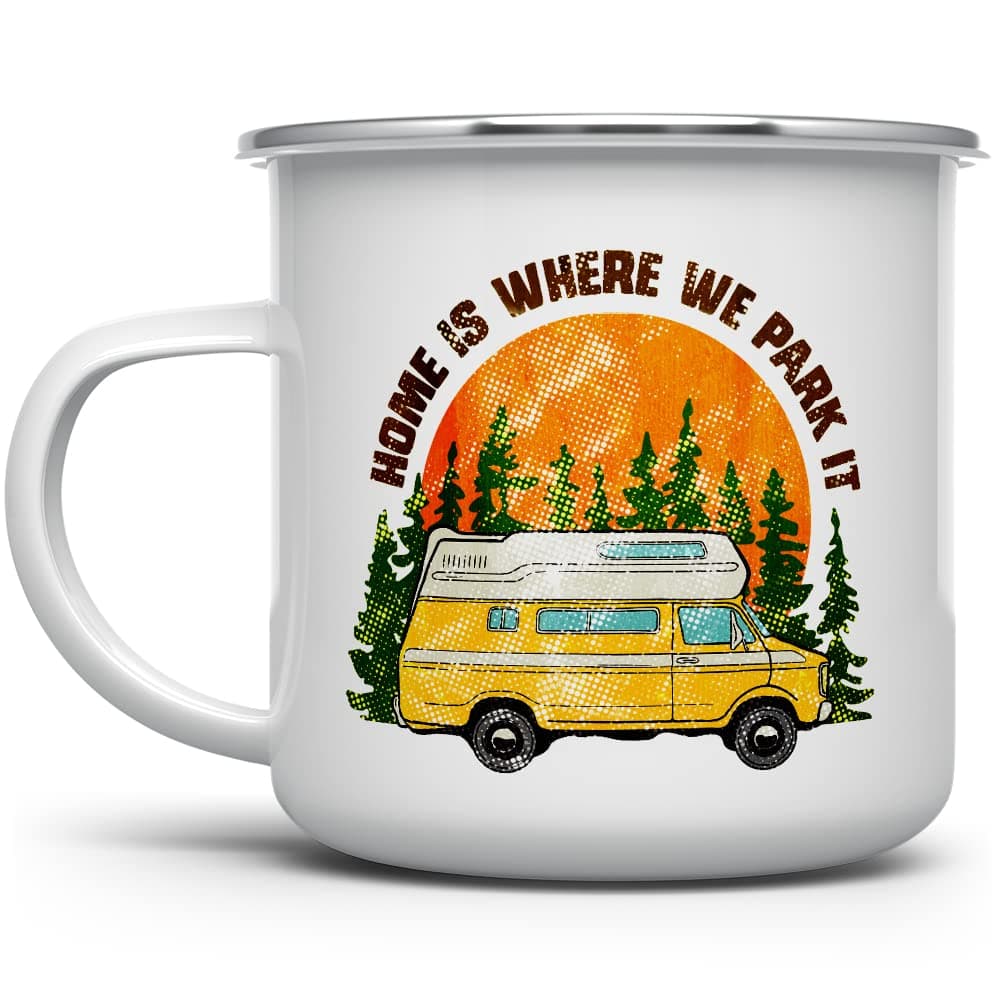
Loftipop Home Is Where We Park It Van Life Camper Coffee Mug, Travel Wanderlust Campfire Nature Loving Cup (12oz) 12 Ounces
- Hand wash only
- NOT microwave safe
- Design printed on both sides of mug
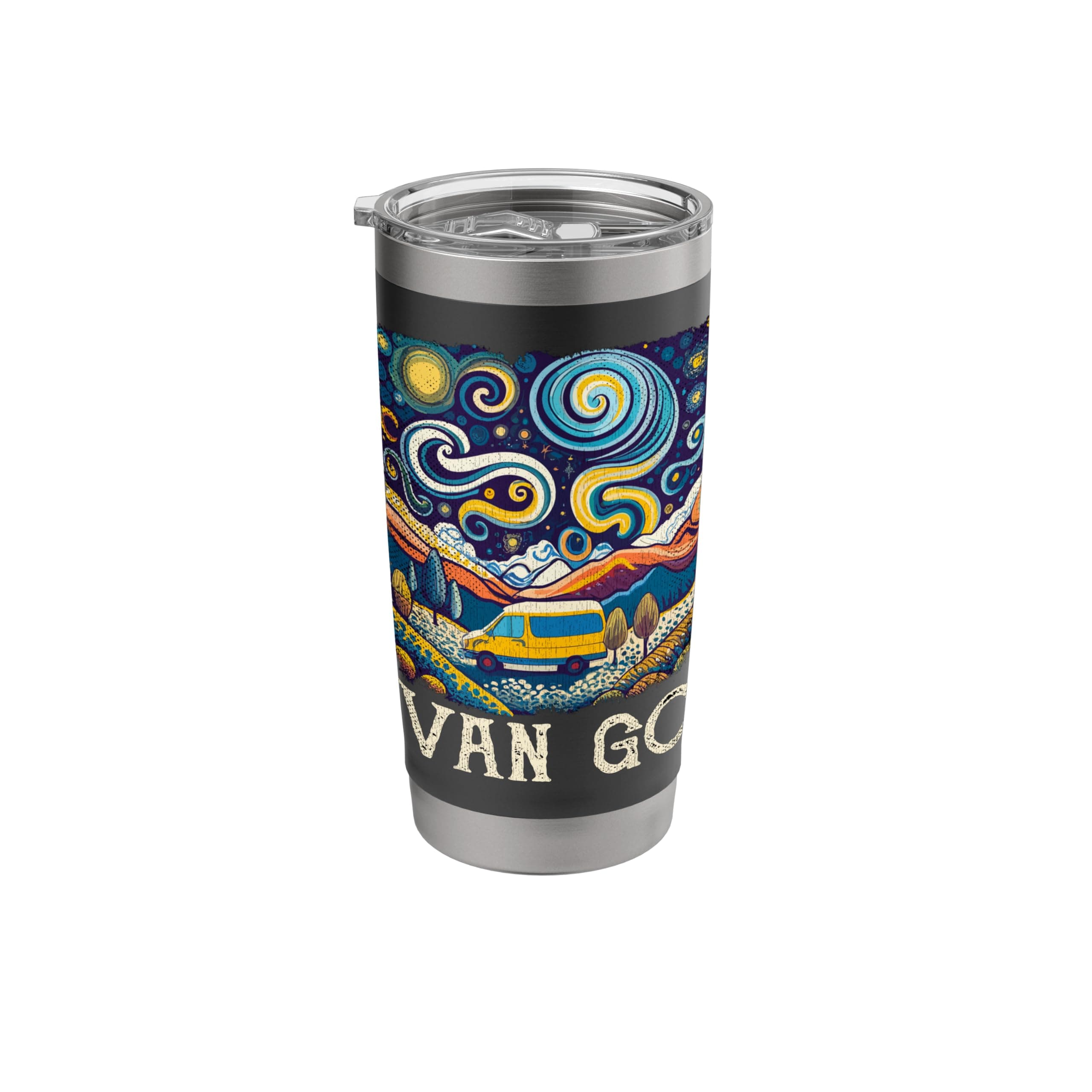
Van Life Vintage Van Dwellers Retro Vanlife Nomads Stainless Steel Insulated Tumbler Black 20 Ounces
- This Van Go design is a cool gift idea on the theme of van life for men, women, kids, and anyone who lives in a van, converted van, or a mobile home.
- This is a perfect gift for van dwellers who are living the vanlife nomads culture. Vintage and distressed retro style graphic.
- Dual wall insulated: keeps beverages hot or cold

Van Life Barista Brewing Coffee, Living Free Camper Stainless Steel Insulated Tumbler 20 Ounces Black
- Hit the road with your favorite brew in hand! The Van Life Barista mug is perfect for nomads who live for the open road and a fresh cup of coffee. Featuring a retro camper van and steaming cup illustration, this mug celebrates freedom, flavor, and the joy
- Van Life Barista Brewing Coffee, Living Free Camper Van
- Dual wall insulated: keeps beverages hot or cold
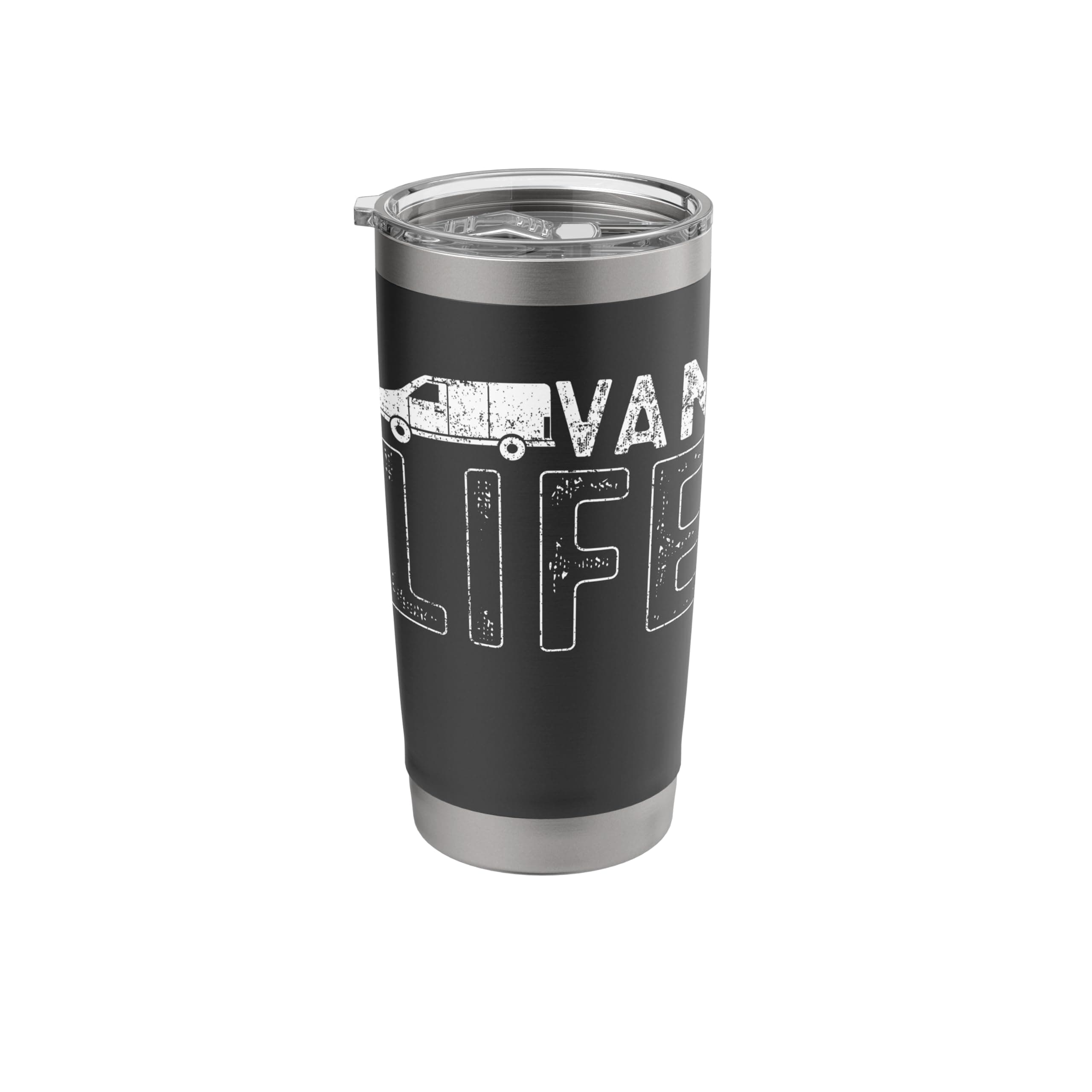
Vanning Vanlife Van Life Stainless Steel Insulated Tumbler 20 Ounces Black
- Van Life design.
- Dual wall insulated: keeps beverages hot or cold
- Stainless Steel, BPA Free

Vanning Vanlife Van Life Stainless Steel Insulated Tumbler 20 Ounces Brushed Steel
- Dual wall insulated: keeps beverages hot or cold
- Stainless Steel, BPA Free
- Leak proof lid with clear slider
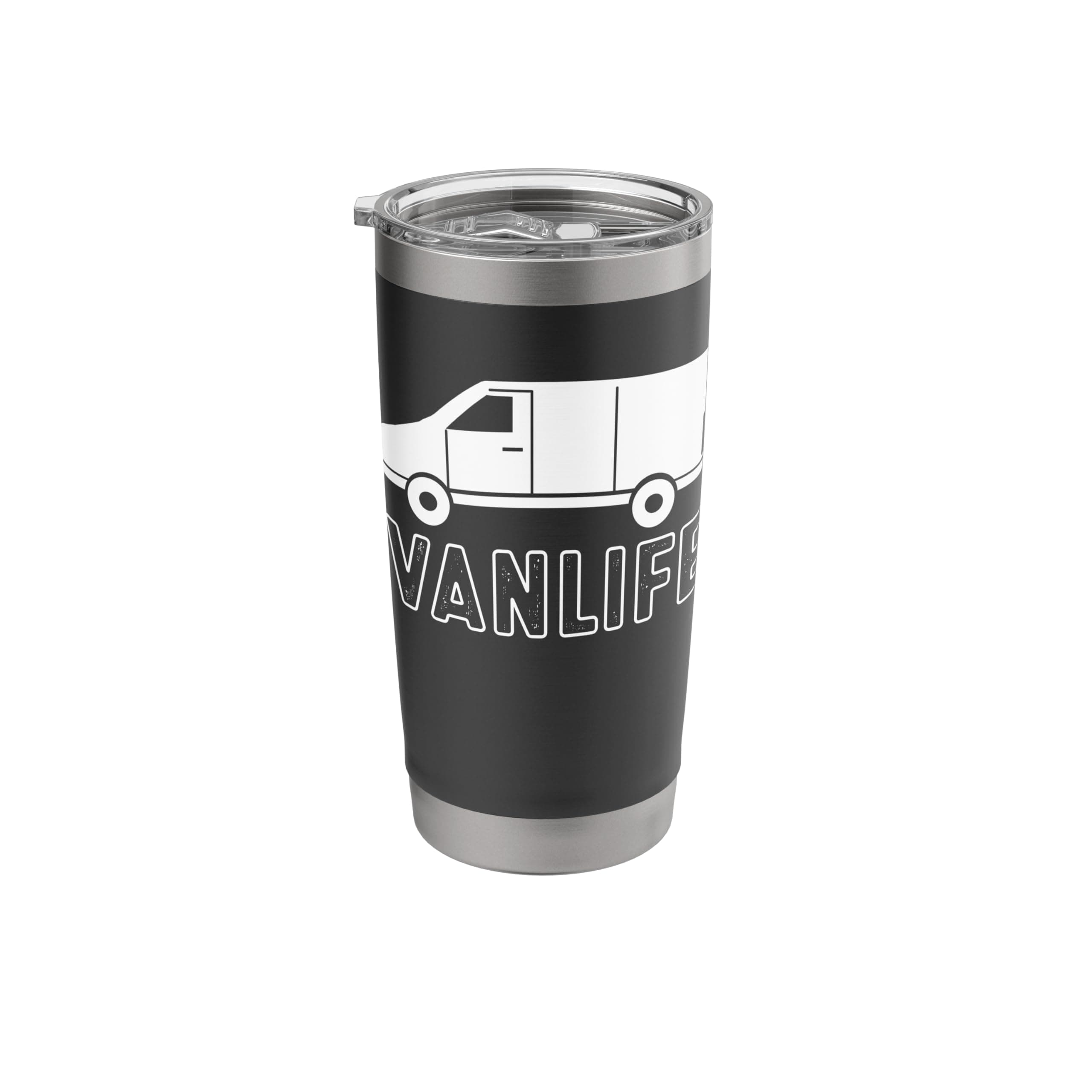
Vanning Vanlife Van Life Stainless Steel Insulated Tumbler
- Dual wall insulated: keeps beverages hot or cold
- Stainless Steel, BPA Free
- Leak proof lid with clear slider