
The Ultimate Off-Grid Coffee Gear Checklist
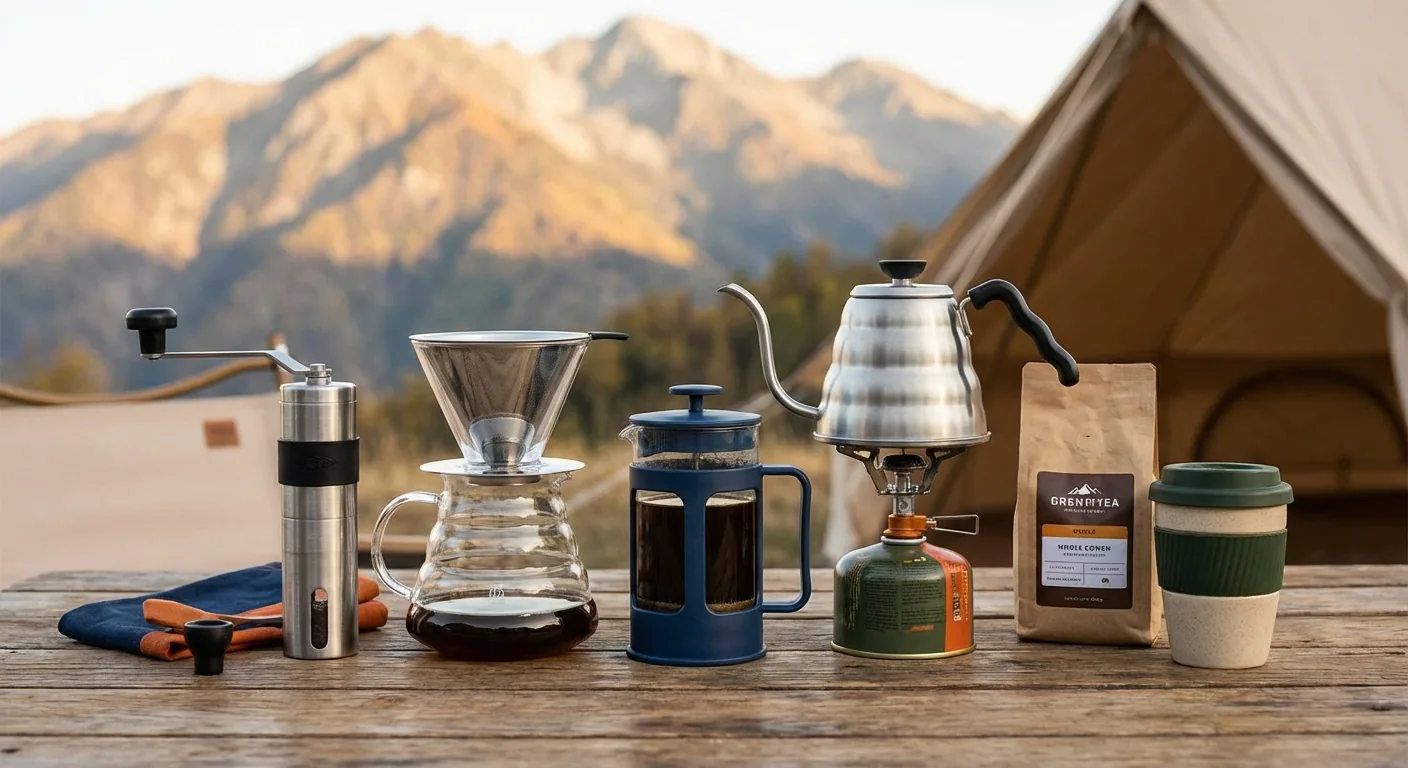
Table of Contents
- The Morning Ritual That Defines Your Adventure
- Why Traditional Brewing Fails in the Wild
- Your Roadmap to the Perfect Wilderness Cup
- Why You Can Trust NomadBrew
- Take the Guesswork Out of Your Next Trip
- Essential Gear Recommendations for Your Checklist
- Frequently Asked Questions
The Morning Ritual That Defines Your Adventure
There is a specific kind of magic that only happens at 6:00 AM in the middle of nowhere. You unzip your tent or slide open your van door to find a world draped in mist, the air crisp enough to see your breath, and the only sound is the distant call of a bird or the rustle of wind through the pines. In these moments, your morning coffee is more than just a caffeine delivery system; it is a grounding ritual that bridges the gap between the rugged wilderness and the comforts of home. It is the warmth in your hands and the aromatic steam that signals the start of another day of exploration.
However, for many off-grid travelers, this ritual is often marred by the disappointment of chalky instant coffee or the frustration of a brewing system that simply wasn't built for the elements. We believe that being far from a power outlet shouldn't mean being far from a world-class extraction. Whether you are perched on a tailgate in the Moab desert or huddled in a cabin in the Pacific Northwest, the quality of your brew sets the tone for your entire journey. A perfect cup of coffee is the ultimate reward for a night spent under the stars, and achieving it requires a blend of the right gear and the right technique.
This guide is designed to elevate your outdoor experience by stripping away the complexity of modern electric brewing and returning to the fundamentals of manual craft. We aren't just talking about "making do" with what you have; we are talking about mastering the art of the manual brew so that your off-grid coffee is actually better than what you make in your kitchen. By focusing on portability, durability, and flavor profile, you can transform your morning routine into a highlight of your trip rather than a logistical hurdle.
Why Traditional Brewing Fails in the Wild
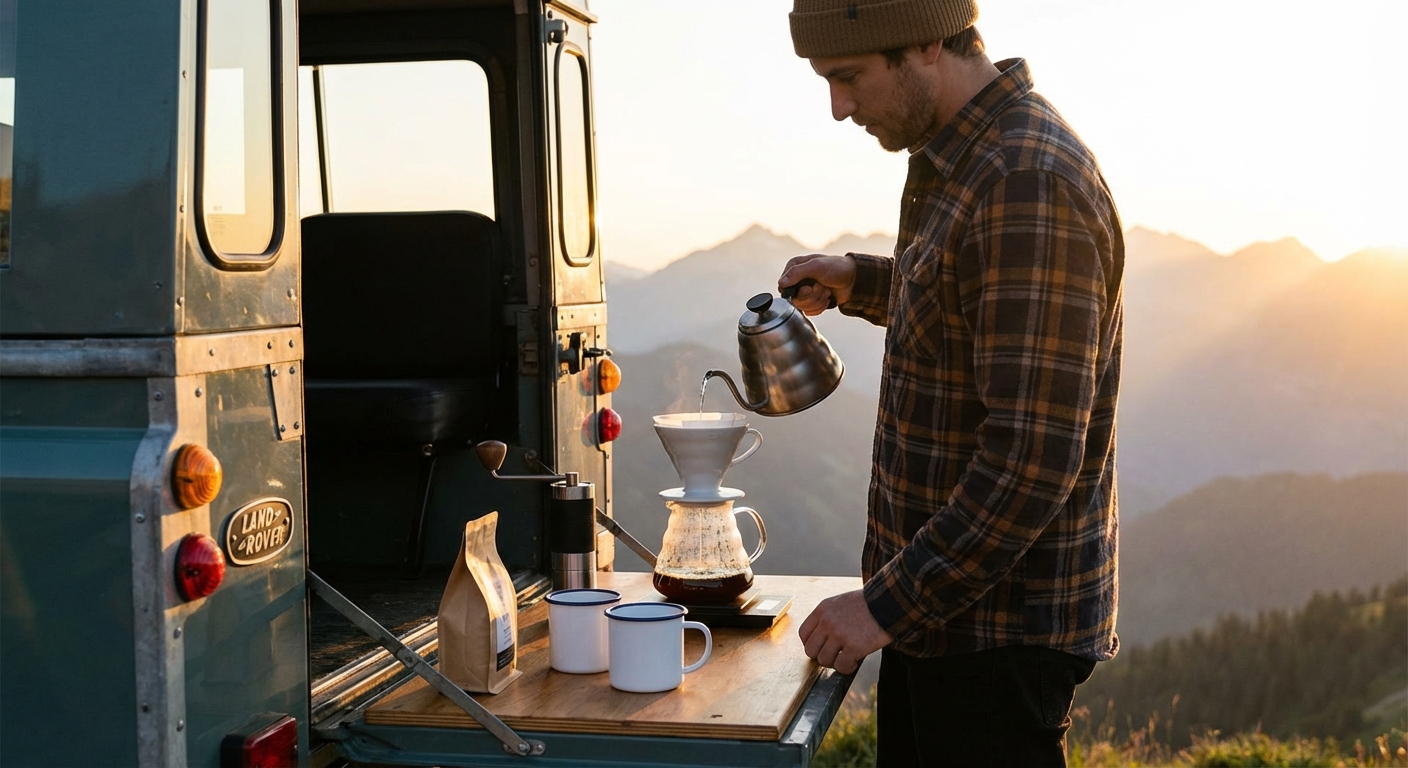
The most common mistake travelers make is trying to replicate their home kitchen setup in an environment that lacks the infrastructure to support it. At home, you have an endless supply of pressurized water, stable 110V electricity, and a level countertop. Off-grid, you are dealing with limited battery banks, uneven surfaces, and a finite supply of water that often needs to be conserved for drinking and hygiene. Standard drip machines or electric grinders are massive power draws that can deplete a portable power station in minutes, leaving you with a dead battery and a lukewarm pot of coffee.
Beyond the power constraints, there is the issue of durability and weight. Glass carafes and delicate ceramic drippers are prone to shattering the moment your rig hits a washboard road or your pack takes a tumble. Space is also a premium currency; every square inch occupied by a bulky coffee maker is space stolen from food, clothing, or safety gear. Many "travel" brewers fail because they are either too fragile for the vibration of off-road travel or too cumbersome to fit into a streamlined packing system.
Finally, the cleanup process is the silent killer of outdoor brewing joy. In a kitchen, you can rinse grounds down a sink or toss a filter in a bin. In the backcountry, you must adhere to "Leave No Trace" principles. Many brewing methods produce messy, wet grounds that are difficult to manage without a dedicated gray water system. If your brewing method requires five gallons of water just to clean the equipment, it isn't a viable off-grid solution. Understanding these pain points is the first step toward building a gear kit that actually works in the real world.
Your Roadmap to the Perfect Wilderness Cup
To solve these challenges, we have developed a comprehensive checklist that categorizes gear based on the "Three Pillars of Off-Grid Brewing": Heat, Grind, and Extraction. This resource isn't just a list of products; it is a strategic framework for building a coffee kit tailored to your specific travel style. Whether you are a minimalist backpacker counting every gram or a van-lifer with a bit more storage, the checklist ensures you never arrive at camp only to realize you forgot the filters or have no way to boil water in high winds.
The checklist begins with the heating element, focusing on non-electric solutions like integrated canister stoves or multi-fuel burners that provide high BTU output regardless of the ambient temperature. We then move into the world of manual grinding, which is the single most important factor in flavor quality. By using a high-quality hand grinder, you eliminate the need for electricity while ensuring a consistent particle size that a blade grinder could never achieve. This section of the checklist helps you choose between lightweight aluminum builds for hiking and heavy-duty steel builds for vehicle-based adventures.
Finally, the checklist covers the extraction methods themselves, highlighting brewers that are virtually indestructible and easy to clean. We prioritize methods like the AeroPress or stainless steel French presses that can handle the rigors of the road. We also include a dedicated section for "support gear"—things like airtight bean storage, collapsible scales, and insulated mugs that keep your coffee hot in sub-zero temperatures. By following this roadmap, you transition from a "coffee survivor" to a "coffee connoisseur," no matter how far you wander from civilization.
Why You Can Trust NomadBrew
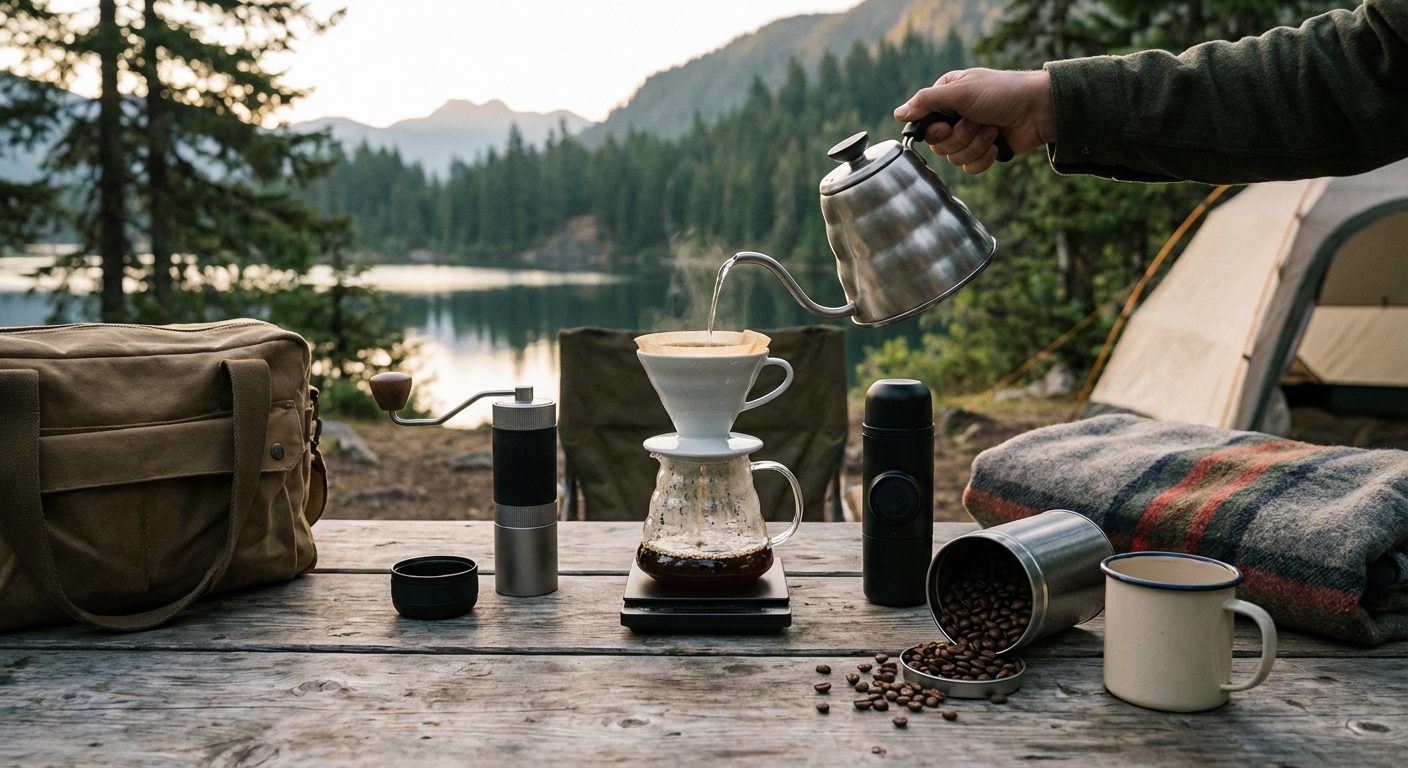
At NomadBrew, we live and breathe the lifestyle we write about. Our team consists of former baristas, long-term van dwellers, and wilderness guides who have collectively spent thousands of nights off the grid. We have brewed coffee in the back of converted school buses in the Yukon, on rocky outcrops in the Andes, and in humid jungles where gear rusts overnight. We don't just read spec sheets; we put every piece of gear through a "field torture test" to see if it truly holds up to the demands of nomadic life.
Our recommendations are born from failure as much as success. We’ve had the glass carafes shatter, the plastic hinges snap, and the cheap hand grinders seize up when we needed them most. This experience allows us to cut through the marketing fluff and tell you exactly what works and what doesn't. We prioritize gear that offers a "high utility-to-weight ratio" and equipment that can be repaired in the field. When you follow our checklist, you are benefiting from years of trial and error, ensuring that your investment in gear results in a reliable, delicious morning experience.
Take the Guesswork Out of Your Next Trip
Planning an off-grid excursion is stressful enough without worrying if your coffee setup is going to fail. To help you streamline your packing and ensure you have everything you need for the ultimate wilderness brew, we’ve condensed our years of experience into a single, easy-to-use PDF resource. This isn't just a list; it’s a tactical guide that includes gear weights, packing tips, and a "pre-trip" maintenance routine to keep your equipment in top shape.
Stop guessing and start brewing with confidence. Download our "Off-Grid Coffee Blueprint" today and join a community of nomads who refuse to settle for mediocre coffee. We respect your privacy and will never spam you; we only send high-quality tips and gear reviews designed to help you live your best off-grid life.
{{LEAD_MAGNET:pdf:The Ultimate Off-Grid Coffee Blueprint}}
By signing up, you’ll also receive our monthly "Nomad's Roast" newsletter, which features seasonal brewing recipes and interviews with travelers who have mastered the art of the remote lifestyle. Take the first step toward better mornings—your future self, standing by a campfire with a perfect cup of coffee, will thank you.
Essential Gear Recommendations for Your Checklist
While the checklist covers various categories, there are two specific pieces of gear that we consider the "gold standard" for any off-grid setup. These items have been tested extensively and consistently outperform the competition in terms of durability and flavor quality.
{{PRODUCT_CARD:B07YVL8D2G}}
I highly recommend the AeroPress Go for any traveler who prioritizes both flavor and space. Unlike the standard AeroPress, the "Go" model is specifically engineered to pack into its own drinking mug, making it the most compact full-immersion brewer on the market. It is virtually indestructible, made of high-quality BPA-free plastic that won't crack or shatter if dropped on a rock.
This brewer is best for solo travelers or pairs who want a versatile tool that can make everything from espresso-style concentrates to a standard 8oz cup of coffee. The standout feature is its "self-cleaning" nature; the plunger wipes the chamber clean as you press, and the spent grounds are ejected in a dry "puck" that is easy to dispose of in a trash bag, adhering perfectly to Leave No Trace principles. The only drawback is its limited capacity; if you are brewing for a group of four, you will be doing multiple rounds. Compared to a French press, it is much easier to clean and produces a cleaner cup with zero sediment.
{{/PRODUCT_CARD}}
{{PRODUCT_CARD:B083S8Z6S9}}
A manual grinder is the heart of an off-grid kit, and the 1Zpresso Q2 is the finest option for those who need to balance performance with portability. I recommend this grinder because it features professional-grade heptagonal stainless steel burrs that provide a grind consistency usually reserved for expensive electric home grinders. It is small enough to fit inside the plunger of an AeroPress, saving you valuable drawer or pack space.
This is best for the "coffee nerd" traveler who isn't willing to sacrifice grind quality just because they are in a van. The dual-bearing design makes the grinding process incredibly smooth and fast, taking less than 40 seconds to grind a standard 15g dose. The aluminum alloy body feels premium and can withstand years of travel. The primary consideration is that it has a relatively small capacity (15-20g), so if you need to brew a large 1-liter pot, you'll be grinding in batches. However, compared to cheaper ceramic burr grinders, the Q2 is significantly faster and produces a much more flavorful cup.
{{/PRODUCT_CARD}}
Comparing Popular Off-Grid Brewing Methods
| Method | Portability | Cleaning Ease | Best For |
|---|---|---|---|
| AeroPress Go | High | High | Solo Backpackers & Vanlifers |
| Stanley Stay-Hot French Press | Low | Medium | Groups and Basecamps |
| Hario V60 Plastic Dripper | Medium | High | Purists & Minimalists |
Frequently Asked Questions
Is it really worth carrying a manual grinder instead of just using pre-ground coffee? Absolutely. Coffee begins to lose its aromatic compounds within minutes of being ground. By the time you reach your campsite three days into a trip, pre-ground coffee will have lost much of its nuance and will likely taste flat or bitter. A manual grinder like the 1Zpresso Q2 allows you to keep your beans whole and protected until the very moment you brew, ensuring a vibrant, fresh cup every morning. Furthermore, manual grinding requires zero electricity, making it the most reliable way to achieve a high-quality grind in the wild.
While it might seem like an extra step, the ritual of hand-grinding is actually quite meditative and becomes a cherished part of the morning routine. Most high-end manual grinders are designed to be efficient, meaning you won't be sweating over your beans for ten minutes. It’s a small weight penalty for a massive increase in flavor quality.
How do I manage water temperature without a thermometer while camping? Achieving the right water temperature (typically between 195°F and 205°F) is crucial for avoiding over-extraction. When you are off-grid, you don't need a digital thermometer to be accurate. A simple trick is to bring your water to a rolling boil and then remove it from the heat source for about 30 to 60 seconds. In most outdoor ambient temperatures, this will drop the water into the ideal brewing range.
If you are at high altitudes, remember that the boiling point of water decreases (at 10,000 feet, water boils at roughly 193°F). In these cases, you should actually use the water immediately after it hits a boil, as it is already at the perfect temperature for extraction. Using an insulated kettle or a specialized camping stove with a wind guard will help you maintain a more consistent temperature during the pour.
What is the best way to clean my coffee gear without wasting water? Water is a precious resource when you are off-grid, so your cleaning method should be as dry as possible. This is why we highly recommend the AeroPress; it effectively squeegees itself clean. For other methods, use a silicone spatula to scrape out as many grounds as possible into a trash receptacle before rinsing. Never dump coffee grounds directly into a lake or stream, as they can disrupt the local pH and ecosystem.
A small spray bottle filled with a mixture of water and a drop of biodegradable soap can also help you clean your gear using a fraction of the water a full rinse would require. Simply spray the components, wipe them down with a reusable microfiber cloth, and give them a final quick spritz of clean water. This keeps your kit hygienic and ready for the next morning without draining your fresh water tank.
Our Top Picks for 2026
We've spent hours researching and testing to find the absolute best options currently available.

Ultimate Off Grid Guide: 20 Years Off Grid Experience Inside!
- Top-tier performance in real-world testing
- Premium materials and exceptional build quality

Off Grid Home Building Essentials: A Comprehensive Planning Handbook for House Options, Solar, Wind, Water, Heating and Cooling--Self-Sufficiency Projects for Off Grid Living! (Off Grid Essentials)
- Top-tier performance in real-world testing
- Premium materials and exceptional build quality