
The Ultimate Guide to Off-Grid Coffee Brewing
The Ultimate Guide to Off-Grid Coffee Brewing
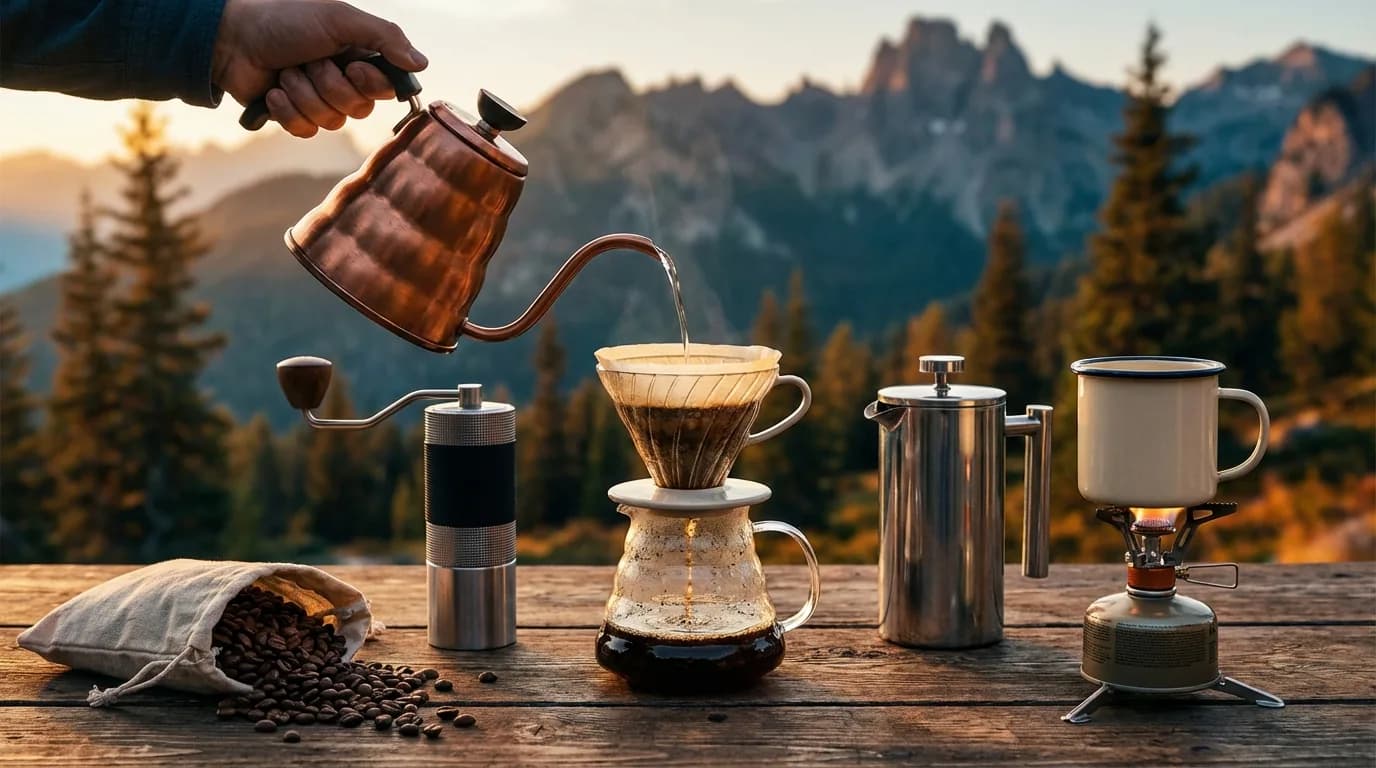
Whether you are waking up in a converted van overlooking the Tetons, hunkered down in a remote cabin, or backpacking through the deep wilderness, coffee is often the ritual that grounds the experience. Off-grid coffee brewing is more than just a means to a caffeine fix; it is an exercise in self-reliance, a dance with the elements, and a way to maintain a high standard of living regardless of where you are on the map. In this guide, we will explore the nuances of brewing without electricity, managing limited resources, and choosing the gear that survives the rigors of the road.
Table of Contents
- The Philosophy of Off-Grid Brewing
- Heat Sources: Boiling Water Without a Plug
- The Essential Off-Grid Brewer Categories
- Water Management and Filtration for Coffee
- The Manual Grind: Why Freshness Matters Most Off-Grid
- Temperature Control and Altitude Adjustments
- Sustainable Cleanup and Leave No Trace (LNT)
- The Ultimate Off-Grid Gear Comparison
- Pro Tips for the Nomad Barista
- Frequently Asked Questions
The Philosophy of Off-Grid Brewing
Off-grid coffee brewing represents a departure from the "push-button" culture of modern society. When you remove the electric drip machine or the pod-based convenience, you are forced to engage with the variables of coffee extraction: time, temperature, grind size, and water quality. For the nomad, this is a rewarding trade-off. It allows for a tactile connection to the morning routine, turning a mundane task into a meditative practice. Understanding how heat transfers from a flame to a kettle, and how that water interacts with coffee grounds, empowers you to make a better cup of coffee in a tent than most people make in a million-dollar kitchen.
Furthermore, off-grid brewing is fundamentally about efficiency and reliability. In a remote setting, equipment failure isn't just an inconvenience; it can be a significant setback. This is why manual methods are the gold standard for travelers. Without circuit boards or heating elements to burn out, a high-quality manual brewer can last a lifetime. We focus on tools that are "bombproof"—items made of stainless steel, high-grade silicone, or reinforced polymers that can withstand being rattled in a storage bin or dropped on a granite slab.
Finally, the off-grid approach encourages a deeper appreciation for the beans themselves. When you have to manually grind every gram of coffee and carefully monitor your water temperature, you tend to invest in higher-quality, ethically sourced beans. You become a "Nomad Barista," someone who values the origin of the coffee and the craft of the brew. This guide is designed to take you from a basic "cowboy coffee" setup to a sophisticated manual laboratory that fits in a backpack.
Heat Sources: Boiling Water Without a Plug
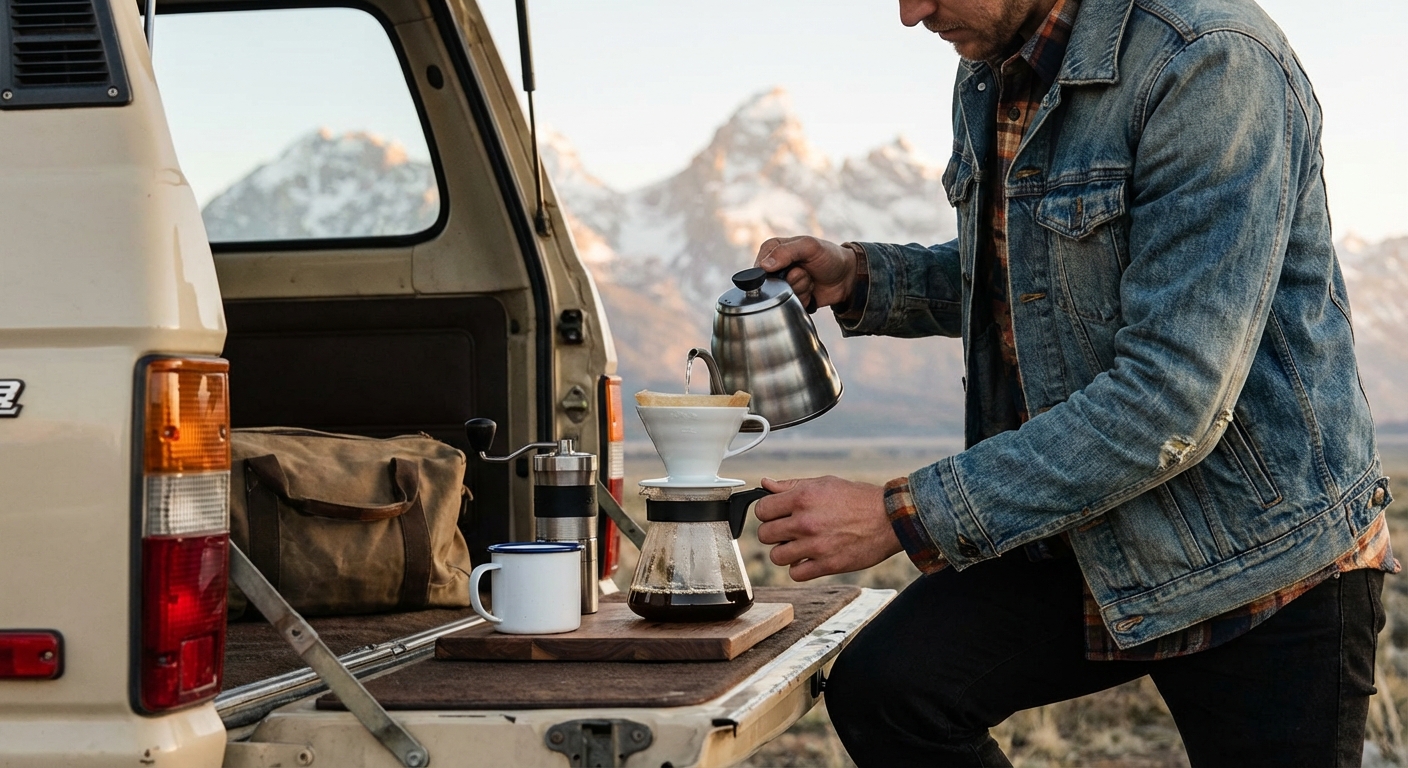
The first hurdle of off-grid brewing is the heat source. Without an electric kettle, you must rely on gas, liquid fuel, or biomass. For most van-lifers and car campers, a dual-fuel or propane stove is the primary choice. These stoves offer excellent simmer control, which is vital for maintaining a consistent water temperature. However, for those traveling light, integrated canister stoves like the Jetboil system are preferred for their speed and fuel efficiency. A Jetboil can bring 500ml of water to a rolling boil in under two minutes, which is essential when fuel supplies are limited.
Alcohol stoves and wood-burning "twig stoves" offer a more primitive but highly sustainable alternative. While they require more patience and skill to operate, they eliminate the need to carry heavy pressurized canisters. If you are in a permanent off-grid cabin, a wood-burning stove with a flat top is the ultimate heat source. It provides a steady, radiant heat that is perfect for a large stovetop percolator or a heavy-duty Gooseneck kettle. The key is to understand the "thermal lag"—the time it takes for your heat source to react to adjustments—so you don't overshoot your target temperature.
Wind is the silent enemy of the off-grid brewer. Even a light breeze can strip away the heat from your kettle, significantly increasing boil times and wasting fuel. Always use a windscreen, whether it’s a dedicated metal folding screen or a natural barrier like a rock or your vehicle's body. Additionally, consider the material of your kettle. Titanium is incredibly light for backpacking but has poor heat distribution compared to stainless steel or hard-anodized aluminum. For the best balance of weight and performance, aluminum remains the champion of the backcountry.
The Essential Off-Grid Brewer Categories
The Pressure-Based Powerhouse: AeroPress
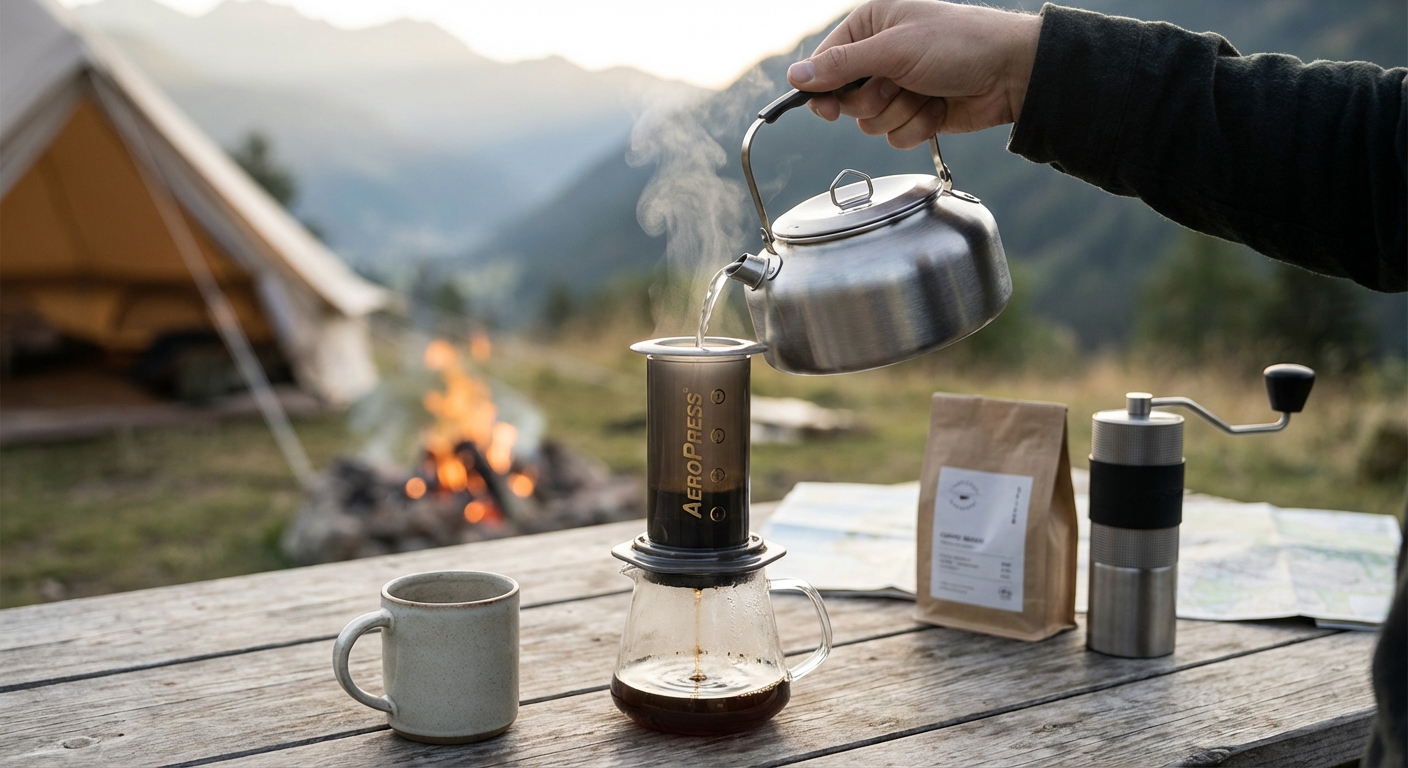
When it comes to off-grid versatility, few tools can match the AeroPress. Its lightweight, nearly indestructible construction makes it a favorite for everyone from ultra-light hikers to professional nomads. The AeroPress uses a combination of immersion and pressure to extract flavor, resulting in a cup that is remarkably clean and low in acidity. Because it uses paper filters (or a reusable metal mesh), cleanup is as simple as "popping" the puck of grounds into the trash or compost.
{{PRODUCT_CARD:B0018RY8H0}}
I recommend the AeroPress (Original or Go version) for any traveler who prioritizes ease of use and durability. It is best for solo travelers or couples who don't mind brewing back-to-back cups. The standout feature is its versatility; you can brew anything from a concentrated espresso-style shot to a standard Americano or even a cold brew. The main drawback is its limited capacity; if you are brewing for a group of four, you'll be spending a lot of time at the stove. Compared to a French Press, it is much easier to clean and produces a far more sediment-free cup, which is a major plus when water for rinsing is scarce.
{{/PRODUCT_CARD}}
The Classic Immersion: The French Press
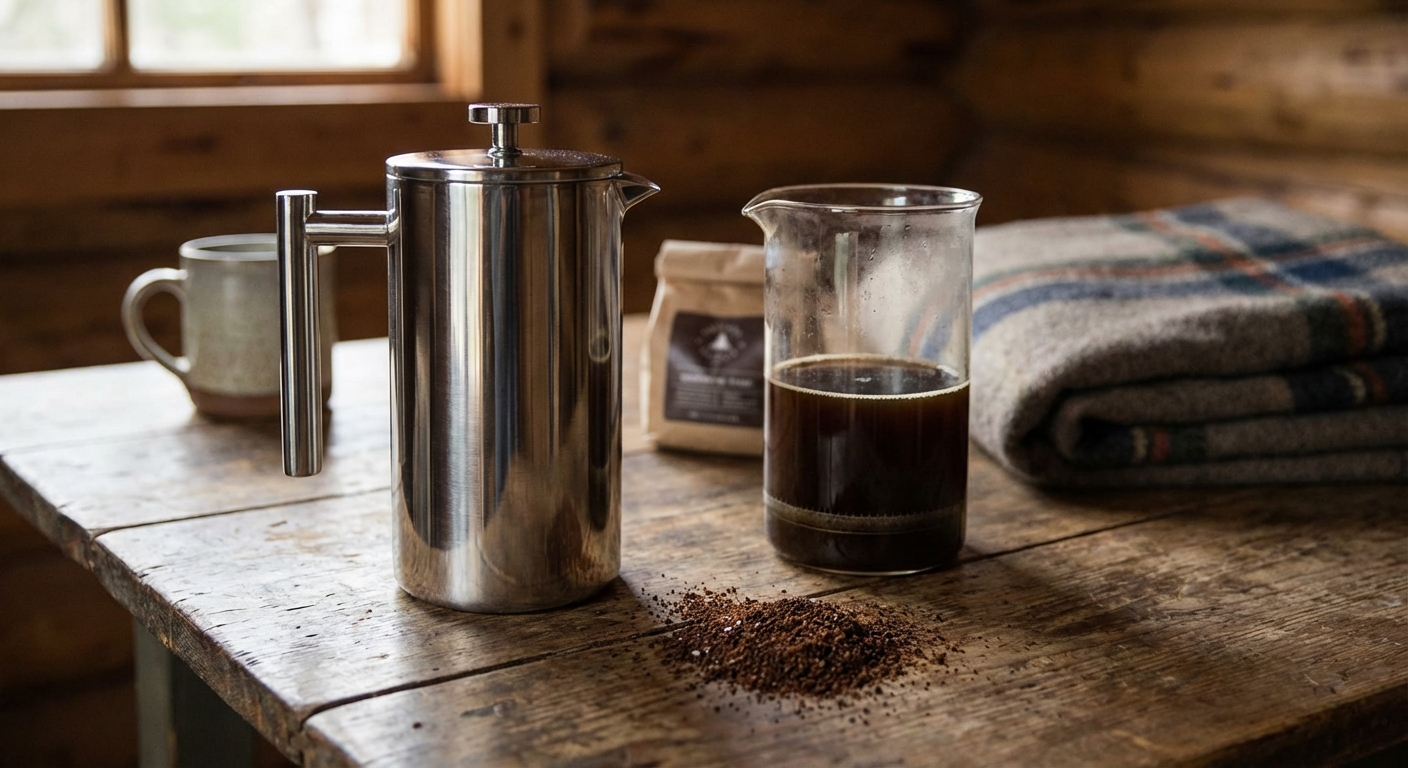
The French Press is the quintessential off-grid brewer for those who want a rich, full-bodied cup and have the space to carry it. For nomad use, we strictly recommend vacuum-insulated stainless steel versions rather than glass. Glass carafes are almost guaranteed to shatter during transit on bumpy forest service roads. A stainless steel press not only survives the journey but also keeps your coffee hot for hours—a crucial feature when you're brewing in cold morning temperatures.
{{PRODUCT_CARD:B00MMQOZ1U}}
The Mueller Double-Wall Insulated French Press is a top recommendation for van-lifers and cabin dwellers. It is best for those who want to brew larger batches (34oz) to share with a partner or friend. The standout feature is the double-layered filtration system which significantly reduces the "sludge" often associated with immersion brewing. The primary drawback is the water required for cleanup; rinsing out grounds from a French Press can be water-intensive, which may be a concern if your tanks are low. However, for pure flavor depth and heat retention, it is hard to beat.
{{/PRODUCT_CARD}}
Water Management and Filtration for Coffee
In an off-grid environment, water is your most precious resource. Coffee is roughly 98% water, meaning the quality of your source directly dictates the quality of your brew. If you are pulling water from a stream or a questionable tank, filtration is mandatory. While standard charcoal filters improve taste, they don't remove pathogens. For the nomad, a two-stage system is often best: a biological filter (like a Sawyer Squeeze or Katadyn BeFree) to ensure safety, followed by a mineral adjustment if the water is too "soft" or "hard."
The mineral content of your water—specifically calcium and magnesium—is what "grabs" the flavor compounds from the coffee grounds. If you are using distilled or highly purified RO (Reverse Osmosis) water from a van's filtration system, your coffee may taste flat or overly acidic. Many off-grid coffee enthusiasts carry "Third Wave Water" mineral packets or a small dropper of saline solution to add back the necessary minerals. This might seem like "coffee nerd" overkill, but when you're brewing expensive beans in the middle of nowhere, it ensures your efforts aren't wasted on dull water.
Water conservation is the final piece of the puzzle. Traditional pour-over methods can be wasteful because they require a significant amount of water for "rinsing" paper filters and pre-heating the vessel. In a water-scarce environment, immersion methods (like the AeroPress or French Press) are superior because every drop of water used goes into the final cup. Additionally, consider "gray water" management. Never dump coffee grounds or rinse water directly into natural water sources; the oils and acidity can disrupt local ecosystems.
The Manual Grind: Why Freshness Matters Most Off-Grid
If there is one piece of gear that will transform your off-grid coffee more than any other, it is a high-quality manual burr grinder. Pre-ground coffee begins to lose its aromatic compounds within minutes of being processed. By the time you open a bag of pre-ground coffee on day three of a trip, much of the nuance is gone. A manual grinder allows you to keep the beans whole and protected until the very moment of brewing, ensuring maximum flavor extraction.
Modern manual grinders are a far cry from the clunky ceramic-burr models of the past. High-end hand grinders now feature stainless steel burrs and dual-bearing driveshafts that make grinding 20 grams of coffee a 30-second task rather than a five-minute workout. These tools are engineered with the same precision as high-end espresso machines, allowing for micro-adjustments in grind size. This is essential for off-grid use because it allows you to toggle between a coarse grind for French Press and a fine grind for AeroPress or manual espresso without needing multiple devices.
{{PRODUCT_CARD:B07ZNX91Z8}}
The 1Zpresso JX Manual Coffee Grinder is our gold standard for off-grid use. We recommend it for the serious coffee enthusiast who refuses to compromise on quality just because they are away from a power outlet. It is best for those who use multiple brew methods, as its 40+ grind settings are easily adjustable. The standout feature is the 48mm stainless steel burrs, which are incredibly fast and consistent. The only drawback is its weight; at nearly 700g, it might be too heavy for ultralight backpacking, but for van-life or base camping, it is perfect. It vastly outperforms cheaper ceramic grinders in both speed and particle uniformity.
{{/PRODUCT_CARD}}
Temperature Control and Altitude Adjustments
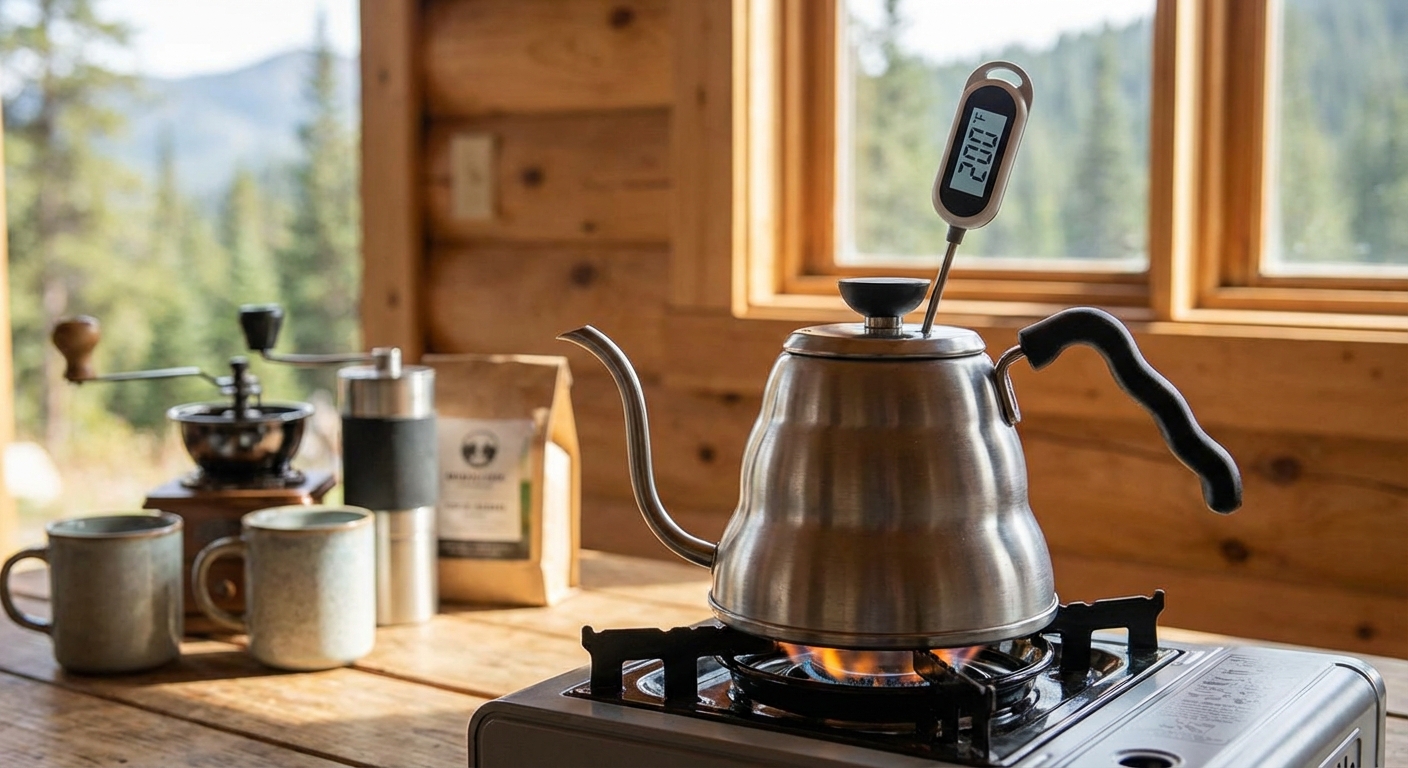
One of the most misunderstood aspects of off-grid brewing is the relationship between altitude and the boiling point of water. At sea level, water boils at 212°F (100°C). However, as you climb into the mountains, atmospheric pressure decreases, causing water to boil at lower temperatures. For example, at 5,000 feet, water boils at roughly 202°F. At 10,000 feet, it drops to about 193°F. This is critical because the ideal temperature for coffee extraction is generally cited between 195°F and 205°F.
If you are brewing at high altitudes, you can no longer rely on the "wait 30 seconds after boil" rule, as your water may already be below the ideal extraction temperature the moment it starts bubbling. In these scenarios, you should brew immediately upon reaching a boil. Conversely, if you are at sea level in a hot climate, your water will retain heat much longer. Using a small digital thermometer is the only way to be precise, but experienced nomads often learn to "read" the bubbles in their kettle—a technique known as "shrimp eyes" or "crab eyes" in traditional tea brewing.
To maintain temperature during the brew, pre-heating your equipment is non-negotiable, especially in cold weather. A cold French Press or AeroPress will instantly sap 10-15 degrees from your water, leading to under-extraction and a sour, weak cup. Use a small amount of your boiling water to swirl around the brewing vessel and your mug before you start the actual brew process. This "thermal priming" ensures that the energy from your hot water goes into extracting coffee flavors rather than just warming up the plastic or steel of your gear.
Sustainable Cleanup and Leave No Trace (LNT)
Cleaning up coffee gear in the wild requires a balance between hygiene and environmental stewardship. The "Leave No Trace" principles dictate that you should pack out what you pack in. Coffee grounds, while biodegradable, are nitrogen-rich and can be harmful to local flora and fauna if dumped in concentrated amounts near a campsite. The best practice is to collect your grounds in a small "scraps" bag and dispose of them in a proper waste receptacle or a compost pile back at home or at a designated facility.
For those in vans or campers, the "dry clean" method is highly effective. Instead of using gallons of water to rinse your brewer, use a silicone spatula to scrape out as much of the grounds as possible. For an AeroPress, the "puck" is already mostly dry and can be wiped clean with a single paper towel. For a French Press, you can add a tiny bit of water, swirl, and dump the slurry into a mesh strainer to separate the solids from the liquid. This saves your fresh water for drinking and prevents your gray water tank from filling up with "coffee mud."
Biodegradable soap is a staple for off-grid living, but it should never be used directly in a stream or lake. Even "eco-friendly" soaps require soil to break down properly. When cleaning your gear, do so at least 200 feet away from any water source. If you are using a manual grinder, avoid getting water inside the burr chamber entirely. Most high-quality grinders should only be cleaned with a dry brush or compressed air to prevent the steel burrs from rusting and the internal bearings from seizing.
The Ultimate Off-Grid Gear Comparison
When building your off-grid coffee kit, it helps to see how the top contenders stack up against each other. Below is a comparison of the most popular manual brewing methods based on portability, durability, and ease of cleaning.
| Brewer Name | Primary Material | Best For | Cleanup Difficulty | Weight |
|---|---|---|---|---|
| AeroPress Original | BPA-Free Plastic | Solo Travelers | Very Easy | 226g |
| Mueller French Press | Stainless Steel | Groups/Couples | Moderate | 900g |
| Hario V60 Plastic | Polypropylene | Flavor Purists | Easy | 100g |
| Wacaco Nanopresso | Reinforced Plastic | Espresso Lovers | Moderate | 336g |
| Stanley Stay-Hot Percolator | Stainless Steel | Large Groups | Moderate | 600g |
Pro Tips for the Nomad Barista
To truly master off-grid brewing, you need to adapt to your environment. One of the best tips for van-lifers is to use a "cozy" for your brewing vessel. Just as you might wear a jacket in the morning, wrapping your French Press or pour-over dripper in a neoprene sleeve or even a spare wool hat can significantly improve heat retention during the four-minute steep time. This is especially important in the shoulder seasons when ambient temperatures are near freezing.
Another pro tip involves the "bloom." When coffee is fresh, it contains CO2. When you first add hot water, the gas escapes, creating bubbles. In an off-grid setting where you might not have a perfect gooseneck kettle for precision pouring, the bloom is your best friend. By adding just a small amount of water first and waiting 30 seconds, you allow the grounds to settle and saturate evenly. This compensates for an uneven pour from a standard camping pot and ensures a much more balanced extraction.
Lastly, don't overlook the importance of your mug. A thin enamel mug is classic and looks great in photos, but it is terrible at keeping coffee hot. For the best off-grid experience, invest in a double-wall vacuum-insulated tumbler with a lid. Not only does it keep your coffee at the perfect drinking temperature for an hour or more, but it also prevents spills if you're moving around a cramped van or sitting on uneven ground by a campfire.
Frequently Asked Questions
What is the best way to store coffee beans while traveling?
Storing beans correctly is vital for maintaining freshness. You want to avoid the "four enemies" of coffee: light, heat, moisture, and oxygen. While the original bag with a one-way valve is okay for short trips, for long-term off-grid travel, a dedicated vacuum-sealed canister is superior. Look for containers with a plunger lid that pushes out excess air. If you are traveling in a van, store your coffee in a cool, dark cupboard away from the stove or any windows where the sun might heat the container.
Can I use "Cowboy Coffee" as a viable off-grid method?
Absolutely. Cowboy coffee is the original off-grid method and requires zero specialized equipment—just a pot and water. The key to making it drinkable is the "settling" phase. After boiling the water and adding the grounds, let it sit for 4-5 minutes, then add a splash of cold water. The cold water helps the grounds sink to the bottom. While it won't be as clean as an AeroPress brew, it’s a rugged, functional way to get your caffeine fix when you're traveling ultralight.
How do I clean my manual grinder if I can't use water?
You should never submerge a high-quality manual grinder in water. The internal bearings and steel burrs will rust or degrade. Instead, use a small, stiff-bristled brush (often included with the grinder) to sweep out the "fines" and leftover grounds after every few uses. For a deeper clean, you can use specialized grinder cleaning tablets which are made of food-safe binders and grain. You simply grind them through like coffee beans, and they soak up the oils and dislodge stuck particles.
Is it worth bringing a gooseneck kettle for off-grid use?
If you are a fan of pour-over coffee (like the Hario V60 or Chemex), a gooseneck kettle is almost essential for a good brew. However, they are bulky and awkward to pack. For most nomads, a small, standard camping kettle is a better compromise. You can improve your pour control by using a "pouring spout" attachment or simply by practicing a slow, steady stream. If you aren't doing pour-overs, a gooseneck kettle is unnecessary weight and space.
How do I deal with static in my grinder in dry climates?
If you are camping in the desert or a very dry high-altitude environment, static electricity can cause coffee grounds to fly everywhere and stick to the sides of your grinder. A simple trick is the "RDT" (Ross Droplet Technique). Dip the handle of a spoon in water and stir your beans before grinding, or use a tiny spray bottle to add a single "mist" of water to the beans. This microscopic amount of moisture neutralizes the static and keeps your workspace clean.
What should I do with my leftover coffee grounds?
As mentioned in the LNT section, packing them out is the best option. However, if you are in a location where composting is permitted, coffee grounds are an excellent "green" material. Some nomads also use dried coffee grounds as a natural deodorizer for their van's compost toilet or as a gentle abrasive for scrubbing stubborn food off of cast iron pans (though use caution with the latter). Always prioritize local regulations over these tips.
Can I make espresso off-grid without a machine?
True espresso requires 9 bars of pressure, which a standard French Press or AeroPress cannot achieve. However, there are manual espresso makers like the Flair or the Wacaco Nanopresso that are designed specifically for this. These use a hand-pump or a lever system to generate the necessary pressure. They require a bit more effort and a very fine grind, but they are the only way to get a real crema-topped shot of espresso while miles away from the nearest cafe.
Our Top Picks for 2026
We've spent hours researching and testing to find the absolute best options currently available.

Bodum 17oz Pour Over Coffee Maker, High-Heat Borosilicate Glass with Reusable Stainless Steel Filter and Cork Grip - Made in Portugal Cork 17oz
- Innovative, environmentally friendly pour over coffee maker
- High-Heat borosilicate glass carafe that won't alter or impair flavors or aromas
- Permanent stainless steel filter that reduces waste and doesn't trap coffee's essential oils
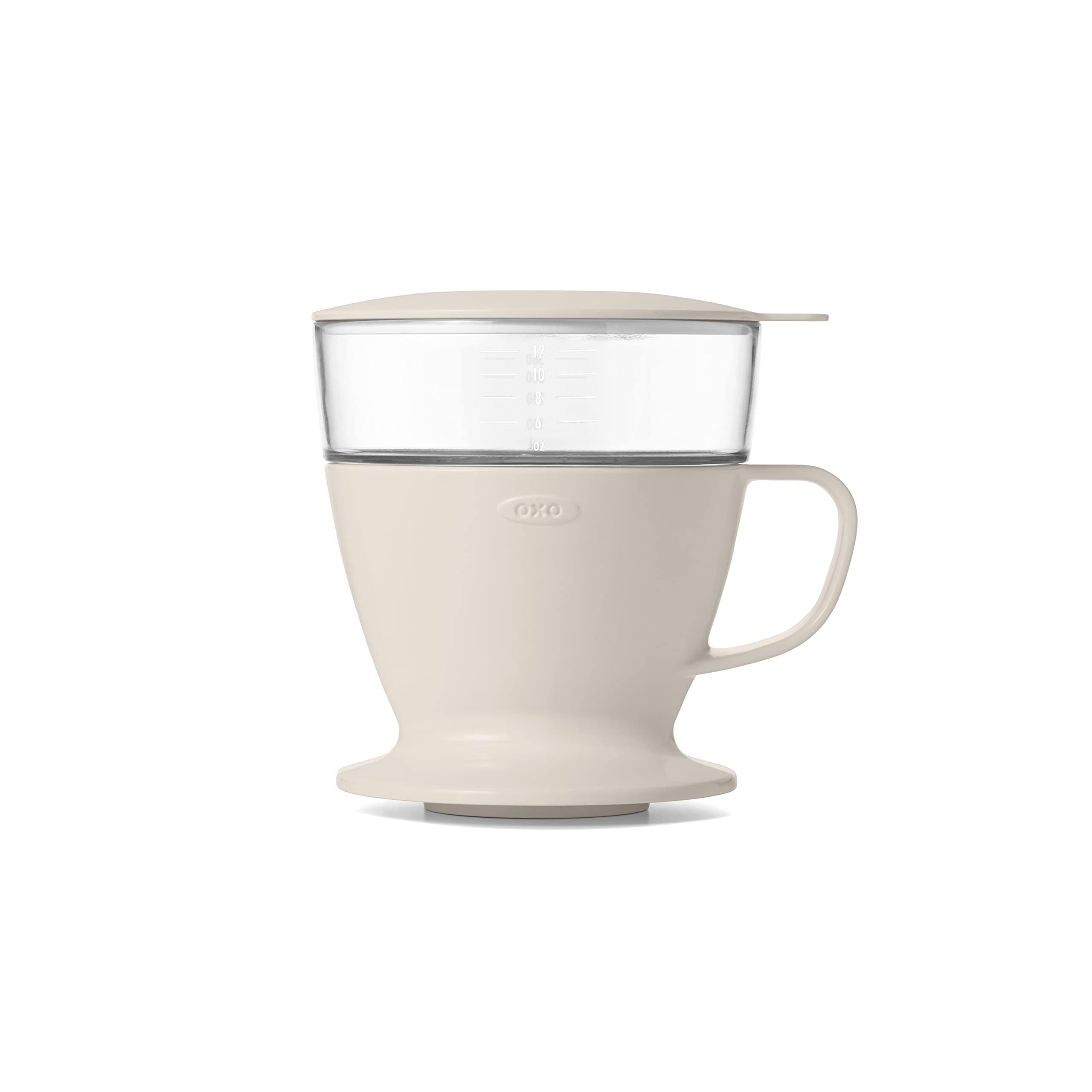
OXO Brew Single Serve Pour-Over Coffee Maker
- Brews consistent, flavorful pour-over coffee with minimal effort
- Auto-drip tank controls water flow for a well-balanced brew
- Measurement markings on Tank show how much water to add, up to 12 ounces
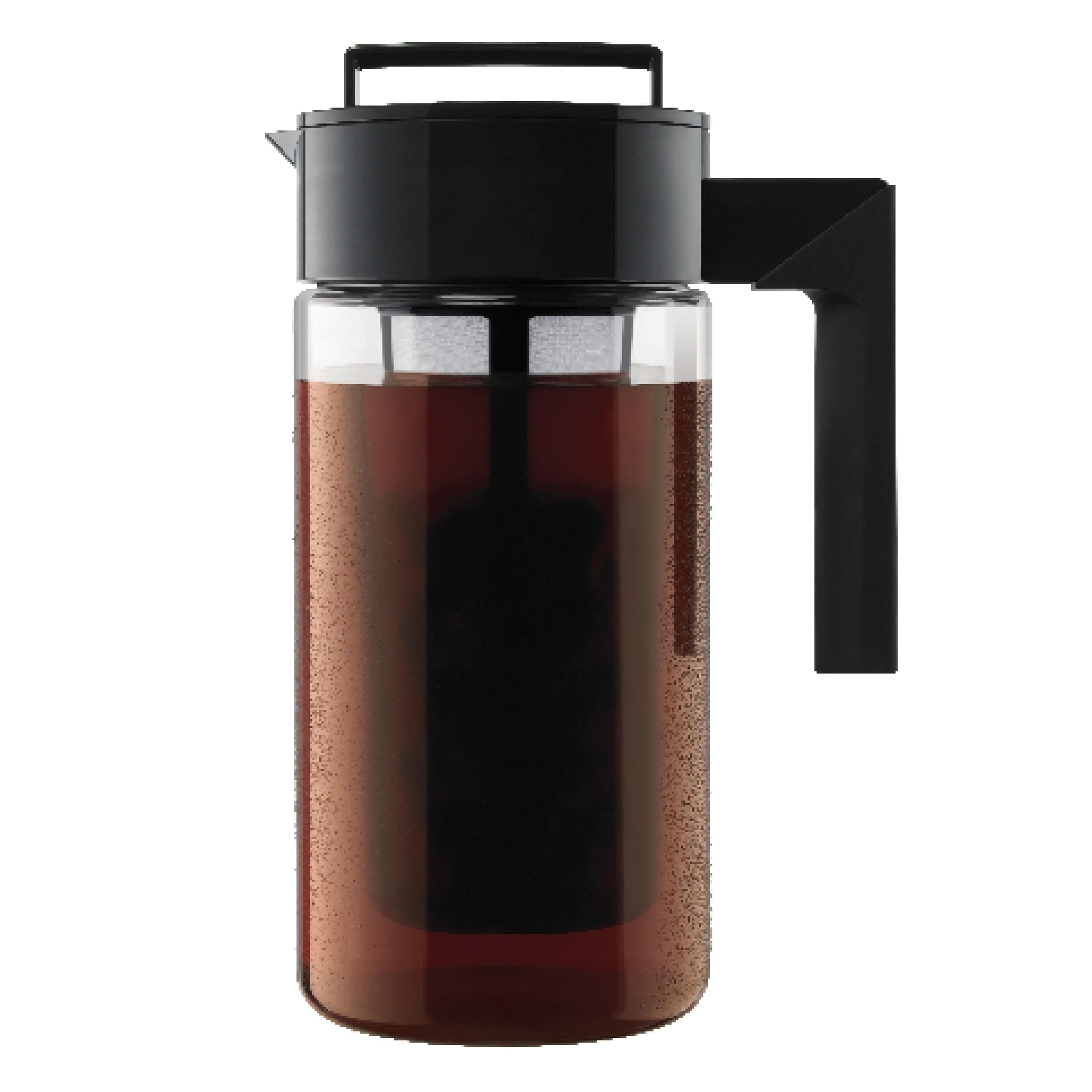
Takeya Tritan Cold Brew Coffee Maker - Airtight Pitcher with Leak-Free Lid - BPA-Free Cold Brew Maker with Silicone Handle - Dishwasher-Safe Pitcher for Homemade Cold Brew - 1 Quart, Black Black 1 qt
- The Deluxe Cold Brew Coffee Maker is a durable BPA Free Tritan pitcher with an airtight lid and non-slip silicone handle. It produces 4 servings of smooth cold brew with any type of coffee grounds and is less acidic than traditional coffee brewing.
- The Fine-Mesh Coffee Filter in this cold brew coffee maker keeps grounds out of your freshly brewed pot - differing from other coffee machines. Tritan plastic withstands hot temperatures if you want a hot cup of coffee. Fits in most refrigerator doors
- Premium Bottles and Lids: Our innovative line of insulated hydration solutions come in a range of sizes. We offer water bottles in 18, 24, 32, 40, and 64 oz sizes, beverage makers and pitchers in 1 Qt and 2 Qt sizes
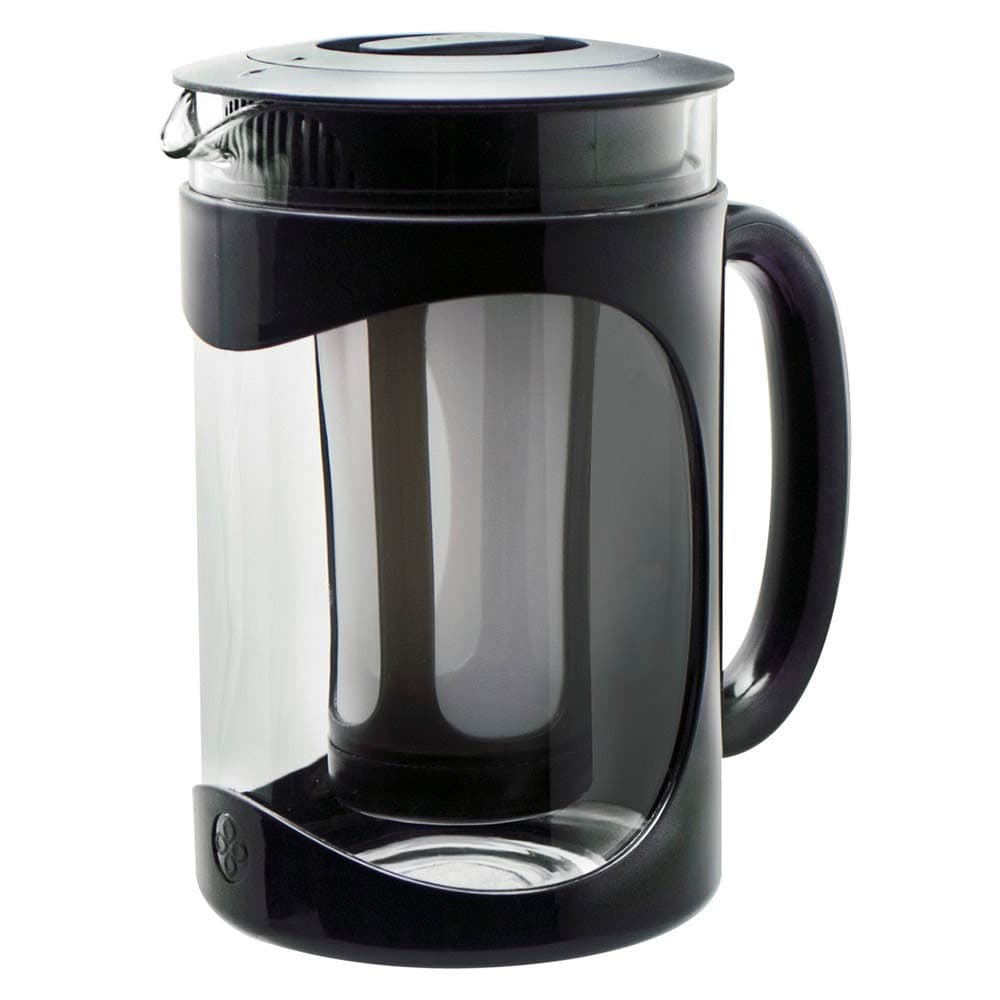
Primula Burke Deluxe Cold Brew Iced Coffee Maker, Comfort Grip Handle, Durable Glass Carafe, Removable Mesh Filter, Perfect 6 Cup Size, Dishwasher Safe, 1.6 qt, Black 1.6 Quart Black Coffee Maker
- Note: 1)Too coarse a grind, too little coffee, or insufficiently tamping the grounds before brewing can all lead to inadequate pressure for a proper brew. 2)It is important to note that the amount of espresso extracted will vary depending on the grind size and amount and reprogramming may be needed when the size and amount are adjusted
- COLD BREW COFFEE AT HOME – Save money and time by making incredibly rich and smooth cold brew coffee at home. It has never been easier and more affordable-- all you need is a Primula cold brew coffee maker for incredible results.
- DO IT YOURSELF CRAFT COLD BREW - Our unique cold brew extraction process produces flavorful, full bodied cold brew coffee and tea. The perfect gift for any novice or coffee enthusiast. Something to enjoy and use for many years.
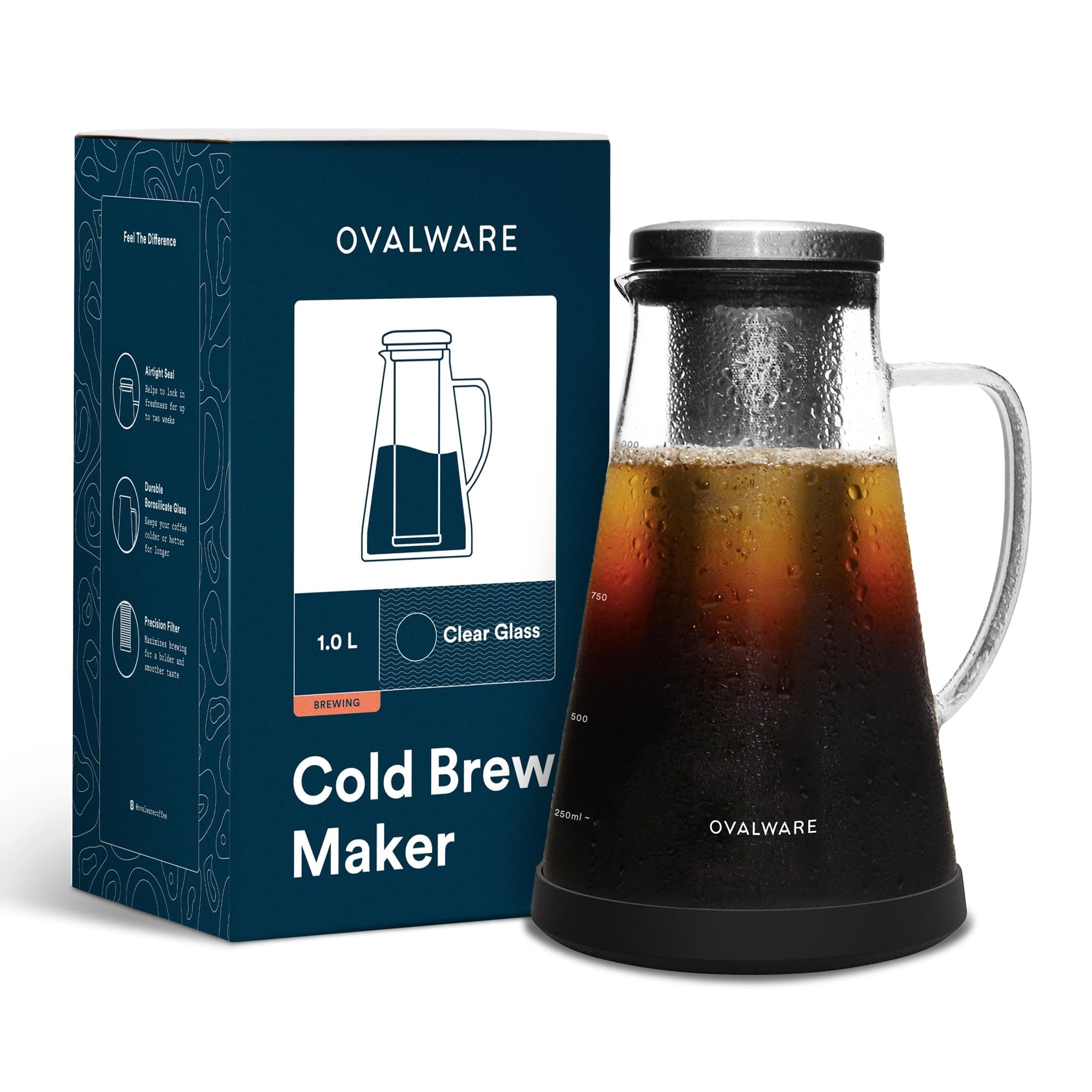
OVALWARE Airtight Cold Brew Iced Coffee Maker Pitcher and Tea Infuser with Spout - 1.0L / 34oz Ovalware RJ3 Brewing Glass Carafe with Removable Stainless Steel Filter 34 Ounces
- SMOOTHER COFFEE, EVERY TIME – Cold brewing is 70% less acidic than hot brewing. And richer in taste. Our cold brew maker pitcher extracts coffee concentrate which can be stored and mixed with an endless variety of beverages to create your own perfect, personal cup of joy. Recommended grind size: Coarse
- LOCKS IN FRESHNESS AND FLAVOR FOR UP TO 2 WEEKS – Airtight seal. Easy-access handle. Engineered to perfectly fit within your fridge shelf. Experience refined craftsmanship you can always count on
- QUALITY YOU WON’T REGRET – 18/8 rust-free superfine laser cut filter, medical-grade stainless steel filter & lid cap. Extra-thick, lab-tested borosilicate glass. BPA-Free silicon airtight seal. Dishwasher safe. New upgrade: Non-slip rubber cushion base for extra protection. Professional home brewing has never been this easy: just mix and pour
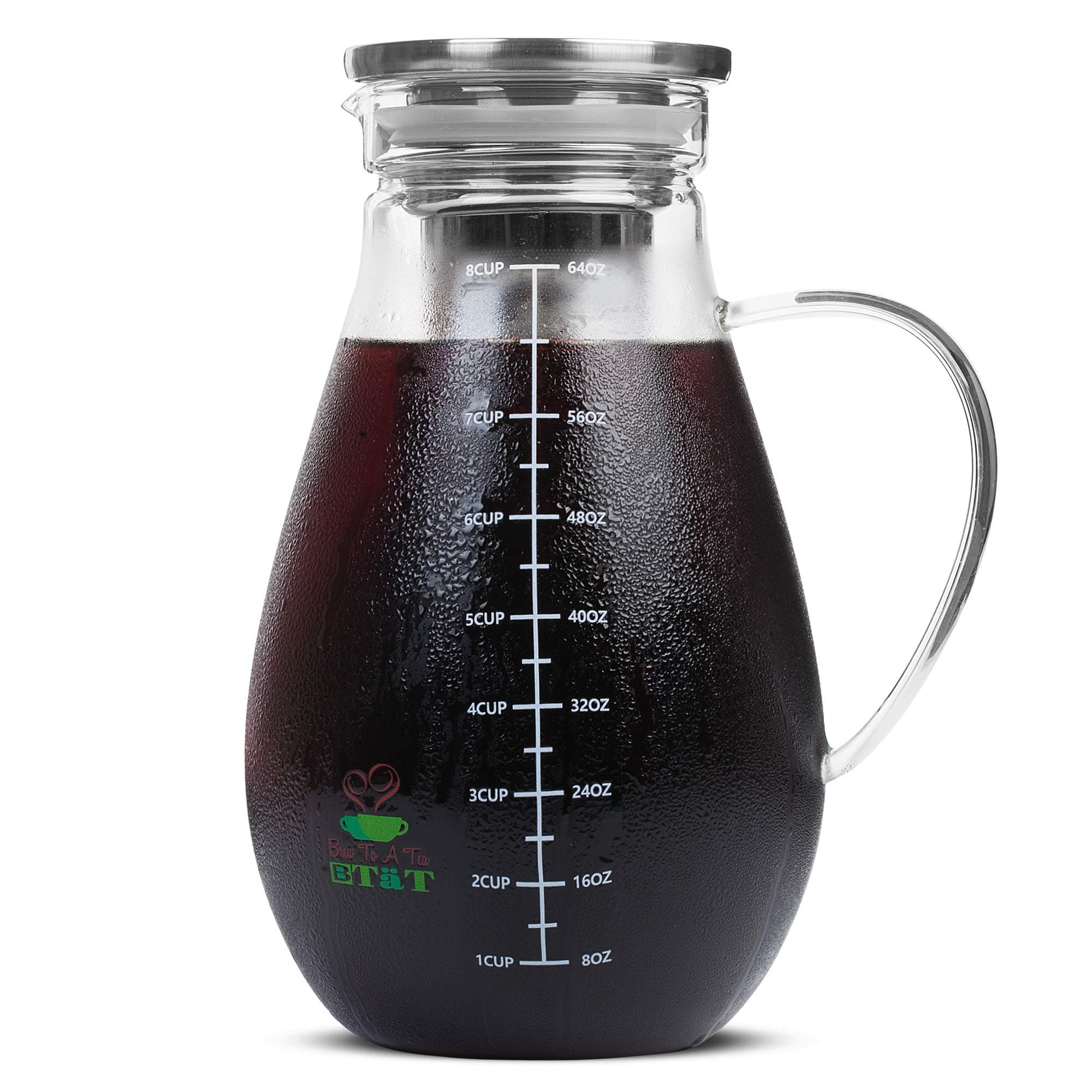
BTaT- Cold Brew Coffee Maker, Iced Coffee Maker, 2 Liter (2 Quart, 64 oz), Iced Tea Maker, Cold Brew Maker, Tea Pitcher, Coffee Accessories, Iced Tea Pitcher, Cold Brew System, Cold Brew Pitcher
- WONDERFUL TASTE – Smooth, Delicious Cold Brew Coffee And Tea At Home With Our Cold Brew Coffee Maker. Easily Make 2.0 Quart Of Perfect Cold Brew Coffee Or Ice Tea.
- 100% AIR TIGHT SEALING LID – The Impermeable Lid Saves The Flavor And Keeps Your Cold Brew Fresh For Weeks. Lasting, BPA-Free Silicone Sealing Design, Our Cold Brew Maker Is Airtight, It Slows Down Oxidation. Your Coffee Will Taste As Awesome As The Day You Made It.
- REMOVABLE STAINLESS STEEL FILTER: Removable, Easy To Clean, Rust-Free, 18/8 Superfine Dual-Mesh, Stainless Steel Filter Keeps Coffee Grinds Get Into Your Cold Brew.

VINCI Express Cold Brew, Electric Cold Brew Coffee Maker in 10 minutes, Glass Carafe, 3 Brew Strength Settings & Cleaning Cycle, Easy to Use & Clean, Cold Brewer for Iced Coffee, 1.4 L Dial Control 1.4 Liters
- Cold Brew Coffee Just Got Faster! The Vinci Express Cold Brew Coffee Maker allows you to make homemade cold brew coffee in just minutes instead of waiting the traditional 12-24 hours.
- 3 Coffee Brew Strengths to Choose From - Select from Light (10 Minutes), Medium (15 Minutes), or Bold (20 Minutes)
- New Technology - Vinci's patented Circle Flow brewing technology ensures a Fast, Bold, Delicious Cold Brew with a Smooth, Clean, and Virtually Sediment-Free finish.

Cuisinart Automatic Grind & Brew 12-Cup Coffee Maker with Blade Grinder, Programmable Coffee Machine Glass Carafe with 1-4 Cup Setting, Brew Pause, Grind-Off Option, DGB-400NAS, Black/Stainless Steel 12-Cup Glass Automatic Grind & Brew Black/Stainless
- GRIND & BREW COFFEE MAKER: The Cuisinart Automatic Grind & Brew 12-Cup* Coffee Maker with blade grinder offers 24-hour programmability with 1–4 cup settings and Brew Pause.
- EASY TO USE: This Cuisinart coffee machine offers simple controls for effortless operation and maximum convenience.
- BUILT-IN GRINDER: The drip coffee maker features a blade grinder that automatically grinds whole beans before brewing for fresh ground flavor. A grind-off feature lets you brew pre-ground coffee.