
The 5-Minute Manual Brew Cheat Sheet
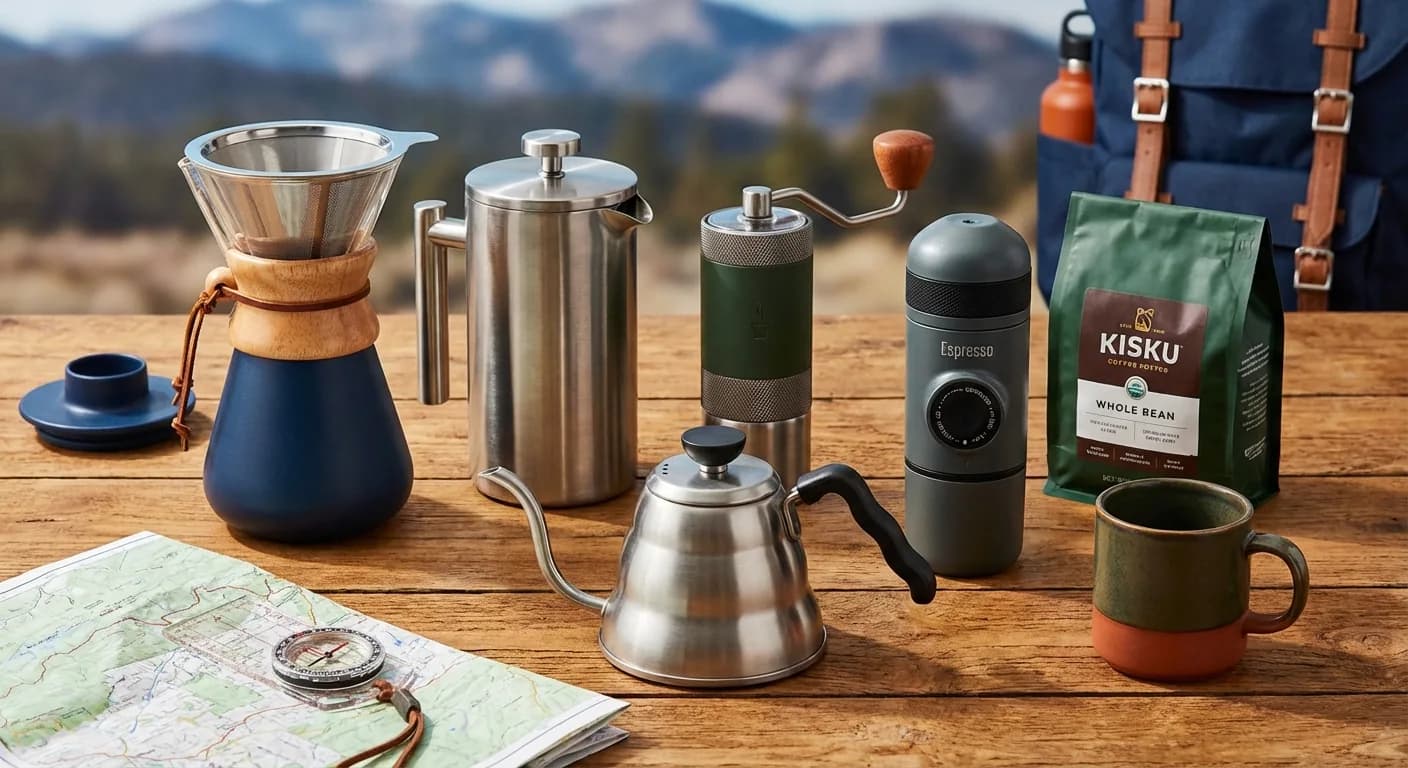
Table of Contents
- The Struggle of the Off-Grid Barista
- The High Cost of Guesswork Brewing
- What’s Inside the 5-Minute Manual Brew Cheat Sheet
- The NomadBrew Mission: Why We Created This
- Download the Cheat Sheet Now
- Essential Gear for Your Mobile Coffee Kit
- Frequently Asked Questions
The Struggle of the Off-Grid Barista
Imagine waking up in your van, the sun just beginning to peak over a jagged mountain range, or perhaps you’re huddled in a tent as the morning mist rolls off a quiet lake. You have the view, the solitude, and the perfect atmosphere, but there is one thing standing between you and total bliss: a mediocre cup of coffee. For many travelers and off-grid enthusiasts, the dream of the "perfect brew" often falls flat because manual brewing is an art form that demands precision, even when you're miles away from a digital scale or a temperature-controlled kettle.
The reality of brewing coffee in the wild is often messy. You’re dealing with fluctuating stove temperatures, inconsistent grind sizes from a portable mill, and the lack of a stable surface. It’s easy to end up with a cup that is either unpleasantly sour or punishingly bitter. We believe that being "off-grid" shouldn't mean settling for "off-flavor." You deserve a ritual that enhances your environment, not one that leaves you frustrated before the day has even truly begun.
The High Cost of Guesswork Brewing
The biggest challenge facing the manual brewer is the sheer number of variables involved. When you’re in a kitchen, you have the luxury of repeatable conditions. When you’re on the road, every morning is a new experiment. Are you at a higher altitude where water boils at a lower temperature? Is your hand-grinder slipping because of the humidity? Without a standardized system, you are essentially playing "coffee roulette" with your limited supply of expensive, specialty beans.
Wasting coffee isn't just a matter of taste; it’s a matter of resources. When you’re traveling light, every gram of coffee and every drop of filtered water is precious. Tossing out a ruined liter of coffee because you lost track of the brew time or used the wrong ratio isn't just disappointing—it’s inefficient. This guesswork creates a barrier to entry that leads many nomads to revert to "instant" coffee, sacrificing the soul of their morning ritual for the sake of convenience.
Furthermore, the frustration of a bad brew can tarnish the peace of your outdoor experience. Instead of sitting quietly and soaking in the nature around you, you’re left scrubbing a French press or wondering why your pour-over stalled. We’ve seen countless travelers give up on manual brewing altogether because they couldn't find a way to make it consistent without bringing an entire chemistry lab into their vehicle or backpack.
What’s Inside the 5-Minute Manual Brew Cheat Sheet
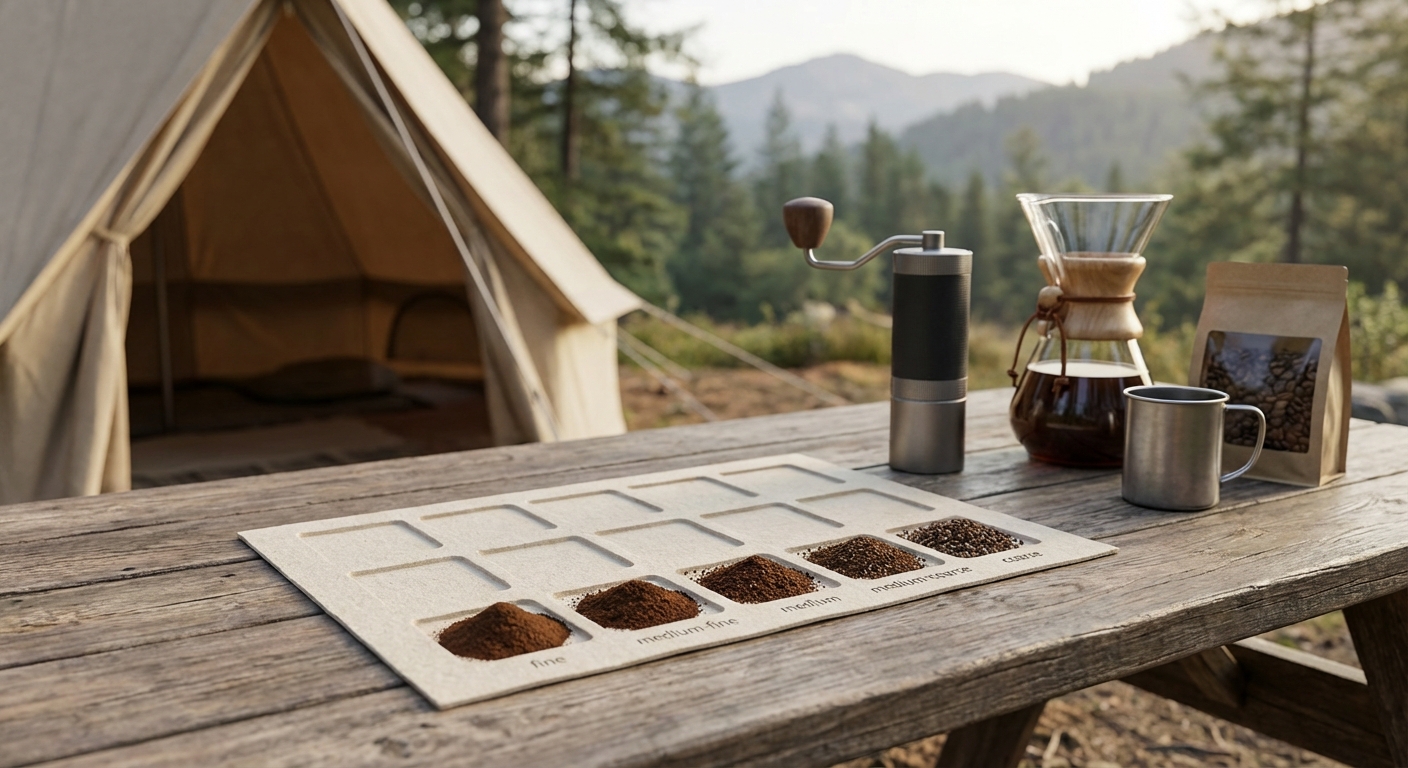
Our 5-Minute Manual Brew Cheat Sheet was designed to bridge the gap between "technical barista" and "rugged explorer." We have distilled years of trial and error into a single-page PDF that acts as your tactical guide to the perfect cup. It starts with the "Nomad Ratios," a simplified breakdown of coffee-to-water measurements that work even if you’re using a standard camping mug or a measuring cup instead of a gram scale. We provide the "visual grind guide," showing you exactly what your grounds should look like—from coarse sea salt for the French press to fine table salt for the Aeropress.
Beyond just measurements, the cheat sheet includes a "Temperature Hack" section. Since most nomads don't carry a thermometer, we’ve calculated exactly how long you need to let your water sit after a rolling boil to reach the ideal brewing range of 195°F to 205°F, depending on your altitude. This ensures you never scorch your beans again, regardless of whether you're using a jet-boil or a campfire grate. It’s about taking the complex science of extraction and making it accessible in a high-pressure, low-resource environment.
Finally, the sheet features a "Troubleshooting Matrix." If your coffee tastes too sharp, the guide tells you exactly which variable to change for your next cup. If it feels thin and watery, you’ll know if you need to grind finer or extend your brew time. This isn't just a recipe; it’s a diagnostic tool that empowers you to master your specific gear and your specific environment. It’s the ultimate companion for anyone who wants to stop guessing and start enjoying.
The NomadBrew Mission: Why We Created This
At NomadBrew, we’ve spent the last decade brewing coffee in some of the most remote locations on the planet. From the back of a 4x4 in the Australian Outback to rainy mornings in the Scottish Highlands, we’ve faced every brewing disaster imaginable. We created this cheat sheet because we were tired of seeing fellow travelers struggle with complicated instructions that weren't designed for the reality of life on the move. We believe that manual brewing is the best way to connect with your coffee, and we want to make that connection as seamless as possible.
Our community is built on the idea that quality should be portable. We’ve tested every hand grinder, every non-electric dripper, and every collapsible kettle on the market. This cheat sheet is the result of that extensive field testing. It’s been vetted by professional baristas who live in vans and by weekend warriors who just want a better cup of coffee at the trailhead. When you use this guide, you’re not just getting a set of instructions; you’re getting the collective wisdom of a global community of nomadic coffee lovers.
Grab Your Copy and Master the Off-Grid Pour
The difference between a "good enough" cup and a "life-changing" cup is often just a few small adjustments. By downloading this cheat sheet, you are taking the first step toward reclaiming your morning ritual. No more watery pour-overs, no more bitter sludge, and no more wasting your precious beans. This is the shortcut to becoming the barista of your own adventure, providing you with the confidence to brew anywhere, anytime, under any conditions.
Join thousands of other off-grid enthusiasts who have already simplified their coffee routine. Once you sign up, you’ll receive the PDF directly in your inbox, formatted perfectly for your smartphone so you can access it even when you’re out of cell range. It’s time to elevate your coffee game to match the epic scenery of your travels.
{{LEAD_MAGNET:pdf:The 5-Minute Manual Brew Cheat Sheet}}
We respect your privacy and will never spam you. You’ll only receive the cheat sheet and occasional tips on the best manual brewing gear and off-grid techniques to keep your adventures caffeinated and delicious.
Essential Gear for Your Mobile Coffee Kit
To get the most out of your new cheat sheet, you need gear that is as rugged as your lifestyle. While the guide works with any equipment, there are a few "NomadBrew Approved" items that consistently perform better in off-grid scenarios.
{{PRODUCT_CARD:B0047W70ZO}}
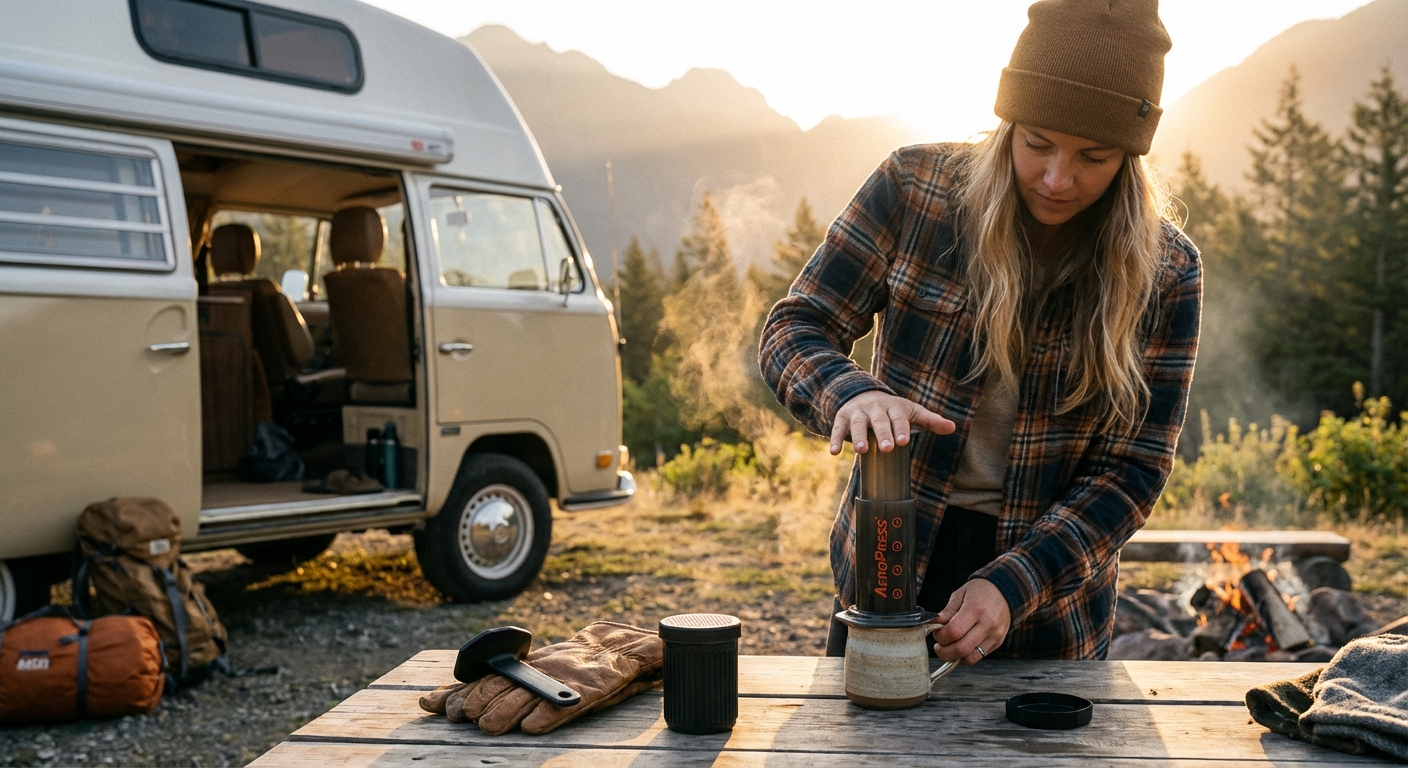
The AeroPress Original is the gold standard for travel coffee, and for good reason. I recommend this to almost every nomad because it is virtually indestructible and incredibly forgiving. Unlike a glass French press or a delicate ceramic pour-over, the AeroPress is made of high-quality, BPA-free plastic that can survive being tossed into a backpack or a storage bin. It’s best for solo travelers or couples who want a quick, clean cup of coffee with minimal cleanup.
The standout feature is its versatility; you can make everything from a concentrated espresso-style shot to a standard Americano. The pressure-based brewing method also extracts more flavor in less time, which is perfect when you're trying to conserve fuel. The only real drawback is its limited capacity, as it only makes about 10oz of coffee at a time. Compared to a French press, it produces a much cleaner cup without the "silt" at the bottom, making it the superior choice for those who prefer a crisp, bright flavor profile.
{{/PRODUCT_CARD}}
{{PRODUCT_CARD:B013R3Q7B2}}
A quality hand grinder is the single most important investment for an off-grid coffee kit, and the Porlex Tall II is a fantastic mid-range option. I recommend it because of its slim, stainless steel profile that fits perfectly inside the plunger of an AeroPress, saving precious space in your kit. It’s best for the weight-conscious hiker or the van-dweller who wants a durable tool that won't rust or break under pressure.
The standout feature is the ceramic conical burrs, which stay sharp longer than steel and don't produce the heat that can dull your coffee's flavor during the grinding process. It offers a wide range of grind settings, from fine to coarse, though it can be a bit slow if you're grinding for a large group. While it’s not as fast as a high-end Comandante, it is significantly more affordable and much more durable than the cheap plastic grinders found in big-box stores.
{{/PRODUCT_CARD}}
Frequently Asked Questions
What is the "Golden Ratio" for manual brewing when I don't have a scale?
The "Golden Ratio" is typically 1:15 or 1:17 (coffee to water). In a wilderness setting without a scale, this translates to roughly two level tablespoons of ground coffee for every 8 ounces (one standard cup) of water. If you prefer a bolder, stronger cup that can stand up to a splash of milk, go with a 1:12 ratio, which is about two and a half tablespoons per cup. Our cheat sheet provides a visual guide to help you estimate these volumes using common camping items like Nalgene bottles or enamel mugs.
Using a consistent ratio is the most important factor in preventing "weak" coffee. Many people simply eyeball the amount of coffee they put into their brewer, which leads to massive inconsistency. By using a simple scoop or even a marked lines on your mug, you can ensure that your extraction remains balanced every single morning, regardless of where you are parked or camped.
How do I manage water temperature without a thermometer?
Water temperature is a critical variable that many off-grid brewers overlook. If your water is boiling (212°F), it will likely over-extract and "burn" the coffee, leading to a bitter taste. If it's too cool, the coffee will taste sour and thin. The general rule of thumb for sea level is to bring your water to a rolling boil and then remove it from the heat for about 30 to 60 seconds before pouring. This usually drops the temperature into the "sweet spot" of 195°F to 205°F.
However, if you are at high altitudes, such as in the mountains, water boils at a lower temperature. At 5,000 feet, water boils at approximately 202°F. In this case, you should use the water immediately after it hits a boil, as it is already in the ideal temperature range. Our cheat sheet includes an altitude adjustment chart to help you time your pour perfectly based on your current elevation.
Which manual brewing method is easiest to clean up in a van or campsite?
When water is a limited resource, cleanup is a major consideration. This is why the AeroPress is often cited as the favorite among nomads. After brewing, you simply "pop" the compressed puck of grounds directly into your trash or compost bin and give the rubber seal a quick rinse. There are no messy filters to scrape out or glass carafes to scrub.
In contrast, methods like the French press can be a nightmare off-grid because they require a significant amount of water to rinse out the "sludge" from the mesh filter and the bottom of the beaker. If you prefer a pour-over, using compostable paper filters is a great way to keep things clean—you simply fold up the filter with the grounds inside and dispose of it. Always remember to follow "Leave No Trace" principles and never dump your coffee grounds directly into alpine lakes or sensitive ecosystems.