
Pre-Ground vs Whole Bean for Travel
Table of Contents
- The Great Debate: Freshness vs. Convenience
- The Science of Oxidation: Why Whole Beans Win on Flavor
- The Weight and Space Dilemma: When Pre-Ground Makes Sense
- Brew Methods and Grind Consistency on the Road
- The Hybrid Approach: Pre-Grinding for Short Trips
- Essential Gear for the Traveling Barista
- Tips for Keeping Pre-Ground Coffee Fresh
- Frequently Asked Questions
The Great Debate: Freshness vs. Convenience
For the off-grid traveler, every cubic inch of pack space and every ounce of weight is a calculated decision. When it comes to coffee, the debate between bringing whole beans and a manual grinder versus pre-ground coffee for travel is one of the most contentious topics in the nomad community. On one hand, you have the purists who insist that a cup of coffee is only as good as its last-minute grind. On the other, you have the ultralight hikers and minimalist van-lifers who argue that the simplicity of a pre-measured bag of grounds outweighs the marginal gains in flavor.
The decision isn't just about taste; it’s about your specific travel style. Are you waking up in a tent at 12,000 feet, where every second of boiling water efficiency matters? Or are you spending a slow morning in a converted sprinter van, watching the sunrise over a canyon? The environment dictates the equipment. Understanding the trade-offs between these two methods will not only save you space in your rucksack but will also ensure that your morning ritual remains a highlight of your journey rather than a logistical chore.
In this guide, we will dive deep into the pros and cons of both approaches. We’ll look at the science of coffee degradation, the physical burden of carrying extra gear, and the specific scenarios where one clearly outshines the other. Whether you are a "gram-counter" looking to shed weight or a flavor-chaser who refuses to compromise, there is a middle ground that fits your nomadic lifestyle. By the end of this article, you’ll know exactly which path to take for your next adventure.
The Science of Oxidation: Why Whole Beans Win on Flavor
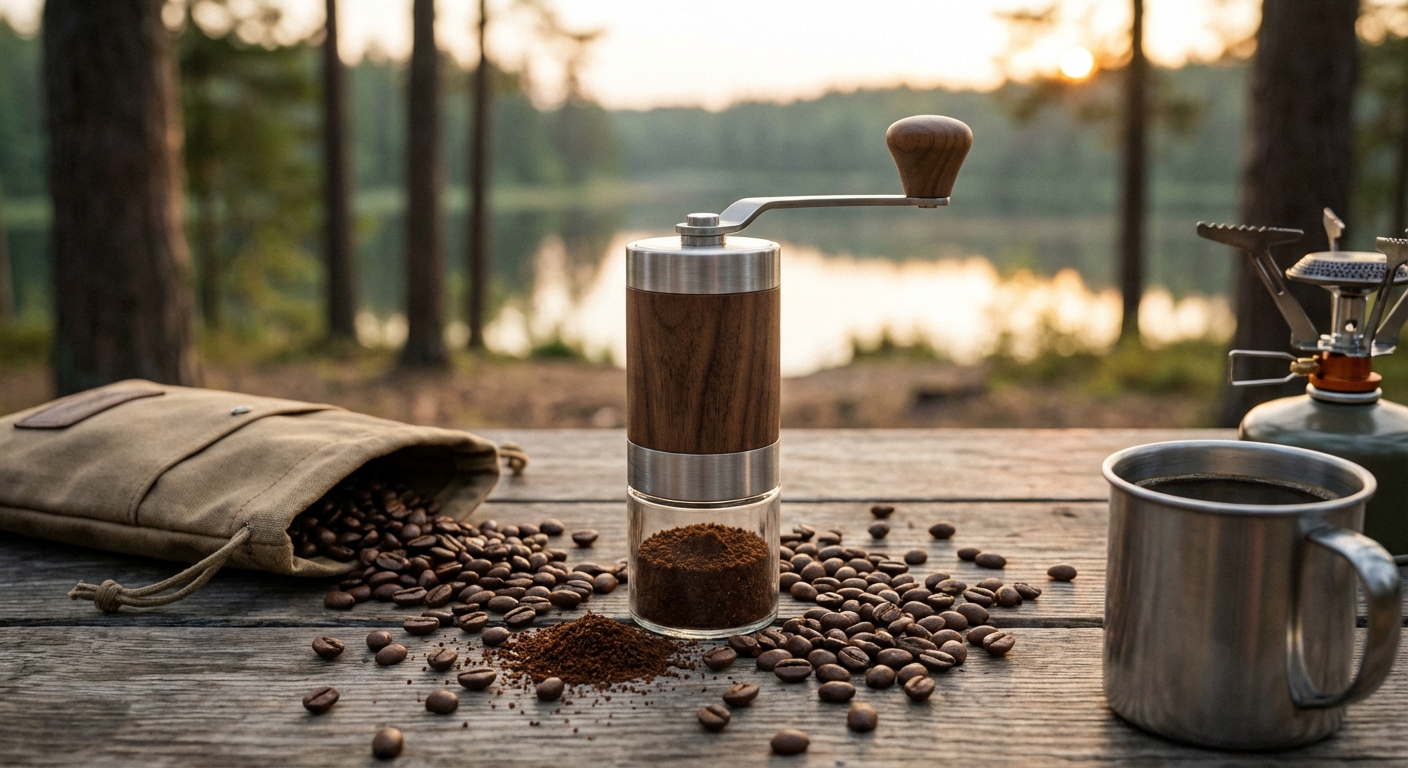
The primary argument for carrying whole beans is the preservation of volatile aromatics. Coffee beans are essentially little protective vaults for oils and CO2. The moment a bean is cracked open, the surface area exposed to oxygen increases by thousands of times. This process, known as oxidation, begins to strip the coffee of its complex flavor profiles—those notes of blueberry, chocolate, or jasmine—leaving behind a flat, bitter, or even "stale" taste. For the traveling coffee enthusiast, whole beans represent a "freshness insurance policy" that lasts for weeks rather than hours.
When you grind coffee, you also release carbon dioxide. This gas is crucial because it acts as a barrier during the brewing process, helping to regulate the extraction of flavors. Pre-ground coffee for travel has often lost most of its CO2 by the time it reaches your camp stove. This results in a "dead" bloom; when you pour water over the grounds, they don't bubble or expand. Without that bloom, the water passes through the grounds differently, often leading to over-extraction and a muddy cup. For those who value the nuances of a single-origin roast, whole beans are the only way to ensure those flavors survive the trip.
Furthermore, the moisture in the air—especially in humid or coastal camping environments—can wreak havoc on pre-ground coffee. Because the surface area is so high, grounds act like a sponge for ambient smells and moisture. If you are storing your coffee in a non-airtight bag in a damp van, your morning brew might start tasting like the interior of your vehicle. Whole beans, with their outer structure intact, are far more resilient to these environmental factors, making them the superior choice for long-term travel or unpredictable climates.
The Weight and Space Dilemma: When Pre-Ground Makes Sense
While flavor is paramount, the reality of travel often involves a "weight tax." A quality manual coffee grinder typically weighs between 250 and 600 grams. For a backpacker on a multi-day trek, that is the equivalent of an extra half-liter of water or a day's worth of food. When you choose pre-ground coffee for travel, you eliminate the need for the grinder entirely, allowing you to carry only the coffee you need in a lightweight, collapsible pouch. This minimalist approach is often the deciding factor for those who are moving fast and light through the backcountry.
Space is the secondary consideration. A grinder, even a compact one, takes up valuable volume in a pannier or a carry-on bag. In contrast, pre-ground coffee can be vacuum-sealed into flat "bricks" or divided into single-serve portions. These flat packs can be tucked into the small gaps of a backpack, such as the space between your sleeping pad and the pack frame. For travelers who are strictly "one-bagging" it through airports and bus stations, the physical footprint of a coffee ritual must be justified. If the goal is to reduce friction and move quickly, pre-ground is the undisputed king of convenience.
There is also the "stealth" factor to consider. Manual grinding isn't exactly silent. If you are "stealth camping" in a vehicle or staying in a quiet hostel dorm, the crunching sound of a ceramic burr grinder at 6:00 AM might not make you many friends. Pre-ground coffee allows for a silent, streamlined morning routine. You simply boil water, pour, and enjoy. For many nomads, the peace and quiet of a morning in nature are more important than the marginal increase in acidity or body found in freshly ground beans.
Brew Methods and Grind Consistency on the Road
One of the biggest challenges with pre-ground coffee for travel is the lack of versatility. When you buy pre-ground, you are committed to a specific grind size—usually a medium-fine setting designed for auto-drip machines. This can be problematic if your preferred travel brewer is a French Press (which requires a coarse grind) or an AeroPress (which can vary from fine to medium). If your grind doesn't match your equipment, you’ll end up with a cup that is either unpleasantly sour or intensely bitter, regardless of how "premium" the beans were.
The AeroPress Advantage
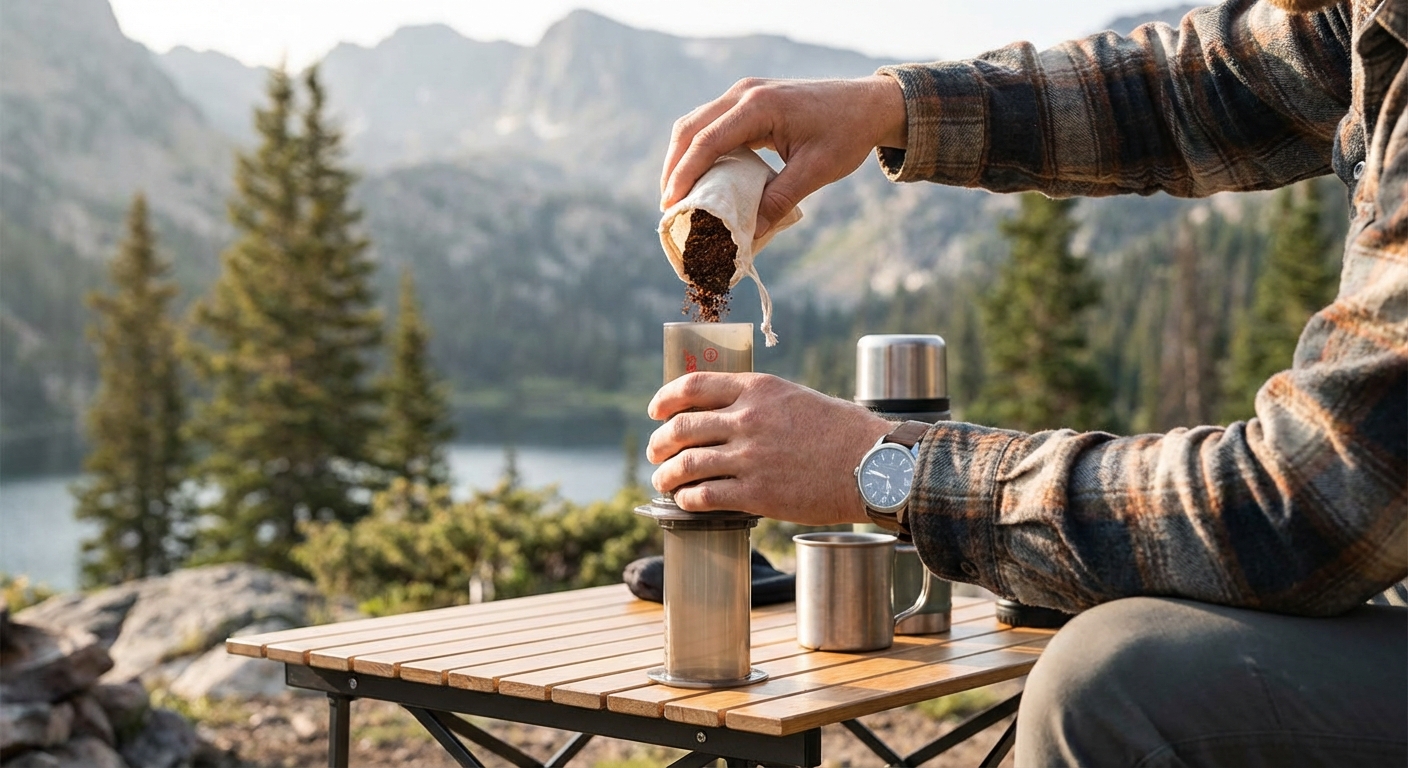
The AeroPress is perhaps the most forgiving tool for the traveling coffee lover, especially when using pre-ground coffee. Because it uses pressure and a paper filter, it can accommodate a wider range of grind sizes than a traditional pour-over. If your pre-ground coffee is a bit too fine, you can simply reduce your steep time or use a slightly lower water temperature to compensate. This flexibility makes the AeroPress the gold standard for nomads who don't want to carry a grinder but still want a high-quality cup.
{{PRODUCT_CARD:B0018RY8H2}}
The AeroPress Go is the ultimate travel companion for those who prioritize both space and quality. I recommend this specifically for nomads because it collapses into its own drinking mug, keeping all components—including filters and a scoop—in one tidy package. It’s best for solo travelers, hikers, and van-lifers who need a durable, lightweight brewing solution that can handle anything from espresso-style concentrates to a standard Americano.
The standout feature is the integrated mug and lid, which protects the plunger during transit. Unlike the original AeroPress, the "Go" version is optimized for the dimensions of a pack side pocket. One drawback is the smaller capacity; it only brews about 8oz at a time, which might be frustrating if you're brewing for two. However, compared to a bulky French Press, the AeroPress Go is far more resilient to the bumps and drops of off-grid life.
{{/PRODUCT_CARD}}
The Manual Grinder for the Perfectionist
For those who cannot abide the thought of pre-ground coffee, a high-quality manual grinder is a non-negotiable piece of kit. A good travel grinder should feature stainless steel or ceramic burrs rather than blades, as consistency is what determines the clarity of the cup. When you have a grinder, you gain the ability to "dial in" your coffee based on the altitude and the age of the beans, which can change significantly as you travel across different regions.
{{PRODUCT_CARD:B004G2S0P6}}
The Hario Mini-Slim Pro is a staple in the travel coffee community for a reason. I recommend it for the budget-conscious traveler who wants a significant upgrade from pre-ground coffee without spending hundreds of dollars. It’s best for those who enjoy the ritual of hand-grinding and want a tool that fits easily into a backpack. The ceramic burrs provide a consistent grind for pour-over and AeroPress, which are the most common travel brewing methods.
The standout feature here is the reinforced hexagonal adapter for the handle, which prevents the stripping issues found in cheaper plastic models. It’s also incredibly lightweight, weighing in at just under 300g. The main drawback is the grind speed; because it uses ceramic burrs, it takes about a minute of vigorous cranking to grind enough for a single cup. Compared to high-end steel burr grinders, it’s slower but significantly more affordable and lighter, making it a fair trade-off for the casual nomad.
{{/PRODUCT_CARD}}
The Hybrid Approach: Pre-Grinding for Short Trips
If you are heading out for a 3-day weekend or a short hiking trip, the "Hybrid Approach" offers the best of both worlds. Instead of buying a mass-market bag of pre-ground coffee for travel, you can grind your high-quality whole beans at home immediately before you depart. By doing this, you control the grind size to perfectly match your travel brewer, and you ensure the coffee is as fresh as possible without the need to carry a grinder into the field.
The key to success with the hybrid approach is storage. Oxygen is the enemy, so you must use airtight containers. Small, reusable silicone bags or vacuum-sealed canisters are excellent for this. Some nomads even use small "centrifuge tubes" or individual sample tins to pre-dose their coffee. This not only keeps the coffee fresher by reducing the amount of air it's exposed to each time you brew, but it also speeds up your morning workflow—no measuring required when you're bleary-eyed in the morning.
For trips longer than four or five days, the quality of pre-ground coffee will begin to noticeably dip. However, for a quick overnighter, the difference between coffee ground 24 hours ago and coffee ground 30 seconds ago is negligible for most people. This strategy allows you to enjoy a "barista-level" cup while maintaining a pack weight that would make an ultralight hiker proud. It is the ultimate "hack" for the weekend warrior.
Essential Gear for the Traveling Barista
Building a travel coffee kit requires a balance of durability and functionality. Beyond the choice of beans, you need a heat source and a vessel. For off-grid use, a small canister stove like a Jetboil or a MSR PocketRocket is the standard. These are incredibly efficient at boiling water, which is all you need for most manual brewing methods. If you are in a van, a simple stainless steel kettle on a propane hob works perfectly and adds a touch of "home" to your mobile kitchen.
When it comes to the comparison of gear, consider the following table for a quick breakdown of the weight and flavor trade-offs:
| Equipment | Portability | Flavor Quality | Affiliate Link Name |
|---|---|---|---|
| AeroPress Go | High | Excellent | AeroPress Go Travel |
| Manual Grinder | Low | Superior | Hario Mini-Slim |
| Pre-Ground Coffee | Maximum | Average | Specialty Pre-Ground |
| Collapsible Dripper | High | Good | Hario V60 Plastic |
The final piece of the puzzle is the mug. A double-walled titanium or stainless steel mug is essential for travel. It keeps your coffee hot while you're outside in the elements, and it's durable enough to be clipped to the outside of a pack with a carabiner. Avoid glass or thin ceramic; they won't survive the first bumpy dirt road or a drop onto a granite rock. Stick to materials that can handle the rigors of the road.
Tips for Keeping Pre-Ground Coffee Fresh
If you’ve decided that pre-ground coffee for travel is the right choice for your journey, there are several steps you can take to maximize its lifespan. First, always buy in small quantities. Instead of a large 12oz bag, look for 4oz "taster" sizes. This ensures that you finish the bag before the oxidation becomes overwhelming. Additionally, look for "nitrogen-flushed" packaging, which replaces the oxygen in the bag with inert nitrogen to stall the staling process until the moment you open it.
Second, consider your storage environment. Heat accelerates the chemical reactions that make coffee go stale. Keep your coffee in the coolest part of your pack or van—usually near the floor or away from direct sunlight. If you are traveling in a vehicle, a small insulated lunch bag can act as a "cool cellar" for your coffee grounds. Never store your coffee in a clear container; UV light is just as damaging as oxygen.
Finally, use the "Squeeze and Seal" technique. Every time you take a scoop of coffee out of the bag, squeeze as much air out as possible before resealing it. If you are using a zip-top bag, you can even use a straw to suck out the remaining air, creating a DIY vacuum seal. These small habits might seem obsessive, but they are the difference between a cup of coffee that tastes like a campfire and one that tastes like a professional cafe brew.
Frequently Asked Questions
Is pre-ground coffee really that much worse than whole bean? It depends on your palate and the length of your trip. For the first 24-48 hours after grinding, the difference is subtle. However, after a few days, pre-ground coffee loses the vibrant "top notes" (the fruity and floral aromas) and begins to taste generic and flat. If you add cream and sugar to your coffee, you likely won't notice a massive difference, but if you drink it black, the lack of freshness will be apparent.
The main issue is that most pre-ground coffee for travel is roasted and ground months before it hits the shelf. To get the best results, you should either grind it yourself right before you leave or buy from a local roaster who can grind a fresh bag for you on the day of your departure. This ensures you are starting with the freshest possible base.
What is the best way to store pre-ground coffee in a backpack? The best storage solution is a multi-layered approach. Use a high-quality, BPA-free plastic or silicone bag that has a reliable seal. To protect it from being punctured by other gear, slide that bag into a small, lightweight dry bag or a padded pouch. This provides a secondary barrier against moisture and air.
For those who want to be extremely organized, individual "pre-dosed" packets are the way to go. You can use small, compostable glassine bags or reusable tins. This prevents you from opening your entire coffee supply to the air every single morning, which is the fastest way to make it go stale. It also makes your morning ritual much faster, as you don't have to hunt for a measuring spoon.
Can I use a battery-powered grinder instead of a manual one? While battery-powered grinders exist, they are generally not recommended for true off-grid or nomadic travel. They are often heavy due to the motor and battery, and they introduce a point of failure—if the battery dies and you don't have a way to charge it, you have no coffee. They also tend to be louder than manual grinders, which can be a nuisance in quiet camping areas.
Manual grinders are the preferred choice because they are "fail-proof." They don't require electricity, they are quieter, and they provide a bit of a physical "warm-up" for your arms on a cold morning. If you are in a van with a large power system, an electric grinder might be an option, but for most travelers, the simplicity of a hand-cranked burr grinder is unbeatable.
Does altitude affect the taste of pre-ground coffee? Altitude affects the brewing process more than the coffee itself. At high altitudes, water boils at a lower temperature (for every 1,000 feet of elevation, the boiling point drops by about 2°F). This means that at 10,000 feet, your water might only be 192°F, which can lead to under-extraction. Pre-ground coffee can actually be a benefit here because you can choose a slightly finer grind to help "speed up" the extraction in the cooler water.
Additionally, the lower air pressure at high altitudes can cause sealed bags of coffee to expand and potentially pop. If you are driving or hiking into the mountains, make sure your coffee container has a bit of "give" or is not filled to the absolute brim. This prevents a "coffee explosion" inside your pack when you reach the summit.
What should I look for when buying pre-ground coffee for a trip? Look for a "Roasted On" date rather than a "Best By" date. You want coffee that was roasted as recently as possible. If you are buying pre-ground coffee for travel, try to find a roaster that offers a "Medium" grind, which is the most versatile for travel brewers like the AeroPress or a collapsible pour-over cone.
Avoid the giant canisters found in grocery stores, as these are often made from lower-quality Robusta beans and have been sitting in warehouses for a long time. Instead, look for specialty roasters that sell 8oz or 10oz bags. These are easier to pack and will stay fresh longer since you'll go through the bag faster.
Our Top Picks for 2026
We've spent hours researching and testing to find the absolute best options currently available.
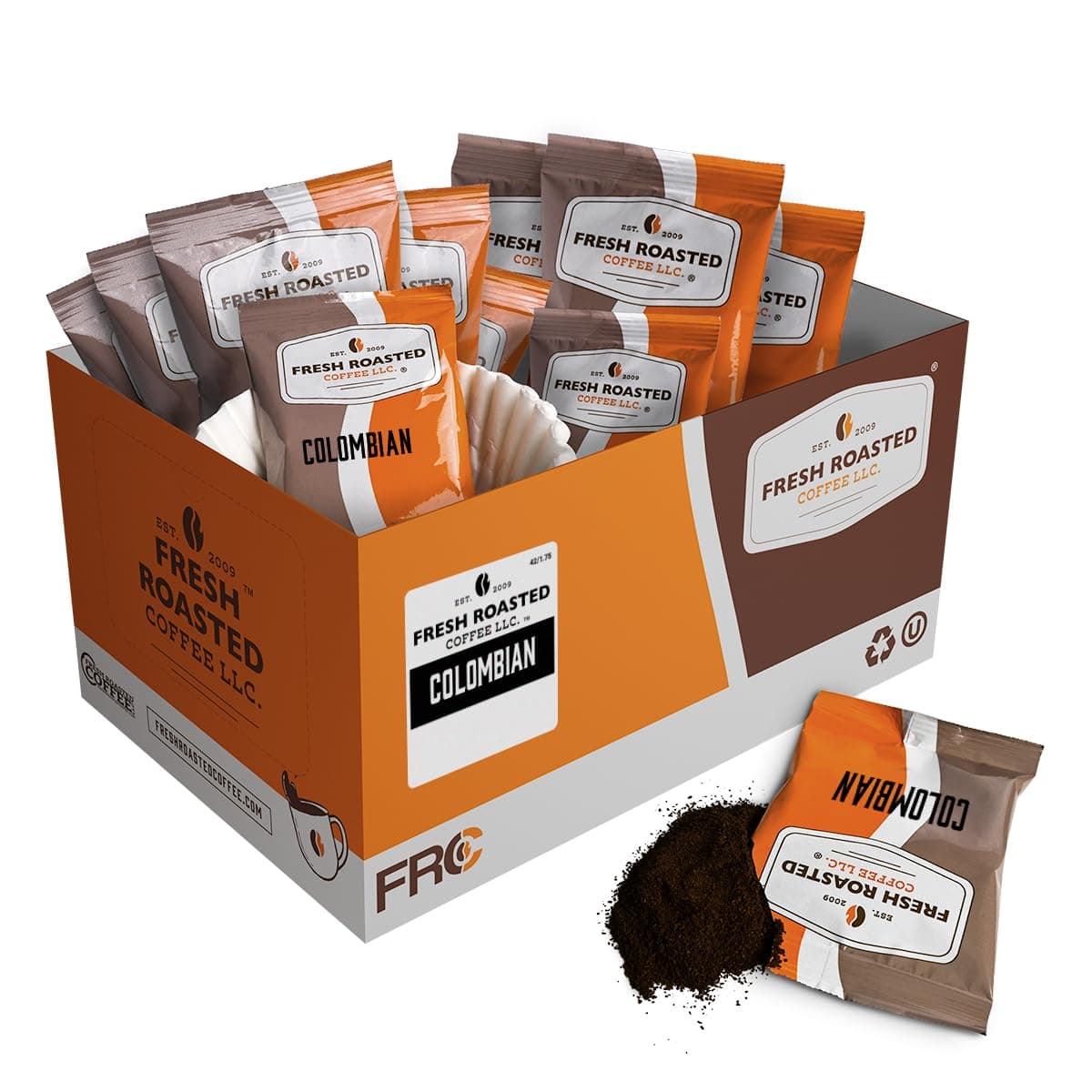
Fresh Roasted Coffee, Colombian, Pre-Ground Fractional Packs, 1.75 Ounce, 42 Count Colombian 1.75 Ounce (Pack of 42)
- Delicious Coffee In Convenient Pre-Measured Pre Ground Packaging. Formulated for Drip Coffee Makers. One Pot Per Package. Filters Included!
- Fresh Roasted Colombian Is Well Balanced with Tasting Notes of Walnut, Lemon, and Chocolate. A Definite Crowd Pleaser.
- Perfect for Offices, Factories, Schools, Churches,or Anyplace Else Where a Quick and Convenient Pot of Delicious Fresh Roasted Coffee is Required.
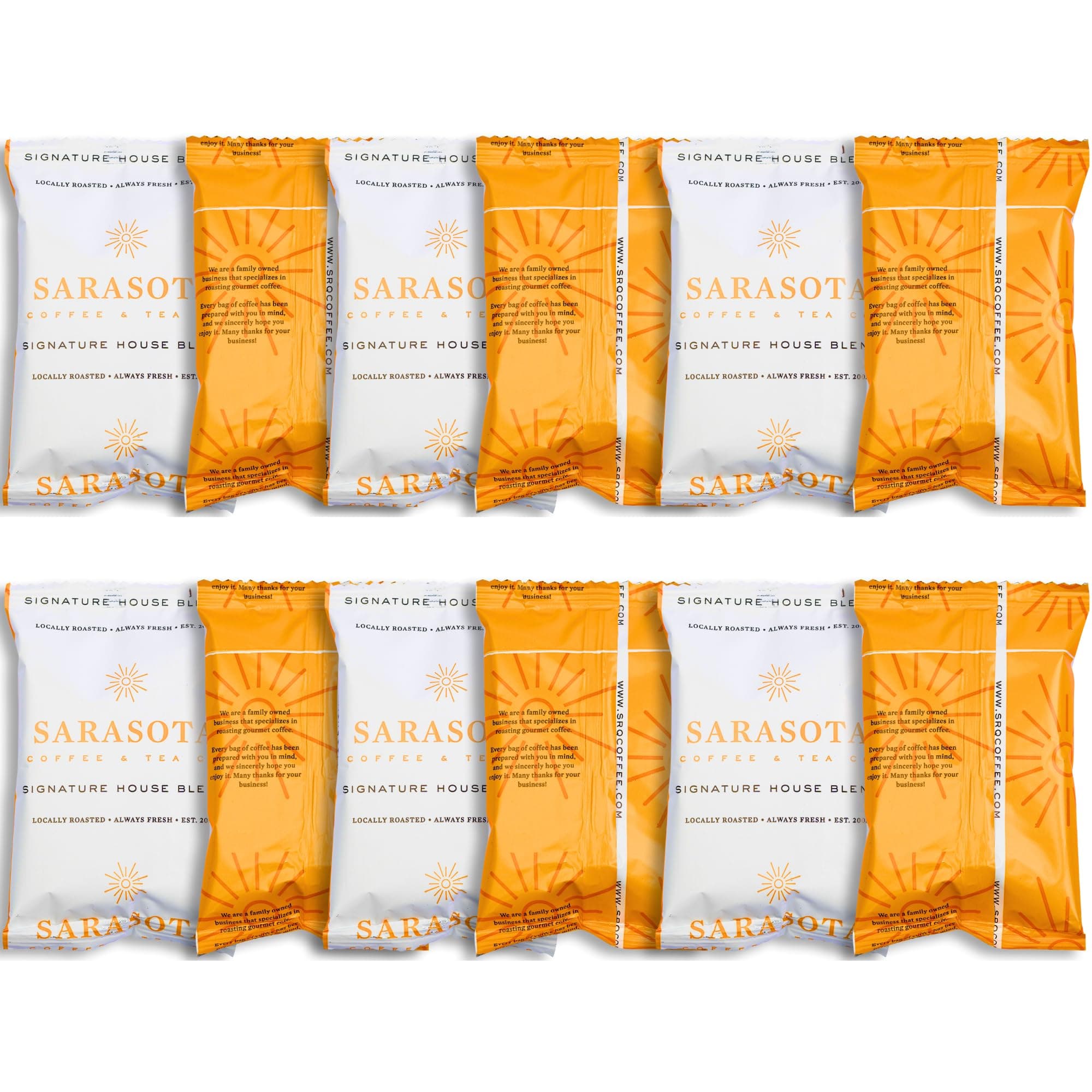
Breakfast Blend Ground Packets – Medium Roast, 2oz Pre-Measured Packs for 8–12 Cup Drip Makers | Low Acid Single-Pot Pouches, Individually Wrapped | 12-Count by Sarasota Coffee Breakfast Blend 2 Ounce (Pack of 12)
- SMOOTH BREAKFAST BLEND – MEDIUM ROAST, LOW ACID - A clean, balanced medium roast made from specialty-grade Arabica beans. Smooth, low-acid flavor that’s perfect for your everyday morning cup.
- 2oz PRE-MEASURED PACKETS FOR 8–12 CUP BREWERS - Each pouch is perfectly portioned for a full pot in any standard drip coffee maker. Open, pour into your filter, and brew — zero measuring, zero mess.
- PERFECT 12-COUNT STARTER / SAMPLER PACK - A convenient small-size box designed for first-time buyers, households that brew occasionally, travel, gifts, welcome baskets, Airbnb stays, and offices that want to try our blend before buying larger cases.
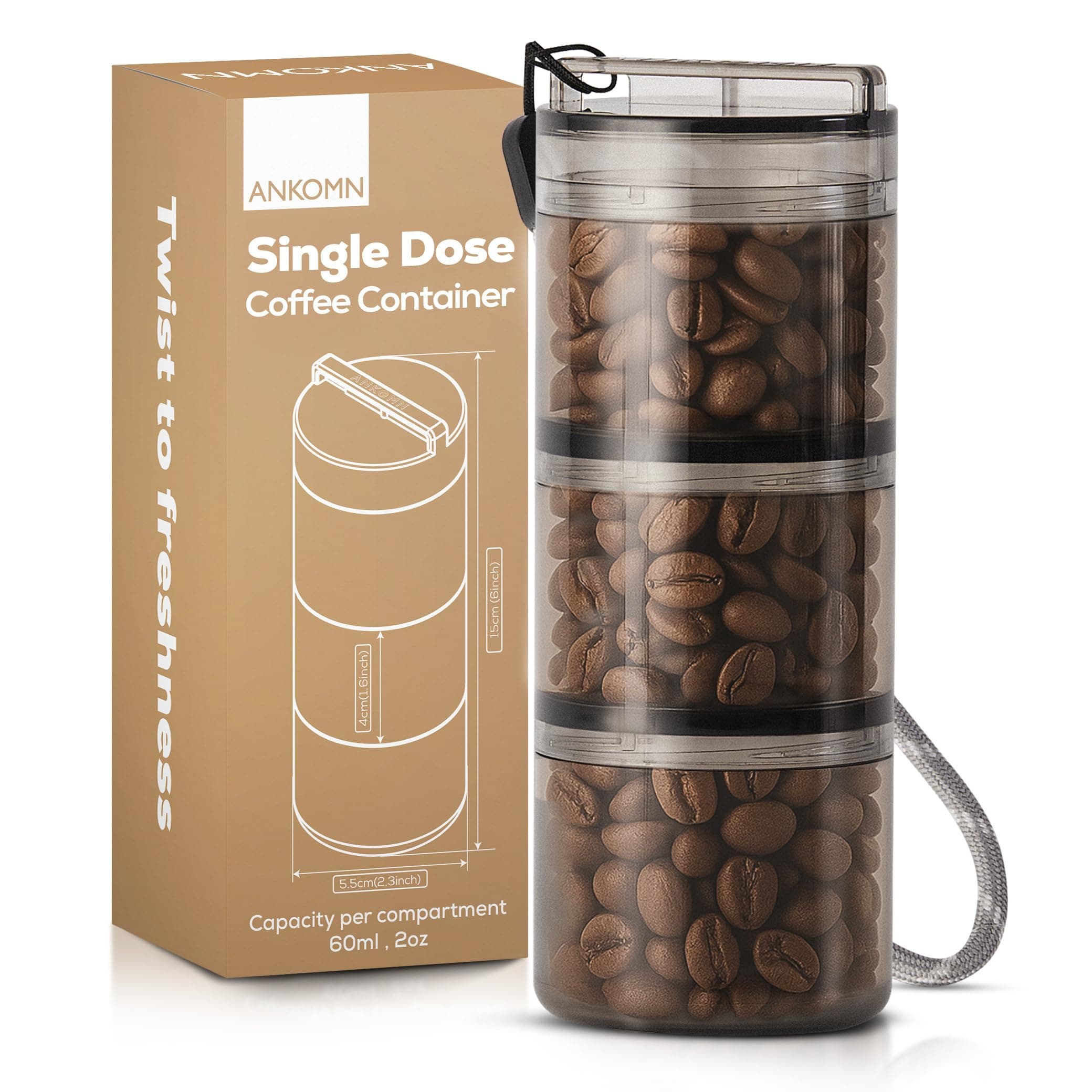
ANKOMN QuarterSeal X7 Airtight Modular Coffee Canister – Single Dose Coffee Bean Storage. Travel Coffee Grounds Container with UV-Protection for Backpacking or Camping. On-the-Go Coffee Accessories. Smoke 3 compartments 1
- Fresh Coffee Anywhere: Enjoy barista-level flavor on the go- each air tight coffee grounds containerkeeps your dose fresh, aromatic, and ready to brew.
- Compact, Travel-Ready Design: Three stackable coffee containers snap together perfectly, saving space in your backpack, camper, or travel kit.
- Built for Adventure: Tough, impact-resistant build survives drops, dust, and rain - your coffee stays safe wherever you roam with ground coffee travel container.