
Mastering Portable Espresso: A Complete Resource
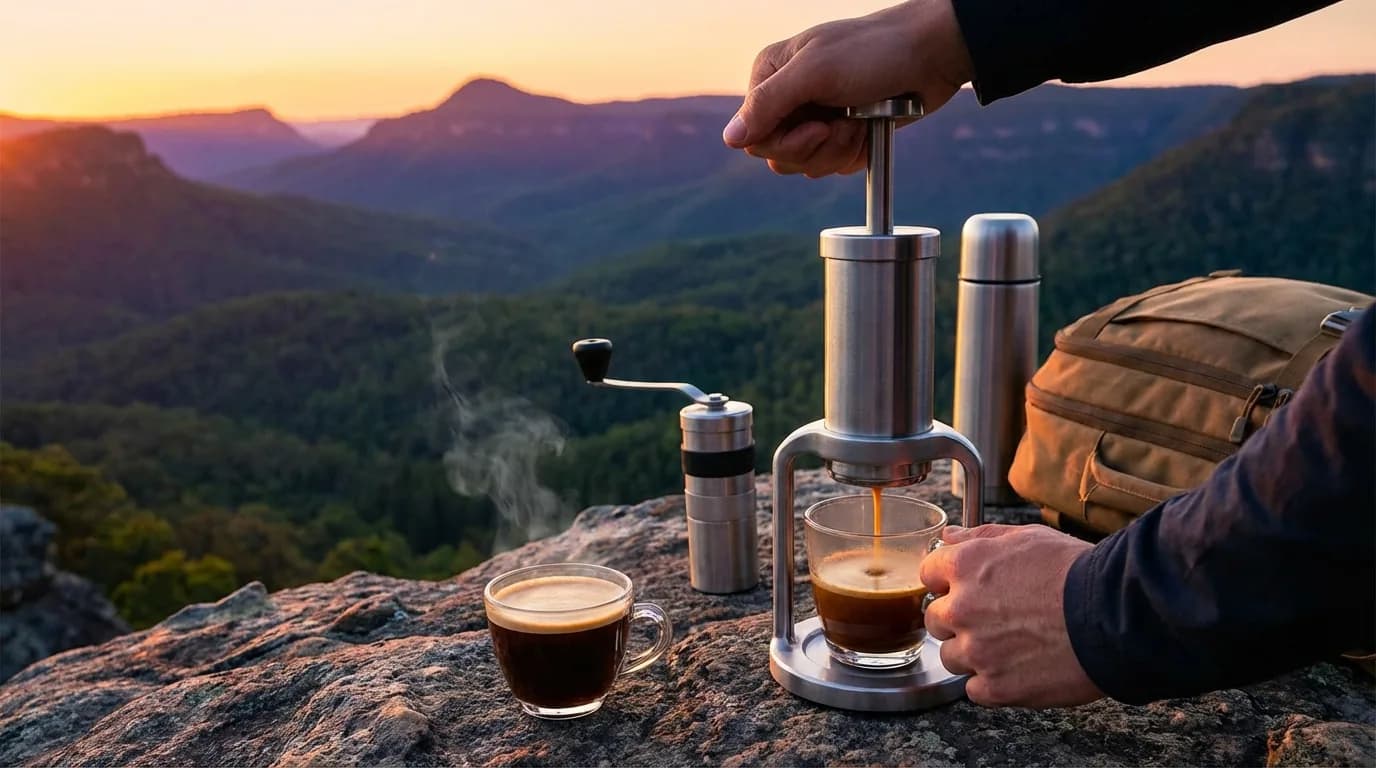
Table of Contents
- The Evolution of Portable Espresso
- How Portable Espresso Makers Actually Work
- Manual vs. Battery-Powered: Choosing Your Power Source
- Key Features to Look for in a Travel Espresso Maker
- Top Portable Espresso Makers for Nomads
- The Grinder: Your Secret Weapon for Off-Grid Espresso
- Mastering the Technique: Step-by-Step Guide
- Maintenance and Cleaning in the Wild
- Common Pitfalls and How to Avoid Them
- Frequently Asked Questions
The Evolution of Portable Espresso
For decades, the term "portable coffee" was synonymous with instant crystals or, at best, a lukewarm French press left sitting too long in a plastic carafe. For the outdoor enthusiast and the digital nomad, the dream of a thick, syrupy espresso with a rich head of crema while overlooking a mountain pass seemed like a logistical impossibility. The high pressure required for true espresso—traditionally nine bars—meant heavy boilers, electrical pumps, and sturdy metal frames. However, the last decade has seen a revolution in engineering that has shrunk the espresso machine from a countertop behemoth to something that fits in a bottle cage.
This evolution began with simple piston-driven designs that relied on arm strength to generate pressure. While these early iterations were a step up from instant coffee, they often struggled with temperature stability and consistent pressure delivery. As the "Third Wave" coffee movement grew, so did the demand for better gear. Manufacturers began experimenting with high-tech seals, reinforced plastics, and innovative pumping mechanisms that allowed users to reach that magical 9-bar threshold without needing a wall outlet. Today, we live in a golden age of portable brewing where the gap between a cafe-quality shot and a trailside shot has narrowed significantly.
Choosing to invest in a portable espresso maker isn't just about the caffeine; it's about maintaining a ritual regardless of your coordinates. Whether you are living in a converted van, backpacking through the Sierras, or simply stuck in a hotel room with a subpar pod machine, these devices offer autonomy. They represent a refusal to compromise on quality just because you’ve left the grid. In this guide, we will explore the nuances of these devices, helping you navigate the sea of options to find the perfect companion for your nomadic lifestyle.
How Portable Espresso Makers Actually Work
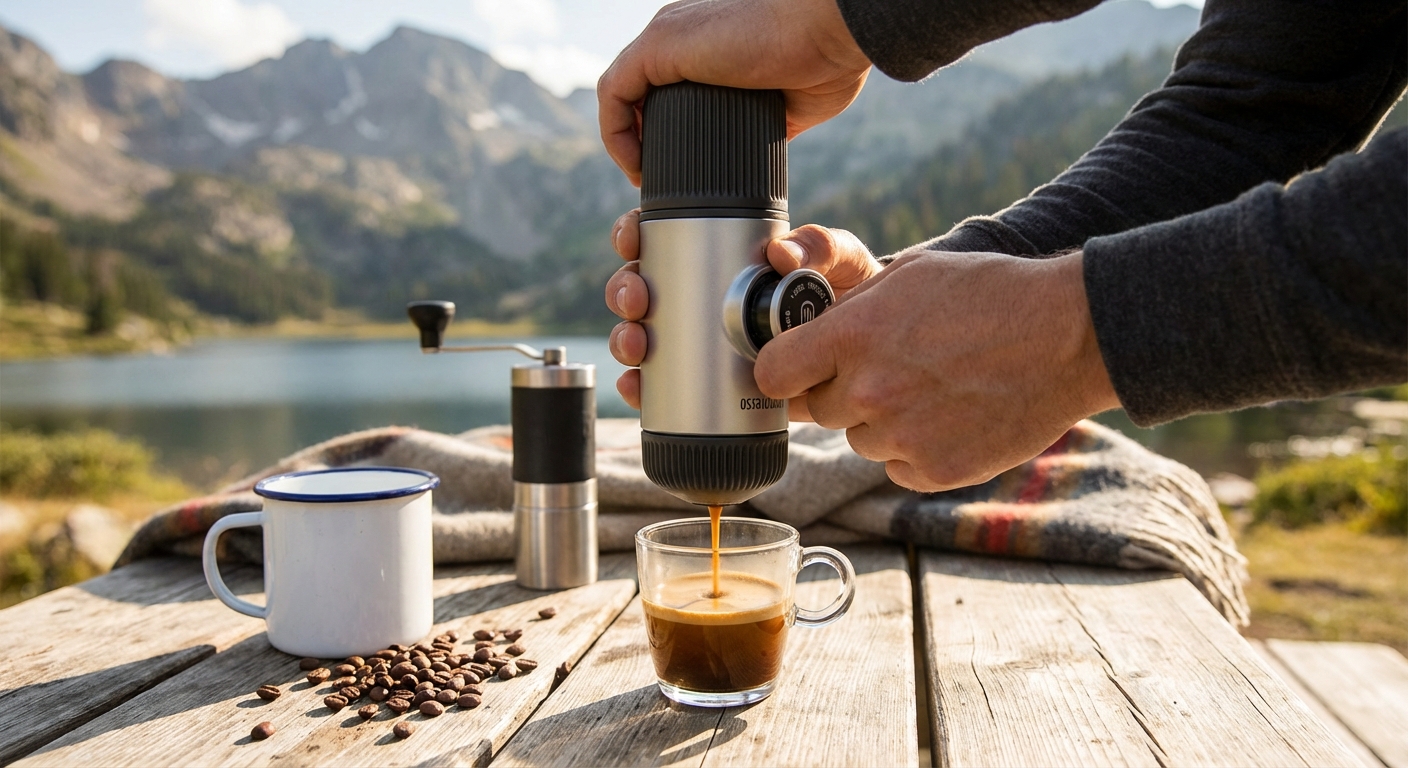
To understand how these compact devices function, we first have to understand what makes espresso espresso. Unlike drip coffee, which relies on gravity, or an AeroPress, which uses moderate air pressure, espresso requires hot water to be forced through a finely ground, compacted "puck" of coffee at high pressure. This pressure emulsifies the oils in the coffee, creating the signature "crema" and the intense flavor profile we crave. Portable espresso makers achieve this through one of three primary methods: hand-pumping, a lever system, or a battery-operated internal pump.
Hand-pumped models, like the popular Wacaco series, use a semi-automatic piston. As you compress the pump, you are building up pressure within a small water chamber. Once the pressure reaches a certain point, a valve opens, and the water is forced through the coffee grounds. The genius of these designs lies in their leverage; you don't need to be a bodybuilder to hit 18 bars of pressure because the mechanical advantage of the piston does the heavy lifting. The challenge for the user is maintaining a steady rhythm to ensure the pressure remains consistent throughout the entire extraction process.
Lever-based portable units, such as the Flair Neo, take a more traditional approach. These use a physical lever to move a piston directly onto the water. This provides the most "analog" feel and gives the brewer immense control over the pressure profile. You can start with a low-pressure pre-infusion to soak the grounds, then ramp up to full pressure. While these are often slightly bulkier than their pumped counterparts, they are favored by purists who want to "feel" the extraction. Regardless of the mechanism, the goal is the same: managing the delicate balance of heat, pressure, and resistance to produce a balanced 30ml shot of liquid gold.
Manual vs. Battery-Powered: Choosing Your Power Source
One of the biggest forks in the road when selecting a portable espresso maker is deciding between a purely manual device and an electric, battery-powered one. Manual devices are the darlings of the off-grid community because they are virtually indestructible and require no external energy source other than your own hands and a way to boil water. If you are backpacking or camping in remote areas for weeks at a time, a manual maker is the clear winner. There are no batteries to die, no circuits to fry, and they are generally much lighter and more compact.
However, manual makers have a learning curve. They require you to provide the boiling water yourself, which means you need a stove or a thermos. Battery-powered units, like the Outin Nano, have changed the game by incorporating a heating element. These devices can take cold water and heat it to the precise temperature before pumping it through the coffee automatically. This is a massive convenience for van lifers or commuters who may not want to pull out a Jetboil just for a quick shot of espresso. The trade-off, of course, is weight and the need to recharge.
When making your choice, consider your "worst-case scenario." If you find yourself in a situation where you can't charge a device for three days, the battery-powered unit becomes a paperweight. Conversely, if you primarily brew in your car or at a campsite with a power station, the convenience of a "one-button" espresso might outweigh the romanticism of a manual pump. Manual units also tend to offer more longevity; with fewer moving electronic parts, a well-maintained manual espresso maker can last for a decade of adventures, whereas batteries eventually degrade and electronics can fail in humid or dusty environments.
Key Features to Look for in a Travel Espresso Maker
When you’re browsing for a portable espresso maker, it’s easy to get distracted by sleek designs, but for a nomad, functionality is king. The first feature to scrutinize is the pressure capacity. For true espresso, you need at least 9 bars. Anything less, and you’re essentially making "strong coffee" rather than espresso. Look for brands that specifically state their bar pressure and, ideally, those that have been third-party tested. Consistency is also key; the device should be able to maintain that pressure without leaking or losing force halfway through the shot.
The second critical feature is thermal mass and heat retention. Because these devices are small, they lose heat rapidly. A shot pulled with water that has dropped to 170°F (76°C) will taste sour and under-extracted. Look for makers made from materials that hold heat well, or designs that allow for easy pre-heating (the process of running hot water through the device before adding coffee). Some high-end portable makers use stainless steel components which, while heavier, offer much better thermal stability than thin plastic.
Finally, consider the ease of cleaning and portability. In an off-grid setting, water is a precious resource. If a device has ten different tiny parts that need to be scrubbed after every shot, it’s going to become a burden. The best travel espresso makers have a streamlined workflow where the "puck" of used grounds can be knocked out cleanly, and a simple rinse is all that's required for the main components. Furthermore, check the weight and dimensions. If it doesn't fit in your pack or your glove box, it’s not truly portable.
Top Portable Espresso Makers for Nomads
The Professional's Choice: Wacaco Picopresso
{{PRODUCT_CARD:B0977T899Z}}
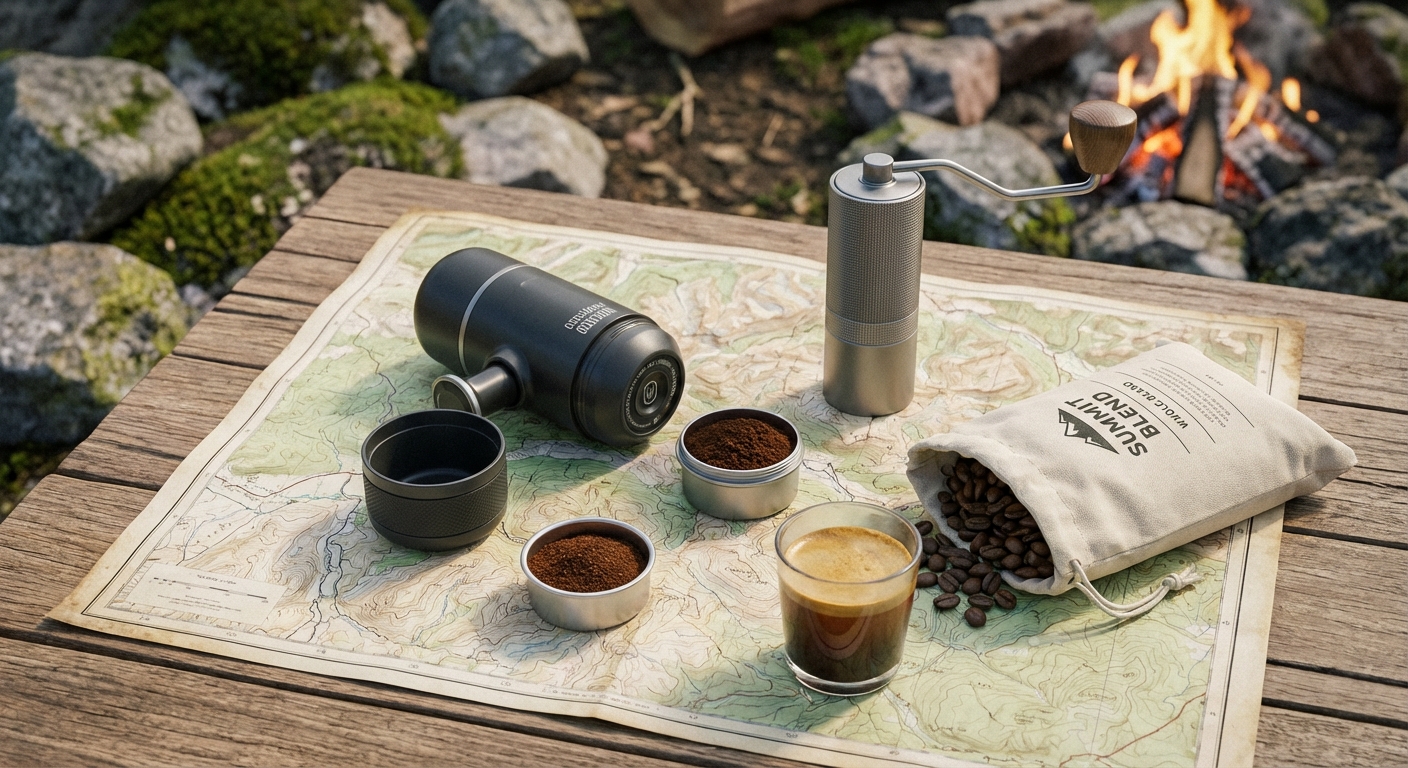
The Wacaco Picopresso is widely considered the gold standard for manual portable espresso. I recommend this device for the "prosumer" nomad—someone who already understands the nuances of espresso and wants a device that doesn't compromise on quality. It features a naked portafilter, which allows you to see the extraction as it happens, helping you diagnose your grind and tamp in real-time. This is a rare feature in the portable world and elevates the Picopresso above its competitors.
The standout feature is its ability to produce shots that are indistinguishable from those made on a $2,000 home machine. It uses a wide 52mm basket, which is much closer to commercial sizes than other portables. The build quality is exceptional, utilizing stainless steel and premium alloys. However, the drawback is the steep learning curve. Because it is a "naked" extraction, if your grind isn't perfect, it will spray coffee. It’s best for those who own a high-quality burr grinder and aren't afraid to put in the work to "dial in" their beans.
{{/PRODUCT_CARD}}
The Versatile Explorer: Wacaco Nanopresso
{{PRODUCT_CARD:B06XRR9W69}}
The Nanopresso is the more approachable sibling to the Picopresso and is the ultimate choice for the casual traveler. I recommend it because of its extreme versatility; with the addition of the NS Adapter (sold separately), it can use Nespresso capsules, making it incredibly convenient for hotel stays or quick trailside hits. It’s lightweight, incredibly rugged, and comes in a variety of colors to suit your gear aesthetic.
Its standout feature is the patented pumping system that can reach up to 18 bars of pressure with very little effort. Unlike older models, the Nanopresso requires 15% less force to pump, which is a blessing on cold mornings. The main drawback is the smaller water tank and basket size, which limits you to a traditional single shot. It’s also made primarily of plastic, so while it's durable, it doesn't have the same heat retention as the metal Picopresso. It is the perfect "set it and forget it" tool for hikers and bike-packers.
{{/PRODUCT_CARD}}
The All-in-One Solution: Outin Nano Portable Electric Espresso Machine
{{PRODUCT_CARD:B0B7BC6S7Y}}
The Outin Nano is a game-changer for those who want the luxury of espresso without the manual labor. I recommend this for van lifers, overlanders, or anyone who frequently brews in a vehicle. The standout feature is its internal heating element. You can pour in cold water, press a button, and in about 3-4 minutes, it will heat the water to 92°C (197°F) and pull a shot automatically at 20 bars of pressure. This eliminates the need for a separate stove or kettle.
The Outin Nano is compatible with both ground coffee and Nespresso capsules, giving you flexibility based on your current location. The build is sleek and fits perfectly in a standard cup holder. The primary drawback is the weight and the reliance on a battery. While it can pull about 3-5 shots from cold water on a single charge, you'll need a USB-C power source to keep it going. It’s also heavier than manual options, making it less ideal for long-distance backpacking but perfect for "glamping" or road trips.
{{/PRODUCT_CARD}}
The Budget-Friendly Powerhouse: STARESSO Portable Espresso Machine
{{PRODUCT_CARD:B01IM9S6Y0}}
For those just dipping their toes into the world of portable espresso, the STARESSO is an excellent entry point. I recommend it for students, budget travelers, or as a secondary "emergency" brewer. Despite its lower price point, it is surprisingly capable, utilizing a vertical pump design that is very easy on the hands. It’s also one of the few portable makers that can froth milk (to an extent) by using the pump mechanism to aerate the milk, making it a "cappuccino maker" in a pinch.
The standout feature is the simplicity of the design; it's easy to assemble and disassemble, and the glass cup it comes with is surprisingly durable. However, the drawbacks are its bulkiness compared to the Wacaco line and the fact that it’s mostly plastic, which can lead to faster heat loss. The extraction quality is good, but it lacks the depth and complexity of the Picopresso. It is a solid, dependable workhorse for those who want a decent shot without breaking the bank.
{{/PRODUCT_CARD}}
The Home-Away-From-Home: Flair Neo Flex
{{PRODUCT_CARD:B0C2G7S6N7}}
The Flair Neo Flex is the portable version of the famous Flair manual espresso presses. I recommend this for the nomad who stays in one place for a few days at a time—like a digital nomad in an Airbnb or a long-term camper. It uses a lever-arm design which gives you unparalleled control over the pressure profile. The Neo Flex is specifically designed to be "grinder friendly," meaning its pressurized portafilter allows you to get a great shot even if your coffee isn't ground perfectly for espresso.
The standout feature is the "feel" of the brew. Pulling down on the lever and seeing the espresso flow is a satisfying, tactile experience that pumping a button simply can't match. It’s also very easy to clean as the brew head completely detaches. The drawback is its footprint; even though it's "portable" and comes apart, it takes up more space than the bottle-shaped makers. It’s also made of a high-strength polycarbonate which is light, but doesn't feel quite as "premium" as Flair's metal models.
{{/PRODUCT_CARD}}
The Grinder: Your Secret Weapon for Off-Grid Espresso
You can buy the most expensive portable espresso maker on the market, but if you're using pre-ground "supermarket" coffee, your results will be mediocre at best. Espresso requires a very specific, fine grind size—somewhere between the consistency of flour and table salt. Furthermore, coffee begins to lose its aromatic compounds within minutes of being ground. For the nomad, a high-quality manual burr grinder is not an optional accessory; it is a fundamental part of the kit.
When choosing a grinder for travel, you need to look for "espresso capable" burrs. Many cheap hand grinders are designed for pour-over or French press and cannot grind fine enough for espresso without the burrs touching and causing damage. Look for grinders with stainless steel conical burrs and fine-stepped adjustments. This allows you to "dial in" your shot—making micro-adjustments to the grind size to slow down or speed up the extraction. If your shot tastes sour and watery, you need to grind finer; if it's bitter and takes forever to pump, you need to grind coarser.
Weight and grip are also vital factors. Grinding for espresso by hand takes effort, especially if you are doing it for multiple people. A grinder with a slim body and a textured grip will make the process much less of a chore. Some grinders are even designed to fit inside the plunger of an AeroPress or have specific mounts for travel kits. Investing in a tool like the 1Zpresso or Timemore series will do more for your coffee quality than almost any other piece of gear in your bag.
Mastering the Technique: Step-by-Step Guide
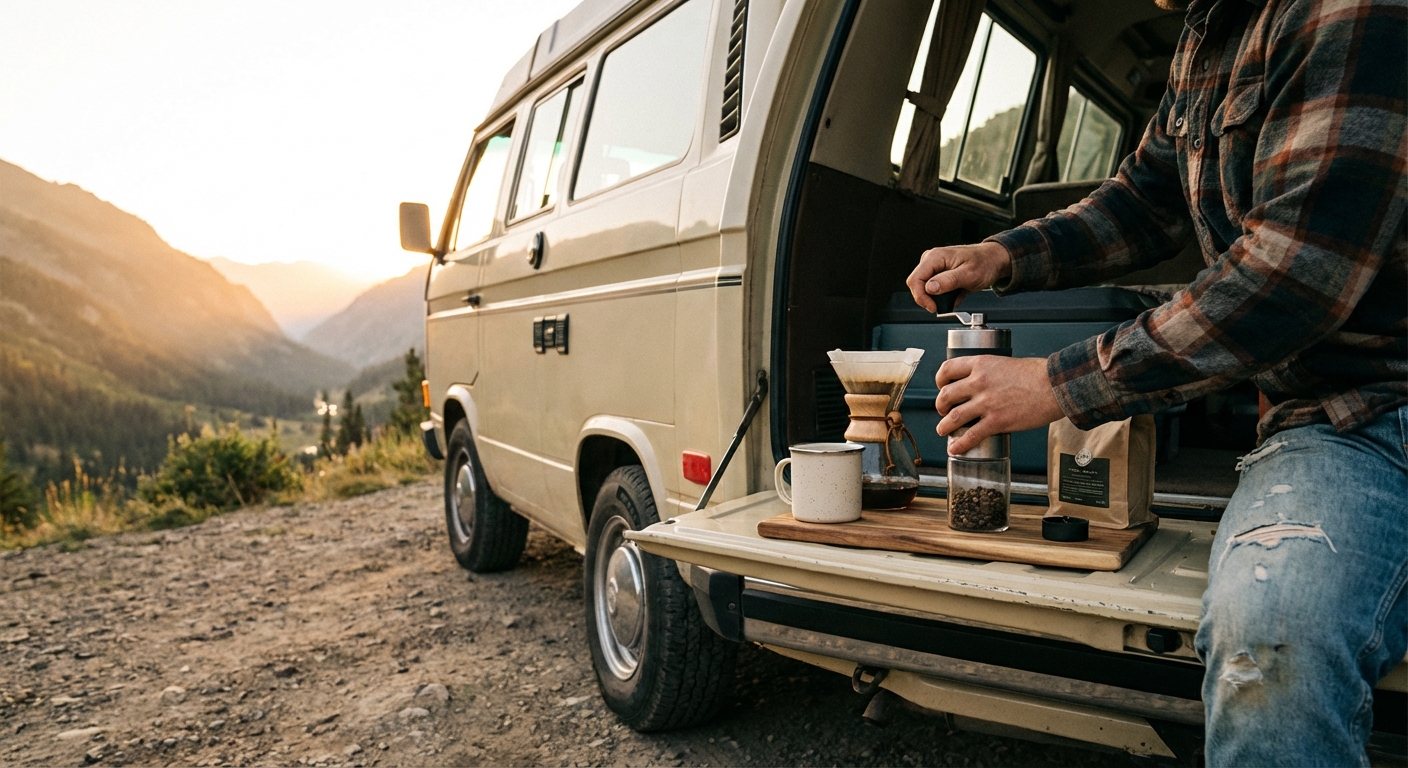
Pulling a perfect shot in the wild is as much about physics as it is about art. The first step is pre-heating. This is the step most people skip, and it's why their coffee tastes sour. Before you put any coffee in the machine, run a cycle of boiling water through the device. This warms up the internal metal or plastic components so they don't suck the heat out of your actual brewing water. While the device is warming, grind your beans fresh. A standard double shot usually requires 16-18 grams of coffee, though some portables use smaller 8-12 gram doses.
Next comes the tamp. You need to compress the coffee grounds into a flat, level disc. Most portable makers come with a small scoop that doubles as a tamper. Apply firm, even pressure. You don’t need to use your whole body weight, but the puck should be solid enough that it doesn't fall out if you turn the basket upside down. This resistance is what allows the pressure to build up; if the tamp is too loose, the water will just find the path of least resistance (channeling), resulting in a weak, flavorless shot.
Finally, the extraction. Discard your pre-heating water and fill the reservoir with fresh water just off the boil (around 205°F or 96°C). Start your pump or lever pull slowly. Many experts recommend a "pre-infusion" where you pump just enough to soak the grounds, then wait 10 seconds before continuing. This helps prevent channeling. Then, maintain a steady, firm pressure. You should see a dark, viscous liquid emerge, slowly turning into a golden-brown foam (crema). Stop the extraction once you’ve reached your desired volume—usually a 1:2 ratio (e.g., 18g of coffee to 36g of liquid espresso).
Maintenance and Cleaning in the Wild
In an off-grid environment, your gear is only as good as your maintenance routine. Coffee oils are incredibly stubborn; they turn rancid over time and will ruin the flavor of future brews if not removed. After every use, you should perform a "dry purge." This involves pumping the remaining air and water out of the device until it’s as dry as possible. Knock out the coffee puck immediately—don't let it sit and dry into a brick, as this makes cleaning much harder.
A simple rinse with clean water is usually enough for daily use, but you must pay attention to the seals and O-rings. These rubber components are the lifeblood of a pressure-based system. Over time, grit and coffee dust can get trapped under the seals, causing leaks. Once a week, or after a particularly dusty trip, disassemble the main components and wipe the seals with a damp cloth. Avoid using harsh soaps, as they can strip the oils and potentially damage the food-grade plastics or leave a flowery aftertaste in your next espresso.
If you are using hard water from a well or certain tap sources, you will eventually face scale buildup. Scale is a mineral deposit that can clog the tiny valves in a portable espresso maker. To prevent this, use filtered water whenever possible. If you notice the pumping becoming significantly harder or the flow slowing down, it may be time for a descale. You can use a mild citric acid solution or a commercial espresso descaler, running it through the machine several times followed by multiple rinses of fresh water.
Common Pitfalls and How to Avoid Them
The most common mistake beginners make is using water that isn't hot enough. Remember that as soon as you pour boiling water into a room-temperature plastic or metal tank, the temperature drops by 10-15 degrees instantly. If you then pump that water through cold coffee grounds, the actual extraction temperature might be as low as 160°F. This leads to a thin, sour shot. Always over-compensate by using water at a rolling boil and never skip the pre-heating phase.
Another pitfall is inconsistent grinding. If you are using a cheap blade grinder (the kind that sounds like a lawnmower), your coffee particles will be a mix of "boulders" and "dust." The water will rush past the boulders (under-extracting) and get blocked by the dust (over-extracting), resulting in a shot that is somehow both sour and bitter. If you can't afford a high-end burr grinder yet, you are actually better off using high-quality Nespresso capsules in a compatible machine, as the grind inside those is perfectly consistent.
Finally, don't ignore the "pumping rhythm." Many people pump as fast as they can, thinking more speed equals more pressure. In reality, a steady, deliberate pace is better for maintaining a consistent pressure profile. If you feel the resistance suddenly disappear, you’ve likely experienced "channeling," where the water has cracked the coffee puck. To fix this next time, ensure your tamp is more level and your grind is slightly finer. Learning to "read" the resistance in the pump is the key to mastering portable espresso.
Frequently Asked Questions
Can portable espresso makers really produce 9 bars of pressure?
Yes, most high-quality portable espresso makers are engineered specifically to hit and even exceed the 9-bar standard. Devices like the Wacaco Picopresso or the Flair series use mechanical advantage—either through a piston pump or a lever—to multiply the force of your hand. While it might seem impossible for a small plastic or metal tube to hold that much pressure, modern seals and reinforced materials are more than capable. The key is the resistance provided by the coffee grounds; if the grind is too coarse, the machine won't be able to build pressure because the water will flow through too easily.
Do I need a special type of coffee bean for travel espresso?
No, you can use any coffee bean you enjoy, but the "roast profile" matters. Most people prefer a medium to dark roast for espresso because these beans are more soluble and easier to extract at the slightly lower temperatures common in portable brewing. Light roasts can be very finicky and often taste overly acidic if the temperature and pressure aren't perfect. Regardless of the roast, the most important factor is freshness. Try to use beans roasted within the last 2-4 weeks for the best crema and flavor.
Is it hard to pump these machines by hand?
For most people, no. The manufacturers have designed the leverage systems to be accessible. For example, the Nanopresso requires about the same amount of force as it takes to squeeze a firm stress ball. However, if you have arthritis or limited hand strength, a manual pump might be fatiguing, especially for multiple shots. In those cases, a lever-based system like the Flair (which uses larger muscle groups) or a battery-powered unit like the Outin Nano would be a much better choice.
How do I get crema with a portable maker?
Crema is a byproduct of high pressure and fresh coffee. If you aren't getting crema, it's usually due to one of three things: the coffee is old (the CO2 has escaped), the grind is too coarse (not enough pressure is building up), or the water isn't hot enough. To ensure a thick crema, use beans roasted within the last month, grind them right before brewing to a fine consistency, and make sure you've pre-heated your device thoroughly. If you are using capsules, the crema is often "simulated" by a valve, but it still provides that creamy mouthfeel.
Are these devices allowed on airplanes?
Yes, manual portable espresso makers are perfectly fine to take in carry-on or checked luggage. They are essentially just tubes of plastic and metal. Battery-powered units, however, contain lithium-ion batteries. These must be kept in your carry-on luggage and are subject to standard TSA/airline regulations regarding battery capacity (most are well under the limit). Always ensure the device is completely empty of water before packing it to avoid leaks or security concerns.
Can I make a latte or cappuccino with these?
Technically, these devices only make the espresso shot. To make a latte or cappuccino, you will need a way to heat and froth milk. Some nomads use a simple battery-operated whisk (like a PowerLix), while others use a dedicated manual milk frother like the Nanofoamer. If you're really roughing it, you can heat milk in a pot and shake it vigorously in a French press to create foam. The STARESSO is one of the few portables that can actually froth milk using its own pump, though the results are more "foamy" than "micro-foam."
How long do portable espresso makers last?
A well-maintained manual espresso maker can last for many years. Because they don't have complex electronics or heating elements, there is very little that can "break" beyond the rubber O-rings, which are easily replaceable and cheap. Battery-powered units have a shorter lifespan, typically 3-5 years, depending on how well the battery is cared for. To maximize longevity, always clean your device after use, don't over-tighten the components, and store it in a dry place.
Is the espresso as good as a coffee shop?
In the hands of a skilled user, yes. A Picopresso or a Flair can produce a shot that rivals a professional cafe. However, it requires more effort and attention to detail. You are the "computer" that controls the temperature and pressure. While a commercial machine offers consistency at the push of a button, a portable maker offers the potential for excellence with the trade-off of a manual process. For most nomads, the ability to have a 9/10 shot in the middle of nowhere far outweighs the 10/10 shot they could get in a city.
Our Top Picks for 2026
We've spent hours researching and testing to find the absolute best options currently available.
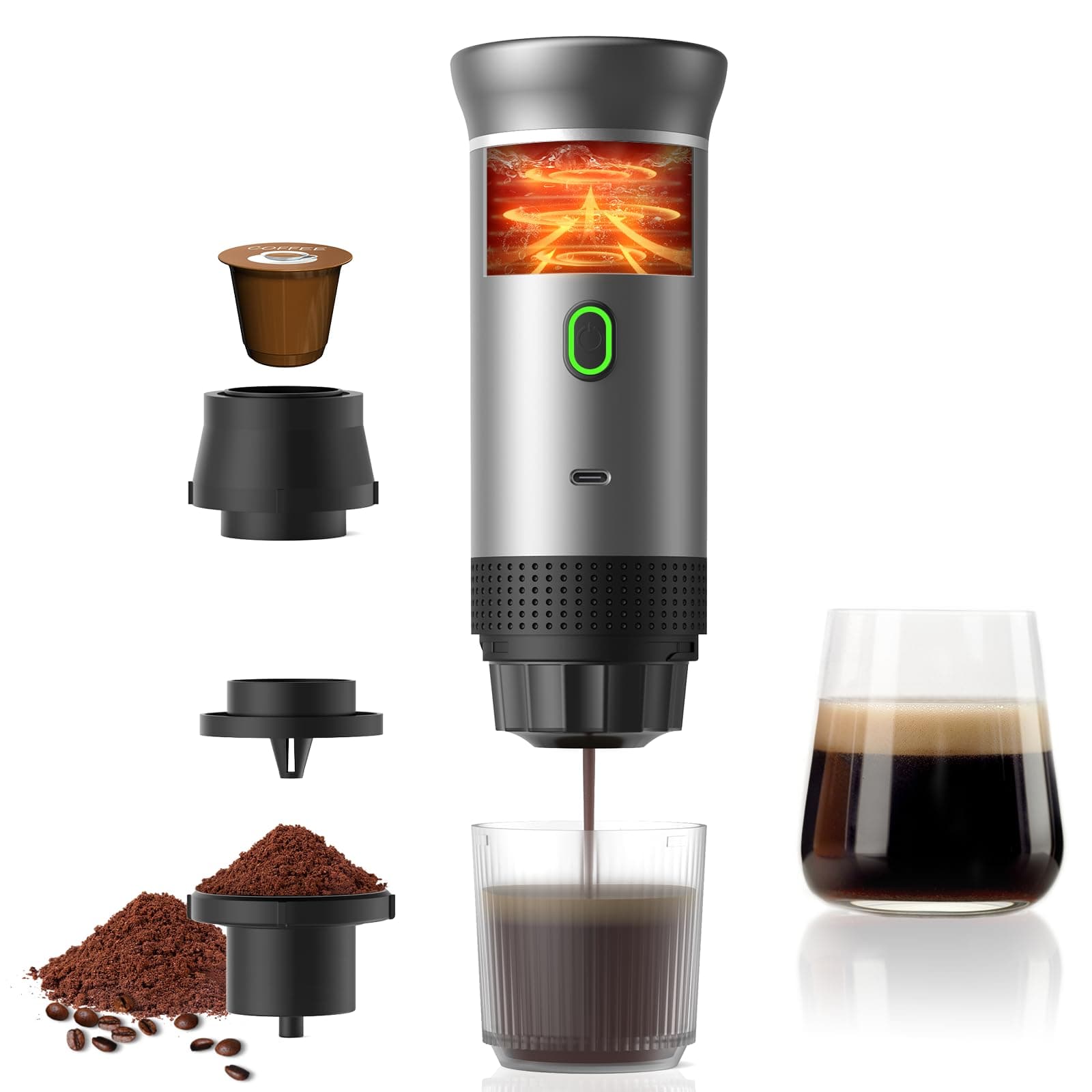
Zcyge Portable Coffee Maker Espresso Machine, Travel Espresso Maker, Cafetera Portatil Expreso with Small Tea Cup, Compatible with Ground Coffee & NS Capsule for RV,Car, Hiking, Camping Office
- 3-IN-1 Espresso Machine: This versatile portable espresso machine is compatible with ground coffee, NS capsules, and DG pods, offering multiple brewing options. Its compact design makes it the perfect travel coffee maker, easily fitting into your bag or car so you can enjoy your favorite espresso wherever you go.
- Long-Lasting Battery: The portable coffee maker features a built-in 7500mAh rechargeable battery, capable of brewing 3-5 cups on a single charge. It heats cold water in just 5 minutes, while 20 bar pressure and optimal temperature ensure a perfect espresso with rich crema and aroma. Additionally, it supports 12V/24V car charging, guaranteeing you'll never run out of power when you need it most.
- Mobile Coffee Shop: Weighing just 700 grams (1.5 lbs), the camping coffee makers is perfect for camping, hiking, fishing, or use at home or in the office. Crafted from food-grade ABS, stainless steel, and other sustainable materials, its compact design ensures easy disassembly and cleaning—convenience for busy coffee enthusiasts.
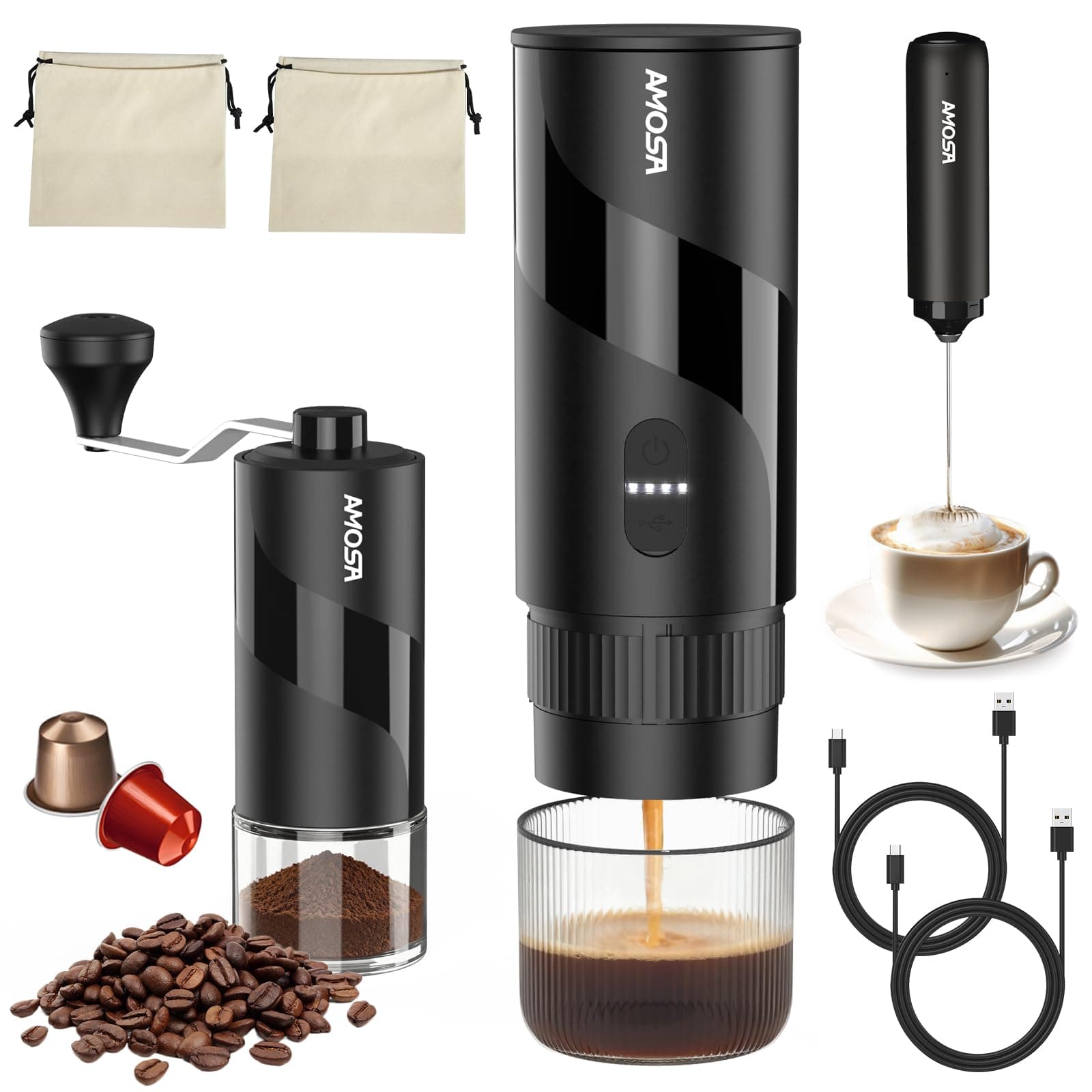
Portable Electric Espresso Machine & Manual Coffee Grinder & Electric Milk Frother All in 1 Mini Travel Coffee Maker Set for Camping, Car, RV, Hiking, Office, Home, Ground Coffee & NS Capsules Pod
- 【All in 1 Portable Coffee Maker Set】Major Upgrade Set - A Boon for Coffee Lovers! AMOSA coffee machine set includes a mini manual coffee grinder, portable electric espresso machine, and portable electric milk frother. A portable personal mobile coffee station to transform coffee beans into rich & aromatic coffee anytime & anywhere.
- 【Need to Add Boiling Water】It can not heat up water! Based on big data research, we found that most coffee lovers are not satisfied with the actual performance of the self-heating in similar products. Therefore, to provide you with a better brewing experience, AMOSA boldly abandoned the self-heating in our expresso coffee machines design. So, please add hot water to brew. If you prefer cold brewing, you can add cold or ice water directly.
- 【20 Bar Golden Extraction & Rich Crema】Powerful & professional 20 bar pressure pump system extraction rich & aromatic espresso. This electric espresso maker maintains a stable 20-bar pressure, ensuring optimal extraction every time for a perfect coffee experience, producing a creamy crema and full-bodied flavor comparable to that of a coffee shop.

CERA+ Self-Heating Portable Espresso Machine,Up to 8 Cups per Charge & 20 Bar, 3 * 4500mAh, CERApresso Works with NS Capsules & Grounds, Electric Coffee Maker for Camping,Hiking,Office,Car,Travel Black
- 【8 HOT CUPS PER CHARGE (1.7oz/50 ml each)】 With 77°F/25°C, a full charge heats and brews up to 8 espressos using this portable espresso maker from CERA+. Results vary with water temperature/volume; many portable coffee maker options yield only 3–4 cups per charge.
- 【ULTRA-FAST USB-C RECHARGE】 3*4500mAh battery supports 10–30 W USB-C PD/QC input and fully recharges in ~2–2.5 hours from wall, car, or power bank—ideal for daily carry, road trips, travel (carry-on safe) as your travel espresso maker / portable electric coffee maker.
- 【TRUE SELF-HEATING IN ~140 s】 Heats 1.7 oz (50 ml) from 77°F to 198°F (25 to 92 °C) in about 140 seconds—no kettle needed. Using preheated water, you can brew 500+ shots on a full charge with this electric espresso maker. Great as a travel coffee maker, coffee maker for car, or battery coffee maker for camping.
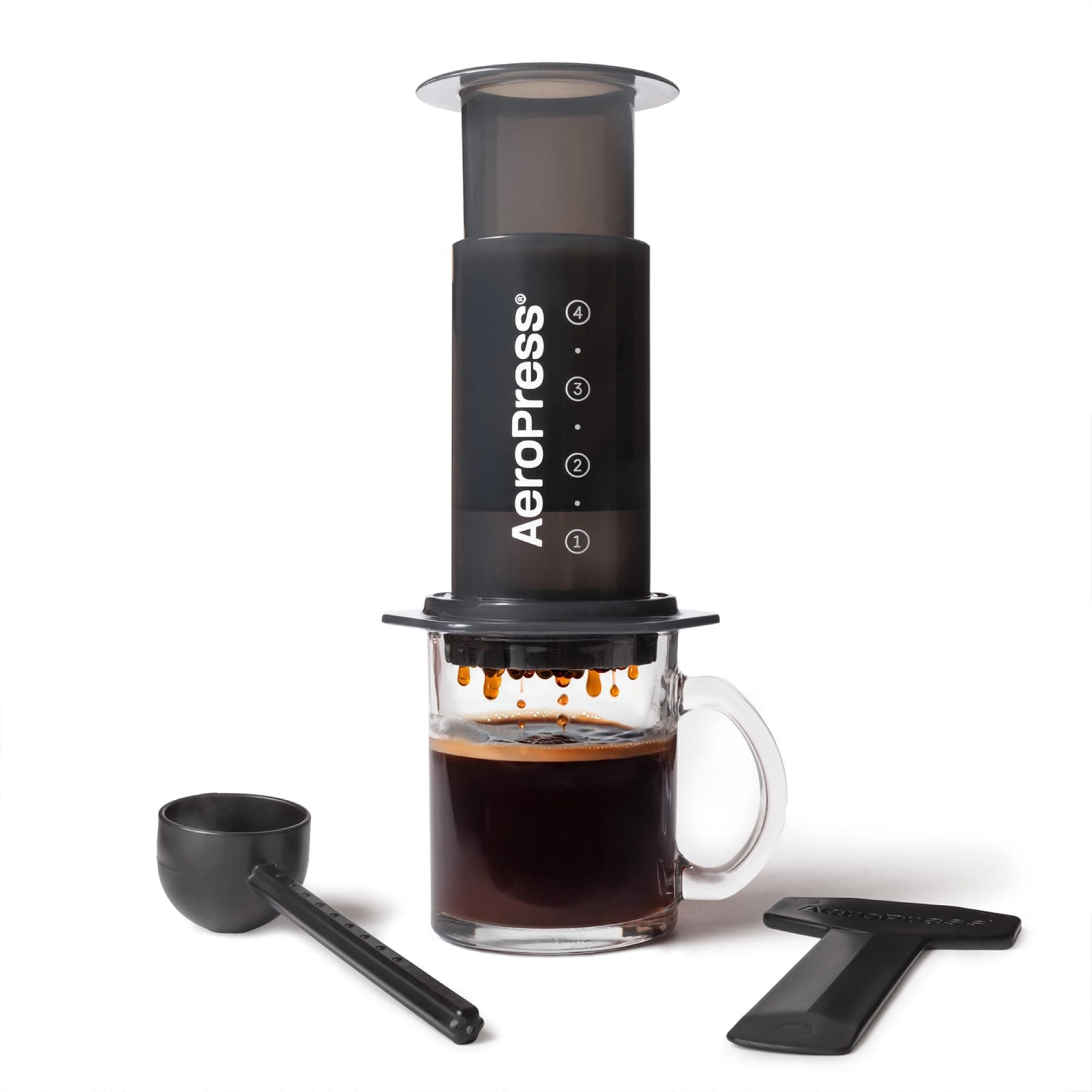
AeroPress Original Coffee Press - All-in-One French Press, Pour-Over & Espresso Style Manual Brewer, 2 Min Brew for Less Bitterness, More Flavor, Small Portable Coffee Maker, Travel & Camping Standard Gray
- The Brewer That Started It All – AeroPress Original was the first single cup coffee maker to combine 3 brew methods in one compact, portable device for a faster brew and better extraction giving coffee lovers a smooth, rich cup bursting with coffee bean flavor—without the bitterness or acidity found in other methods.
- A New Standard in Coffee Flavor – Equal parts French press, pour-over, and espresso, AeroPress patented 3 in 1 technology distills the best of all three brewing methods into one sleek, portable device. The result? A rich, full-bodied cup in under two minutes—free of bitterness and grit, and full of delicious coffee bean flavor.
- The Secret to AeroPress Superior Flavor – Air Pressure and micro-filtration work together to speed up extraction for less bitterness than other methods, so you can finally enjoy the full spectrum of coffee bean flavor, from smooth tasting notes to level of roast and country of origin
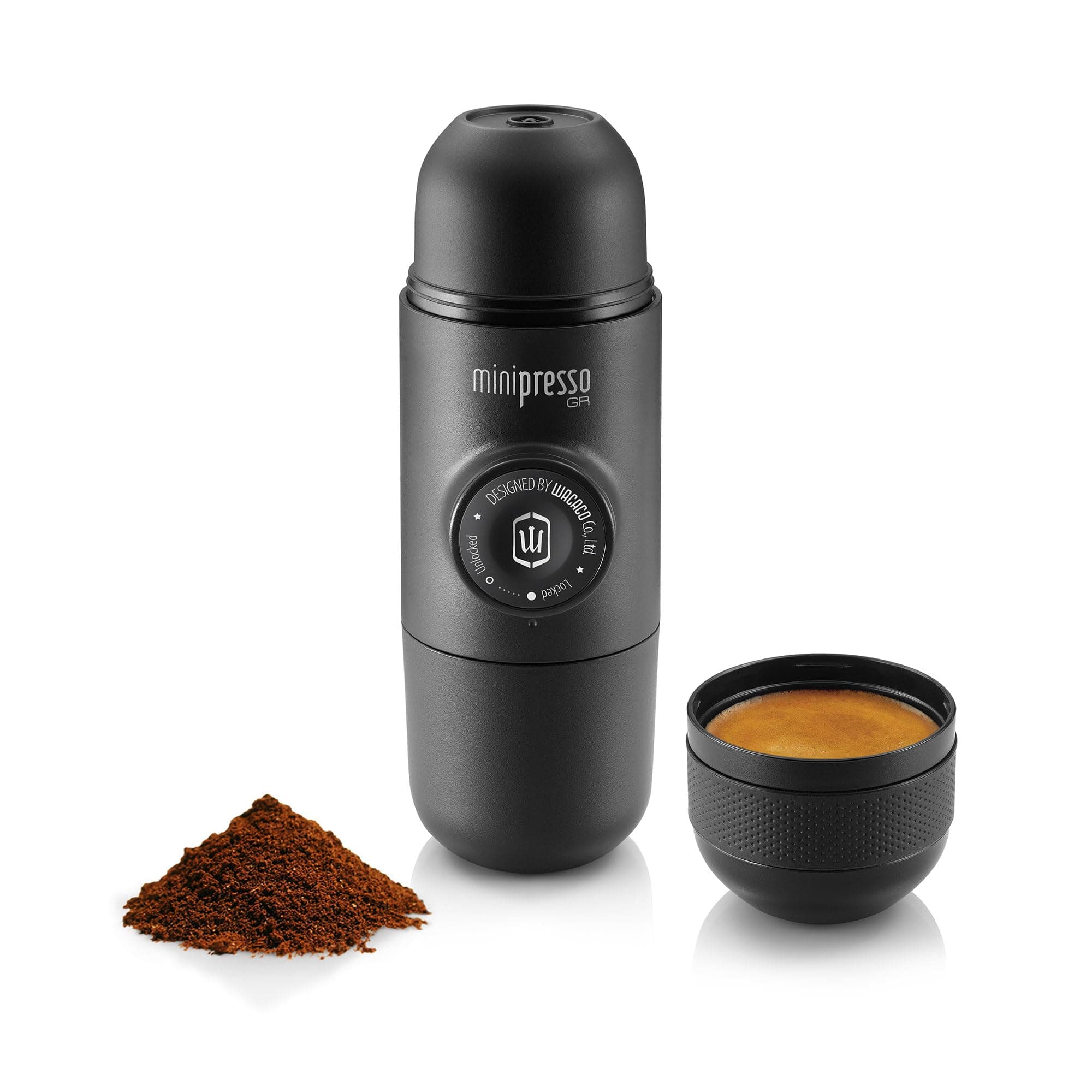
WACACO Minipresso GR, Portable Espresso Machine, Compatible Ground Coffee, Hand Coffee Make, Travel Gadgets, Manually Operated, Perfect for Camping
- 【MANUAL OPERATION ONLY】No battery/electricity need. Compact, lightweight and versatile, you may use any variety of coffee bean/roast, which will give you more flexibility in trying new flavors.
- 【NEED TO ADD THE BOILING WATER】It can not heat up water. Minipresso GR is your best choice to enjoy up to 50 ml of authentic espresso at home, in the office and on the go.
- 【SIMPLE TO OPERATE& LIGHTWEIGHT】Minipresso GR is your best choice to enjoy up to 50 ml of authentic espresso at home, in the office, and on the go. Compact, lightweight and versatile, you may use any variety of coffee beans/roast, which will give you more flexibility in trying new flavors.

Narcissus Portable Electric Espresso Machine for Travel, 86.6 Watt 2-In-1 Travel Coffee Maker for Max 12g Coffee Powder or NS Capsules, 1.5 Pounds & 7800mAh Battery Capacity, Includes Quick Charger
- 2-In-1 Portable Espresso Maker for Outdoors - Narcissus Portable Electric Espresso Machine features a portable design: 2.6-inch diameter, 9.2-inch height, and 1.5lbs weight, 80ml water capacity, so espresso lovers can enjoy espresso anywhere. This machine only works with 12g (max) of ground coffee powder or Nespresso Original capsules.
- Rapid Brewing Within 6 Minutes - This portable electric espresso maker features a real 86.6-watt power, lab-tested for optimal performance. It features a high-precision temperature detector in the interior. When water is heated to 195°F, this machine will start to brew espresso. If you add hot water to the machine, it will brew espresso in approximately 50 seconds.
- Built-in Bigger 7800mAh Battery – The Narcissus Electric Espresso Maker features a 7800mAh large-capacity battery for better durability when outdoors. When fully charged, this machine can brew espresso 3-5 times with cold water or 30-100 times with hot water. We include a 15-watt super-fast charger in the package. Please only charge the machine with the included charger. The power indicator light of the machine will turn on when it is at 90% charging (about 2 hours and 40 minutes).
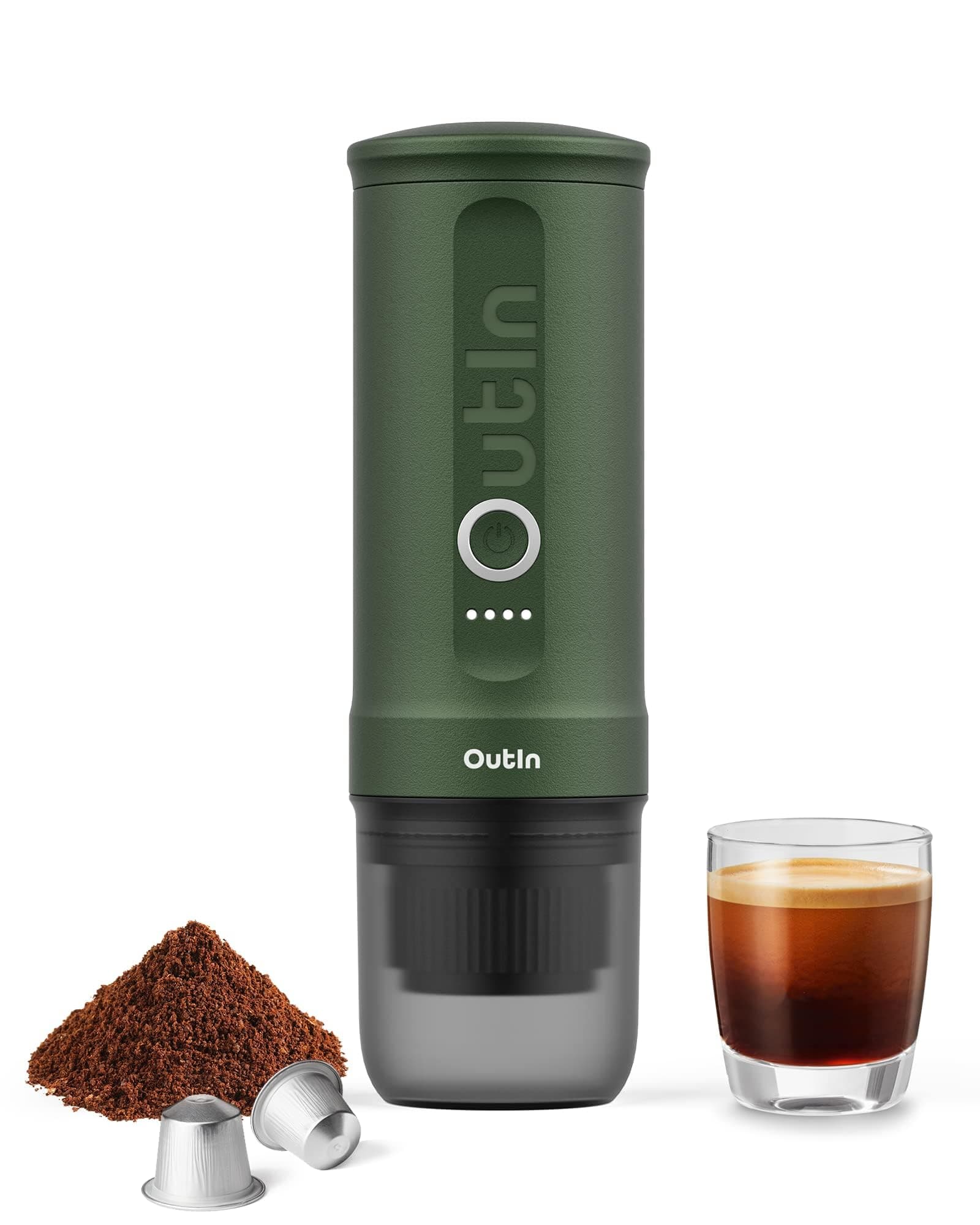
OutIn Nano Portable Electric Espresso Machine, Travel Coffee Maker for Camping, Car Coffee Maker Self-Heating with USB-C, With Ground Coffee & NS Capsule for RV, Hiking, Office Forest Green
- 【LIGHTWEIGHT & PORTABLE】: OutIn Portable Espresso Machine weighs only 670 grams. Made of food-grade stainless steel and sustainable materials, OutIn espresso maker Easy to disassemble and wash.
- 【FAST SELF-HEATING & RICH CREMA】: OutIn Nano coffee machine heats 1.7oz of 77°F room temperature water to 198°F within 200 seconds. 20-bar pressure ensures a smooth extraction with rich crema comparable to results from professional desktop coffee machines!
- PREMIUM BATTERY CAPACITY 】: Travel espresso maker comes with 3 × 2500mAh lithium batteries, compatible with 10–15 watts USB-C car chargers for universal charging, which supports up to 5 hot shots with 1.7oz 77°F room temperature water or 200+ shots with hot water

OutIn Nano Portable Electric Espresso Machine, Travel Coffee Maker for Camping, Car Coffee Maker Self-Heating with USB-C, With Ground Coffee & NS Capsule for RV, Hiking, Office Space Gray
- 【LIGHTWEIGHT & PORTABLE】: OutIn Portable Espresso Machine weighs only 670 grams. Made of food-grade stainless steel and sustainable materials, OutIn espresso maker Easy to disassemble and wash.
- 【FAST SELF-HEATING & RICH CREMA】: OutIn Nano coffee machine heats 1.7oz of 77°F room temperature water to 198°F within 200 seconds. 20-bar pressure ensures a smooth extraction with rich crema comparable to results from professional desktop coffee machines!
- 【PREMIUM BATTERY CAPACITY 】: Travel espresso maker comes with 3 × 2500mAh lithium batteries, compatible with 10–15 watts USB-C car chargers for universal charging, which supports up to 5 hot shots with 1.7oz 77°F room temperature water or 200+ shots with hot water.