
Disposal of Coffee Grounds in the Wild
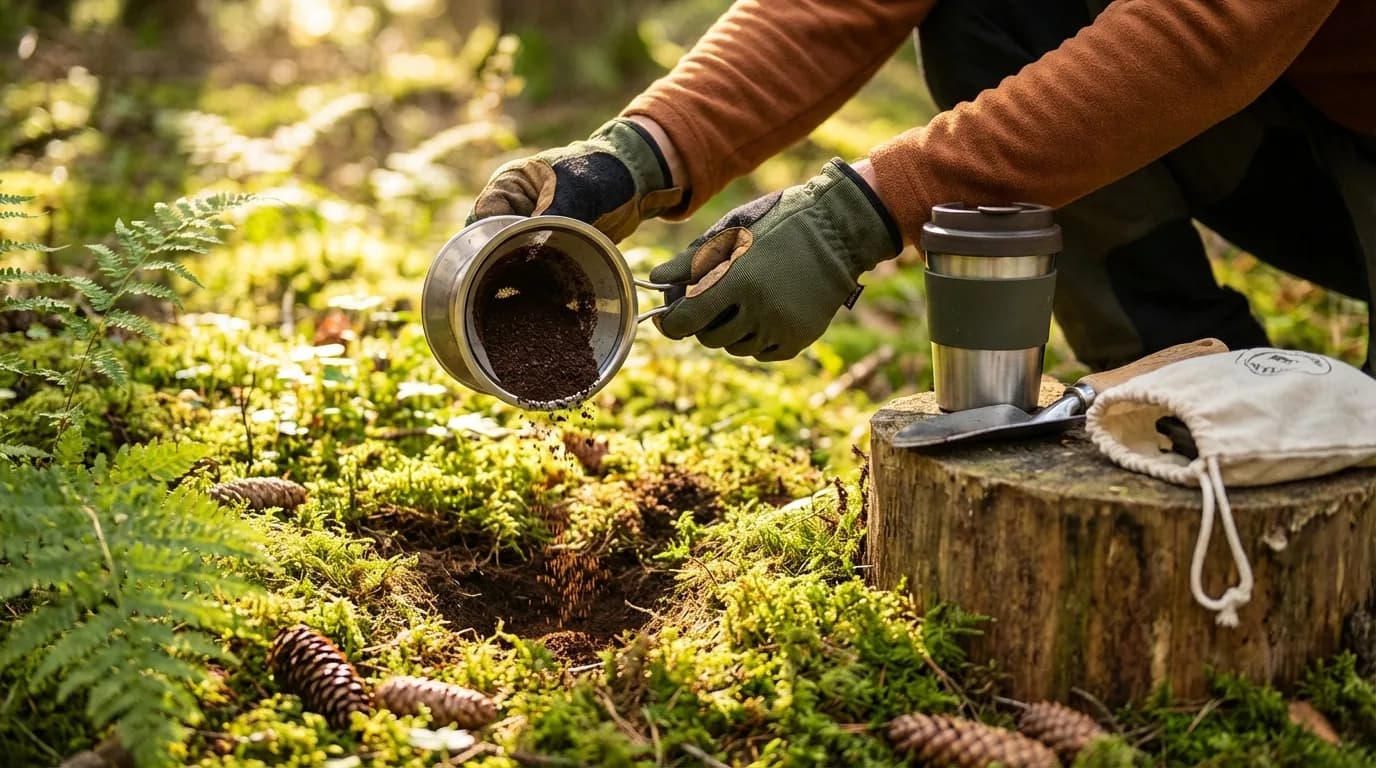
Table of Contents
- The "Natural" Myth: Why Coffee Grounds Aren't Harmless
- Leave No Trace Principles for the Off-Grid Barista
- The Pack-It-Out Method: Logistics and Gear
- Managing Different Brewing Methods in the Wild
- The Environmental Impact: From Soil pH to Wildlife
- Pro Tips and Common Pitfalls
- Frequently Asked Questions
The "Natural" Myth: Why Coffee Grounds Aren't Harmless
For many outdoor enthusiasts, the morning ritual of brewing a fresh cup of coffee amidst a sunrise is non-negotiable. However, a common misconception persists that because coffee grounds are "natural" and organic, they can simply be tossed into the bushes or buried in a shallow hole. This line of thinking suggests that since coffee comes from a bean, it will naturally integrate back into the earth without consequence. Unfortunately, this is a fundamental misunderstanding of how ecosystems handle non-native organic matter, especially in fragile environments like high-alpine tundras or arid deserts.
Coffee grounds are highly processed and concentrated. When you dump a puck of espresso or a heap of drip grounds into the wild, you aren't just adding "dirt" to the ground; you are introducing a foreign substance with a high nitrogen content and significant acidity. In a home garden, these traits are often beneficial, but in the wild, the local flora and soil microbes are adapted to very specific nutrient balances. Introducing a sudden burst of nitrogen can encourage the growth of invasive species or disrupt the delicate mycorrhizal fungi that native plants depend on for survival.
Furthermore, coffee is a potent source of caffeine, which is actually a natural pesticide produced by the plant to ward off insects. When concentrated grounds are left in the wild, that residual caffeine can be toxic to local micro-fauna and soil-dwelling insects. These tiny creatures are the backbone of the ecosystem's decomposition process, and by harming them, you are effectively slowing down the natural cycle of the area. The "it’s just plants" argument falls apart when you realize that your morning brew is a chemically complex intruder in a pristine landscape.
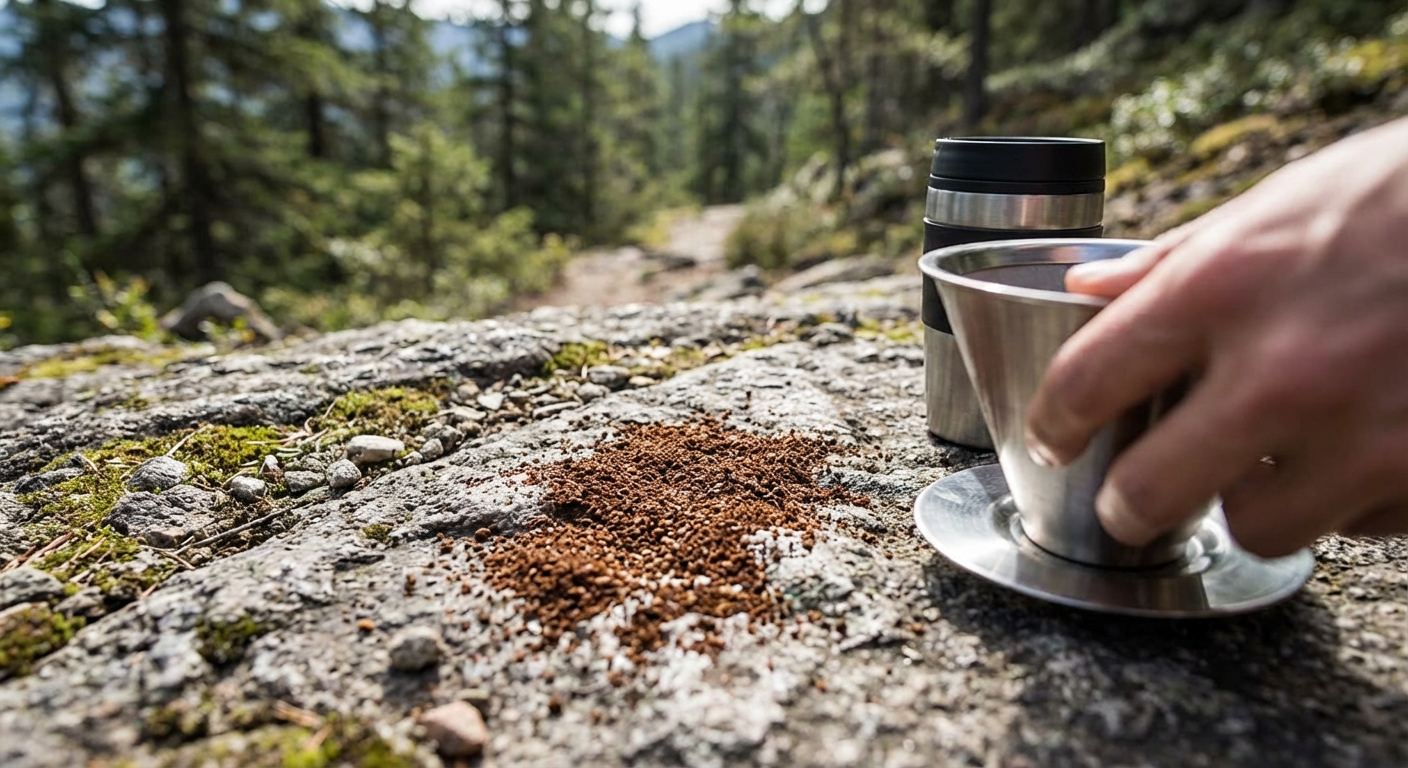
Finally, there is the issue of decomposition rates. In many popular hiking and camping destinations, the environment is surprisingly sterile or slow-moving. In the high desert, a pile of coffee grounds can remain visible and unchanged for months or even years because there isn't enough moisture or microbial activity to break them down. This creates a visual "trash" problem that ruins the wilderness experience for others and signals to less-informed campers that littering organic waste is acceptable.
Leave No Trace Principles for the Off-Grid Barista
The Leave No Trace (LNT) Center for Outdoor Ethics provides a framework for enjoying the outdoors responsibly, and the third principle—"Dispose of Waste Properly"—is the most relevant for coffee lovers. This principle is often summarized as "Pack it in, Pack it out," and it applies to everything from candy wrappers to coffee grounds. While it might seem like a hassle to carry wet, heavy grounds back to civilization, it is the only way to ensure that your presence doesn't negatively impact the land for future generations.
Adhering to LNT means acknowledging that human presence is an anomaly in the wilderness. When thousands of hikers pass through a popular trail each year, the cumulative effect of "just one person" dumping their grounds becomes an ecological disaster. This is known as the "cumulative impact" theory. If every visitor to a national park dumped a single ounce of grounds, the soil chemistry near popular campsites would be permanently altered. By choosing to pack out your grounds, you are participating in a collective effort to keep wild spaces truly wild.
Another key aspect of LNT is "Leave What You Find," which also implies not adding what wasn't there. When we dump grounds, we are essentially "landscaping" the wild with our waste. Even burying grounds—a practice sometimes suggested in older camping manuals—is now discouraged in most high-traffic areas. Most "cat holes" are dug only 6 to 8 inches deep, which is the "biological layer" where decomposition happens. However, coffee grounds decompose so slowly that they often outlast the human waste they were buried with, eventually being unearthed by curious animals.
Finally, LNT encourages us to be "Considerate of Other Visitors." Nothing ruins a pristine campsite faster than seeing the moldy remains of someone else's breakfast. Coffee grounds, when wet, quickly develop a white or green fuzz that is unsightly and off-putting. By following the LNT principles, you ensure that the person who camps in your spot tomorrow sees only the natural beauty of the area, not the remnants of your AeroPress puck.
The Pack-It-Out Method: Logistics and Gear
Packing out coffee grounds requires a bit of planning, but it is far simpler than most people imagine. The primary challenge is the weight and moisture. Wet coffee grounds can weigh twice as much as dry ones, and the "sludge" can easily leak and ruin your gear. The most effective method used by veteran nomad brewers is the "Ziploc and Squeeze" technique. After brewing, allow your grounds to cool, then transfer them into a heavy-duty freezer-grade gallon bag. Before sealing, squeeze out as much excess air and moisture as possible to reduce volume and prevent the bag from popping under pressure in your pack.
For those who want a more durable and eco-friendly solution than disposable plastic bags, reusable silicone bags or dedicated "trash dry bags" are excellent alternatives. These containers are designed to be airtight and leak-proof, ensuring that the pungent aroma of old coffee doesn't attract wildlife to your backpack or tent. Some campers even use a "human waste bag" (often called a WAG bag) for their coffee grounds in areas where all waste must be removed, as these bags contain gelling agents that solidify liquids and neutralize odors.
Another pro tip for managing grounds is to "pre-dry" them if you are on a multi-day trip. If the weather is sunny and dry, you can spread your grounds out on a lightweight mesh screen or a piece of foil for an hour after breakfast. This evaporates a significant portion of the water weight, making the grounds much lighter to carry. Once dried, the grounds can be stored in a simple paper bag inside your main trash container, which further reduces the risk of mold growth during the remainder of your trek.
If you are traveling by van or vehicle, the logistics are even easier. A dedicated "grounds jar" (like an old peanut butter jar) with a screw-top lid is the perfect airtight container. This allows you to accumulate several days' worth of grounds without any mess. When you reach a town or a trailhead with a trash receptacle, you can simply dump the jar. This method is highly effective for off-grid living because it keeps your living space smelling fresh while ensuring you never leave a trace behind.
Managing Different Brewing Methods in the Wild
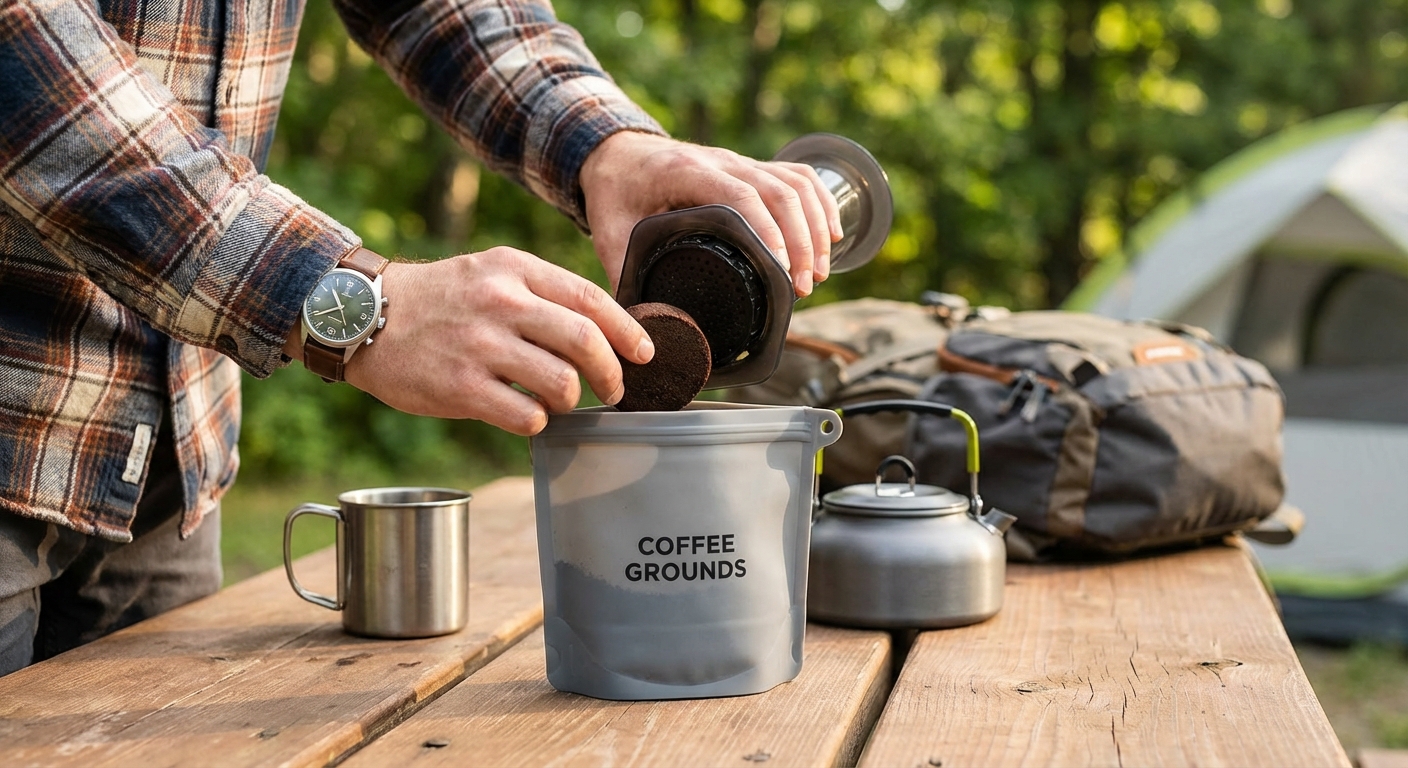
The ease of disposal often depends on the brewing method you choose. For the LNT-conscious traveler, the AeroPress is often cited as the gold standard. Because the AeroPress uses air pressure to squeeze water through the grounds, it leaves behind a nearly dry, compressed "puck." This puck can be popped directly into a waste bag with zero mess. There is no "sludge" to deal with, and the paper filter (which should also be packed out) keeps the grounds contained in one neat package.
In contrast, methods like the French Press or "Cowboy Coffee" are the most difficult to manage in the wild. These methods involve loose grounds floating in water, creating a slurry that is hard to clean without using excessive amounts of water. To dispose of French Press grounds responsibly, you should never rinse the carafe directly into a stream or on the ground. Instead, use a small amount of water to swirl the grounds, then pour the mixture through a fine-mesh strainer or a bandana. The solids are caught and packed out, while the "gray water" can be broadcasted over a wide area at least 200 feet from water sources.
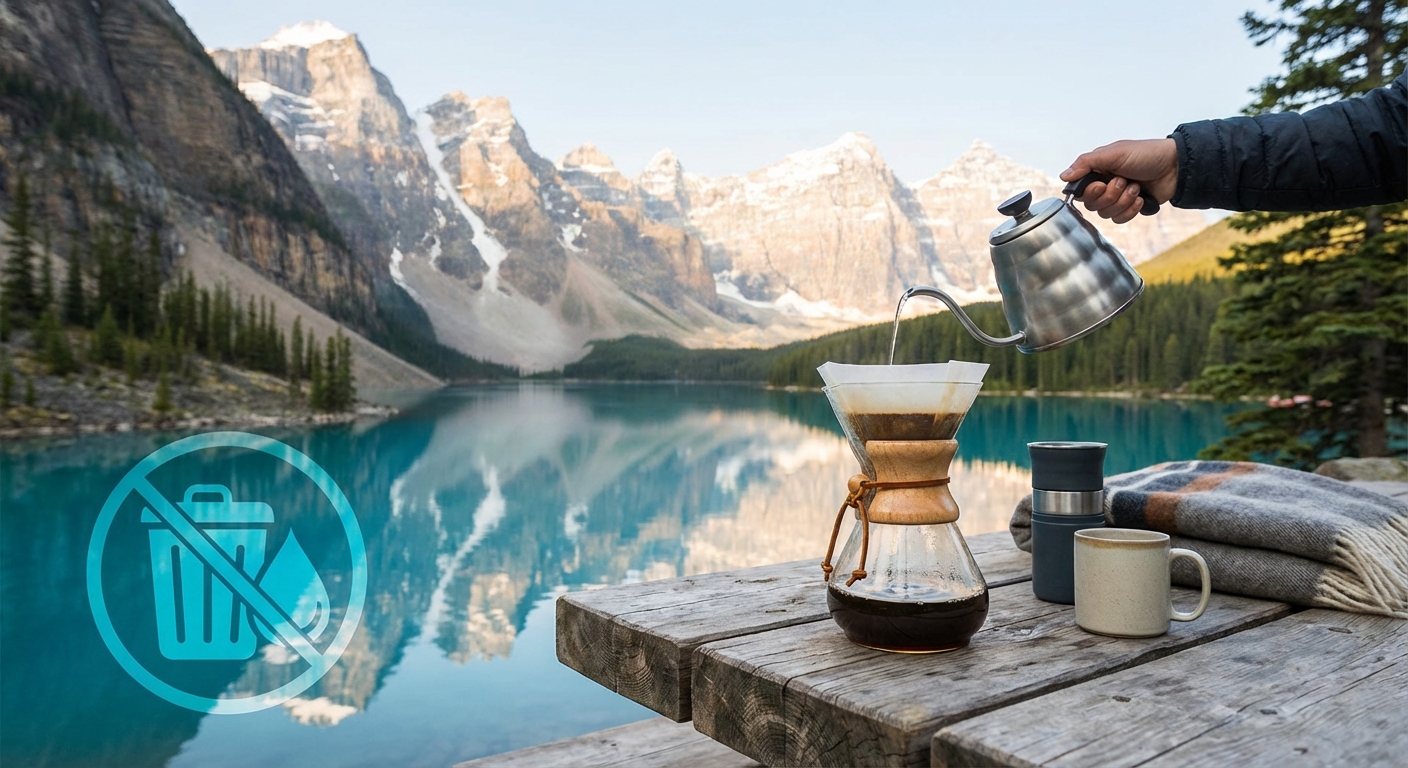
Pour-over brewing falls somewhere in the middle. While the paper filter makes it easy to lift the grounds out of the dripper, the filters are often heavy with water. It is essential to let the filter drain completely before attempting to pack it out. Some nomad brewers use reusable metal or cloth filters to reduce paper waste, but these require more careful cleaning. A cloth filter can be rinsed in a dedicated gray-water bucket, ensuring that no grounds escape into the environment.
For those who want the absolute easiest disposal, "steep-and-filter" bags (similar to tea bags but for coffee) are a growing trend. These pre-filled bags are self-contained, meaning you never have to touch the grounds at all. Once the coffee is brewed, the entire bag is removed and placed into a waterproof waste pouch. While this creates more initial packaging waste, it is often the cleanest and most reliable way for beginners to ensure they are following LNT protocols in the backcountry.
The Environmental Impact: From Soil pH to Wildlife
The impact of coffee grounds on wildlife is a significant concern that is often overlooked. Coffee has a strong, pungent aroma that can travel long distances, especially in the still air of a forest or canyon. To a bear, raccoon, or rodent, this scent is an invitation to investigate. While animals rarely eat coffee grounds in large quantities, the scent draws them to campsites, leading to "food conditioning." Once an animal associates the smell of human activity with a potential food source, they become bolder, which often leads to dangerous encounters and the eventual relocation or euthanization of the animal.
From a botanical perspective, coffee grounds are highly acidic, typically hovering around a pH of 5.1 to 5.5. Many wild ecosystems are balanced on very specific pH levels. For example, in certain pine forests, the soil is already naturally acidic; adding more acidity can drop the pH to a level where native wildflowers can no longer germinate. Conversely, in alkaline desert soils, the sudden introduction of acid can "burn" the delicate root systems of cacti and desert scrub. By dumping grounds, you are effectively performing an unsanctioned chemical experiment on the local flora.
There is also the issue of "micro-trash." Many coffee drinkers use paper filters, thinking they will biodegrade quickly. However, most modern paper filters are bleached or treated with chemicals to prevent them from tearing when wet. These treatments significantly slow down the decomposition process. In cold or dry climates, a "biodegradable" filter can take years to break down. During that time, it often breaks into smaller white fragments that litter the landscape, creating a visual blight and a choking hazard for small birds and mammals.
Lastly, we must consider the impact on water quality. If coffee grounds are dumped near a stream or lake, the tannins and caffeine can leach into the water. In small, stagnant pools or slow-moving creeks, this can alter the water chemistry enough to affect aquatic insects and amphibian larvae. Frogs and salamanders are particularly sensitive to chemical changes in their environment because they breathe through their skin. Your morning cup should never come at the cost of the local ecosystem's health.
Pro Tips and Common Pitfalls
One of the best pro tips for the off-grid brewer is to transition to a "dry" cleaning method. Instead of using precious water to rinse out your brewer—which creates messy gray water—use a small silicone spatula or a dedicated "coffee brush" to scrape the remaining grounds into your waste bag. This keeps your equipment clean enough for the next use without generating liquid waste that you then have to manage. This is particularly useful in "dry" camping scenarios where every drop of water is accounted for.
A common pitfall is the "Scatter Method." Some older guides suggest "broadcasting" grounds over a wide area to minimize their visual impact. While this is better than leaving a pile, it is still discouraged in modern LNT practice. Scattering grounds makes them nearly impossible for wildlife to ignore and still introduces the same amount of caffeine and acid into the soil—it just spreads the damage over a larger area. If you find yourself in an emergency where you absolutely cannot pack out your grounds, ensure you are at least 200 feet (70 large steps) away from any water source, trail, or campsite, and spread them as thinly as possible in a sun-exposed area.
Another mistake is attempting to burn coffee grounds in a campfire. Coffee grounds are incredibly dense and hold a high moisture content. Throwing them into a fire usually results in a smoldering, foul-smelling mess that lowers the temperature of the fire and produces excessive smoke. Furthermore, the grounds rarely burn completely, leaving behind a charred sludge in the fire ring that the next camper will have to deal with. LNT principles state that you should only burn wood, and all trash (including organic waste) should be packed out.
Finally, consider your choice of coffee. Using a "dark roast" actually results in grounds that are slightly less acidic than light roasts, though the difference is marginal in an ecological context. The more important choice is the grind size. Coarser grounds (like those for French Press) are easier to strain and pack out than fine, silty grounds used for espresso. If you are worried about the weight of your waste, choosing a brewing method that utilizes a coarser grind can make the "straining and packing" process much more efficient.
Frequently Asked Questions
Can I bury coffee grounds in a cat hole? While you can bury them, it is not recommended. Coffee grounds decompose much slower than human waste and are frequently dug up by animals attracted to the scent. In many high-use areas, burying any form of trash or food waste is strictly prohibited. The best practice is always to pack them out in a sealed bag to ensure they don't interfere with the local ecosystem or attract wildlife to the area.
Are compostable coffee filters okay to leave behind? No. Even if a filter is labeled "compostable," that process requires the high heat and specific microbial conditions of a commercial composting facility. In the wild, these filters act just like any other piece of litter. They can take months or years to break down, depending on the climate, and they contribute to the "micro-trash" problem that plagues many popular wilderness areas. Always pack out your filters along with your grounds.
Is it okay to dump grounds if I’m on my own private off-grid property? If you own the land, you have more flexibility, but the ecological principles still apply. If you dump grounds in the same spot repeatedly, you will significantly alter the soil pH and nutrient balance. A better approach for private land is to set up a dedicated composting bin. This allows the grounds to break down properly in a controlled environment, turning them into beneficial fertilizer for a garden rather than a pollutant for the wild landscape.
How do I clean my French Press without dumping grounds on the ground? The best way is to use a "two-step" rinse. First, scrape as many grounds as possible into your trash bag using a long spoon or spatula. Then, add a small amount of water to the press, swirl it to collect the remaining silt, and pour that liquid through a fine-mesh strainer or a bandana. The strainer catches the solids for your trash bag, and the remaining "gray water" can be scattered 200 feet away from water sources and campsites.
Do coffee grounds attract bears? Yes, they can. Bears have an incredible sense of smell and are naturally curious. While they may not find the grounds particularly tasty, the strong, oily scent of coffee is a "novel odor" that can draw them into a campsite to investigate. Once a bear is in your camp, it may find other, more caloric food sources. To keep yourself and the bears safe, treat coffee grounds exactly like food and store them in a bear-resistant container or a scent-proof bag.
Our Top Picks for 2026
We've spent hours researching and testing to find the absolute best options currently available.

Danger Coffee by Dave Asprey, Remineralized, Mold Free & Lab Tested Ground Coffee, Medium Roast, 10.9 Ounce
- Danger Coffee is Specialty Coffee Association (SCA) grade, lab tested to be free of mold and other impurities, and is sourced farm direct from Central America.
- Our beans are remineralized with ancient plant minerals known as Fulvic and Humic. These incredible minerals interact with the heat of the brew to infuse your body with over 50 trace and ultra-trace minerals. The patent-pending remineralization process delivers the essential nutrients your body craves.
- Tasting notes: Danger Coffee Medium Roast is the original blend. It has the perfect balance of nutty sweetness and pipe tobacco. A smooth finish you can’t really go wrong with!

Bulletproof Original Medium Roast Ground Coffee, 12 Ounces, 100% Arabica Coffee, Clean Coffee Tested for Toxins, Packaging May Vary Medium Roast 12 Ounce (Pack of 1)
- Unbeatable Taste: Contains one 12-ounce bag of Bulletproof The Original Medium Roast Ground Coffee, a clean coffee with a smooth, well-balanced and premium flavor, Packaging May Vary
- Crafted With Care: Bulletproof coffee beans are expertly blended and roasted for a rich, bold flavor. The Original has distinct notes of plum, orange, cinnamon and cocoa with a hazelnut finish
- Trusted Sourcing: We source our coffee beans from Rainforest Alliance Certified farms that implement more sustainable practices to protect fair wages, workers’ rights and our environment
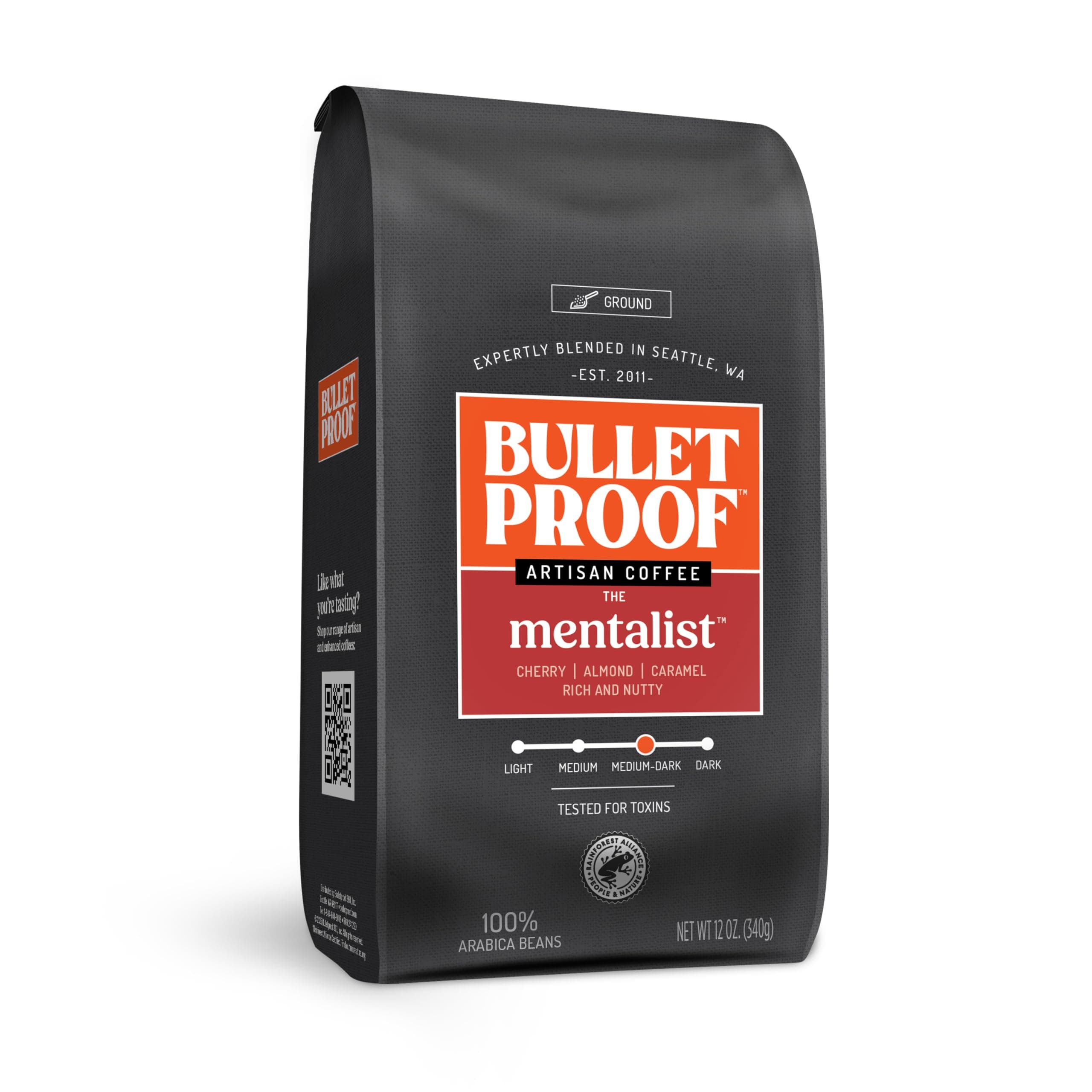
Bulletproof The Mentalist Medium-Dark Roast Ground Coffee, 12 Ounces, Clean Coffee Tested for Toxins, Packaging May Vary Medium-Dark Roast 12 Ounce (Pack of 1)
- Unbeatable Taste: Contains one 12-ounce bag of Bulletproof The Mentalist Medium-Dark Roast Ground Coffee, a clean coffee with a rich, full-body and premium flavor, Packaging May Vary
- Crafted With Care: Bulletproof coffee beans are expertly blended and roasted for a rich, bold flavor. The Mentalist has distinct notes of cherry, almond and caramel
- Trusted Sourcing: We source our coffee beans from Rainforest Alliance Certified farms that implement more sustainable practices to protect fair wages, workers’ rights and our environment