
Coffee Gear Weight Comparison Tool
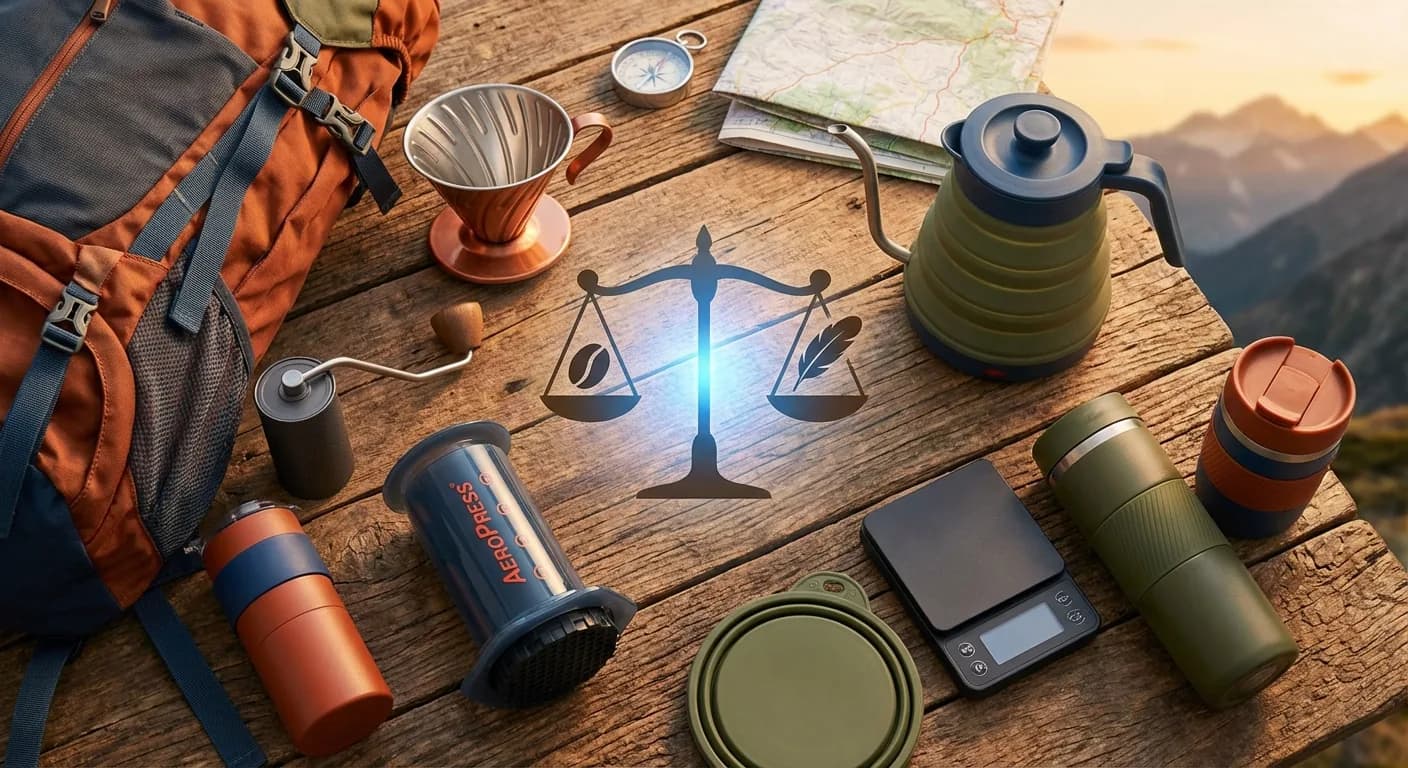
Table of Contents
- The High-Altitude Dilemma: Why Every Gram Matters
- The Weight of Indecision: The Problem with Traditional Packing
- Inside the NomadBrew Coffee Gear Weight Comparison Tool
- Why Trust NomadBrew? Our Field-Tested Methodology
- Claim Your Free Weight Comparison Tool
- Top Lightweight Gear Picks for Your Off-Grid Kit
- Frequently Asked Questions
The High-Altitude Dilemma: Why Every Gram Matters
There is a specific kind of magic that occurs when you reach a summit or a remote lakeside camp just as the sun begins to crest the horizon. In those moments, a lukewarm instant coffee packet simply won't suffice. You crave the ritual, the aroma, and the bold body of a properly brewed cup. However, for the nomad, the backpacker, or the van-lifer, that craving often clashes with the harsh reality of physical limits. Every ounce added to your pack is an ounce you have to carry up a 15% grade or squeeze into a cabinet that is already bursting at the seams. The struggle to find the "perfect" balance between coffee quality and kit portability is a challenge every outdoor enthusiast faces.
We’ve all been there: standing over a kitchen scale the night before a trip, debating whether to bring the glass French press (too heavy, too fragile) or the plastic dripper (light, but maybe not the flavor profile you want). The problem is that most gear manufacturers list "shipping weights" rather than "trail weights," and they rarely account for the accessories like filters, stirrers, and grinders. Without a centralized way to compare these items, you end up with a kit that is either unnecessarily heavy or frustratingly incomplete. Our goal at NomadBrew is to bridge that gap, ensuring your coffee gear is as optimized as your hiking boots or your solar array.
The Weight of Indecision: The Problem with Traditional Packing
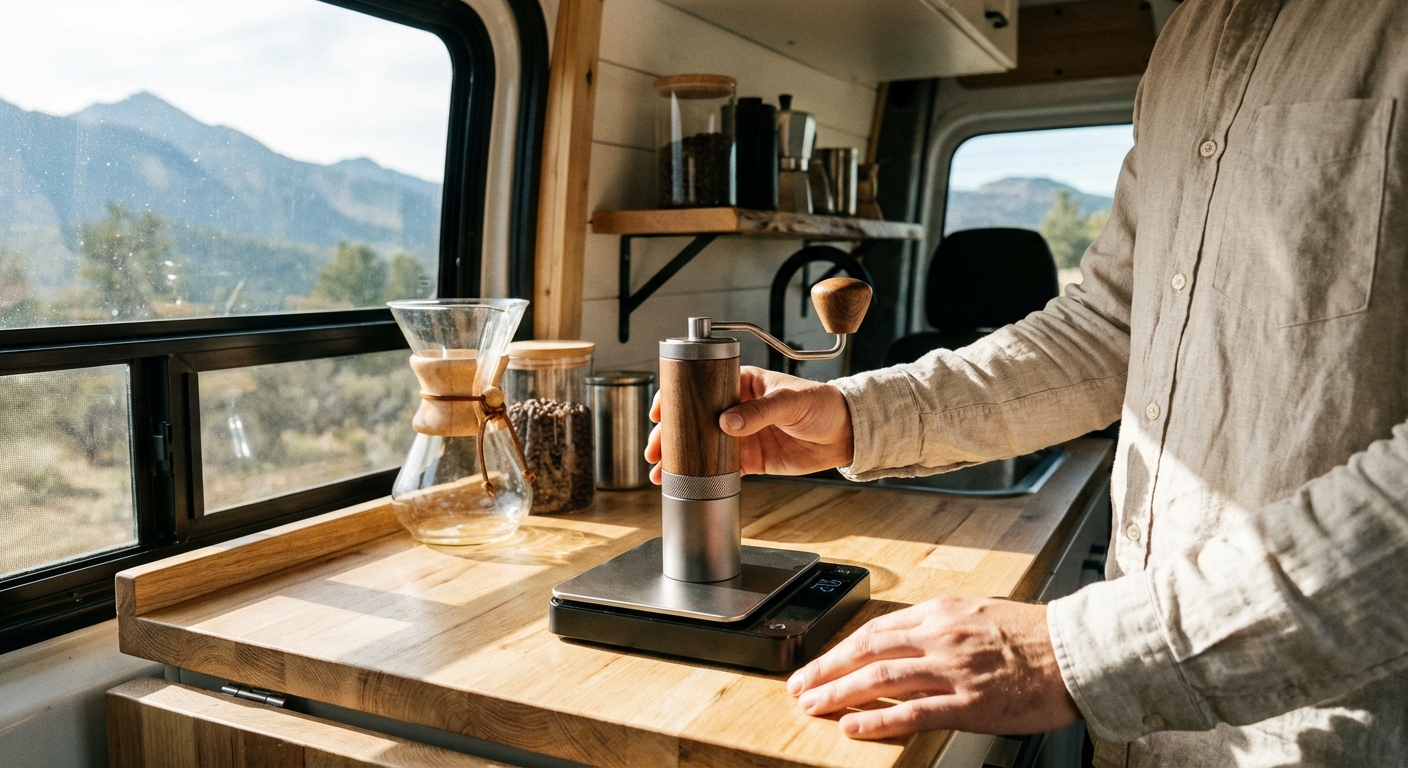
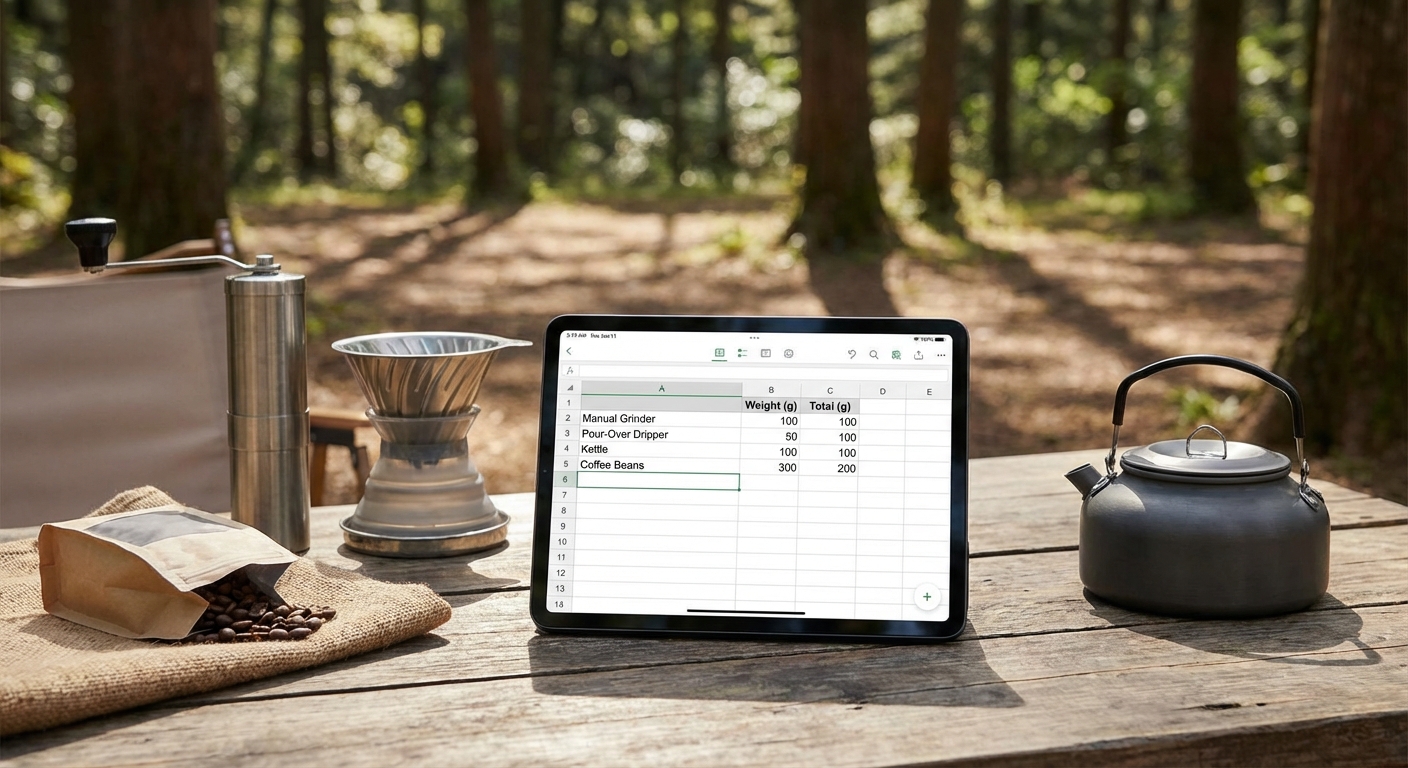
The "ounces equal pounds" mantra isn't just a cliché; it’s a fundamental law of travel. When you are off-grid, your resources are finite—this includes your physical energy and your storage space. Traditional coffee brewing gear is designed for the countertop, where weight is actually an advantage for stability. In the wild, that same stability becomes a literal burden. Many adventurers fall into the trap of buying "travel" gear that is actually just smaller versions of heavy home equipment. They don't realize that a 500g setup plus 200g of beans and a 300g grinder puts them at a full kilogram before they’ve even added water.
Furthermore, the lack of standardized data makes it nearly impossible to build a "modular" kit. You might know how much your AeroPress weighs, but do you know how much weight you save by switching to a metal mesh filter versus carrying a pack of 350 paper filters? Do you know if your hand grinder fits inside the plunger to save space, or if it’s an awkward shape that creates "dead air" in your pack? This lack of clarity leads to "packing anxiety," where you either overpack and suffer on the trail, or underpack and end up with a subpar brew that ruins your morning ritual.
To solve this, you need more than just a list of products; you need a dynamic way to compare total system weight. A setup is only as light as its heaviest component. If you buy an ultralight dripper but pair it with a heavy steel burr grinder, you’ve defeated the purpose. The frustration lies in the math—constantly adding and subtracting grams to hit a "base weight" goal. Most people give up and settle for "good enough," which usually means carrying an extra two pounds of gear they don't actually need.
Inside the NomadBrew Coffee Gear Weight Comparison Tool
We created the Coffee Gear Weight Comparison Tool to eliminate the guesswork and the frantic midnight weighing sessions. This isn't just a static list; it’s a comprehensive, interactive resource designed to help you visualize your entire brewing "ecosystem." The tool breaks down gear into five critical categories: Brewers, Grinders, Kettles, Scales, and Accessories. By inputting different combinations, the tool automatically calculates the total "Wet Weight" (including the water needed for a standard brew) and "Dry Weight" (the gear alone), allowing you to see exactly where your pack is bloating.
The true value of this resource lies in its "What-If" functionality. You can toggle between a "Minimalist Backpacker" profile and a "Luxury Van-Lifer" profile to see how much weight you gain or lose by upgrading your equipment. For example, the tool highlights how switching from a standard Hario Skerton to a lightweight aluminum Timemore grinder can shave off 200 grams—nearly half a pound—while actually improving your grind quality. We have meticulously verified the weights of over 100 popular off-grid brewing items, including often-overlooked items like carrying cases and cleaning brushes.
Beyond just numbers, the tool provides "Portability Scores" based on the dimensions and durability of the gear. It answers the questions that specs sheets don't: "Does this fit inside a 700ml mug?" or "Will the glass components survive a drop on granite?" By using this tool, you aren't just choosing a coffee maker; you are engineering a specialized travel kit that fits your specific lifestyle. Whether you are counting every gram for a thru-hike or optimizing a tiny home on wheels, this tool provides the data-driven clarity you need to brew better and travel lighter.
Why Trust NomadBrew? Our Field-Tested Methodology
At NomadBrew, we don't just read product manuals; we live them. Our team consists of full-time travelers, backcountry guides, and coffee professionals who have brewed everywhere from the back of a 1985 Westfalia to the base camps of the Andes. We know that a piece of gear might weigh 100g on paper but feel like a brick if it’s awkwardly shaped or requires a specific, heavy kettle to function correctly. Every entry in our Weight Comparison Tool has been cross-referenced with real-world usage data and weighed on calibrated laboratory scales.
We’ve spent hundreds of hours testing these products in environments where "failure" means no coffee for three days. We’ve seen plastic threads strip in freezing temperatures and "lightweight" handles snap under pressure. Our credibility comes from this hands-on rigor. We don't accept sponsorships to "pad" the rankings of heavy gear; if a product is a "weight-offender," our tool will show it in bright red. Our community of "Nomad Brewers" has also contributed their own data, ensuring that our tool reflects the actual experience of people living off-grid today.
Claim Your Free Weight Comparison Tool
Ready to stop guessing and start optimizing? We’ve packaged this entire database into an easy-to-use, downloadable tool that you can access anywhere—even when you’re out of cell range. This is the ultimate shortcut to building a professional-grade travel coffee kit without the trial-and-error costs. Join our community of over 10,000 off-grid enthusiasts who have already lightened their loads and leveled up their morning caffeine ritual.
When you download the tool, you'll also receive our "Ultralight Brewing Cheat Sheet," which lists our top three curated kits for different travel styles. Don't let a heavy pack slow you down or a bad cup of coffee ruin your view. Click the link below to get instant access to the NomadBrew Coffee Gear Weight Comparison Tool and start building your perfect kit today.
{{LEAD_MAGNET:tool:Coffee Gear Weight Comparison Tool}}
We value your privacy as much as we value a clean cup of coffee. Your email address will never be sold, and we only send content that helps you brew better while wandering further. You can unsubscribe at any time, but we think you’ll find the ongoing tips, gear hacks, and off-grid guides far too valuable to pass up.
Top Lightweight Gear Picks for Your Off-Grid Kit
To give you a head start on your weight-optimization journey, we’ve highlighted two of the highest-rated pieces of gear from our database. These items consistently rank at the top for their "Weight-to-Performance" ratio, making them staples for any nomad.
{{PRODUCT_CARD:B084ZLM99G}} The AeroPress Go is the gold standard for travel brewing, and for good reason. We recommend it because it is a complete, self-contained system that weighs in at only 11.4 ounces (323g) including the mug and lid. It’s best for backpackers and solo travelers who need a durable, versatile brewer that can make everything from espresso-style concentrates to a standard Americano.
The standout feature is the nesting design; every component, including the scoop and foldable stirrer, fits inside the included drinking mug. This eliminates "gear sprawl" in your pack. The only real drawback is the limited capacity—it only brews about 8oz at a time, which might be frustrating for couples. Compared to the original AeroPress, the "Go" is slightly smaller but significantly more packable due to its integrated storage. {{/PRODUCT_CARD}}
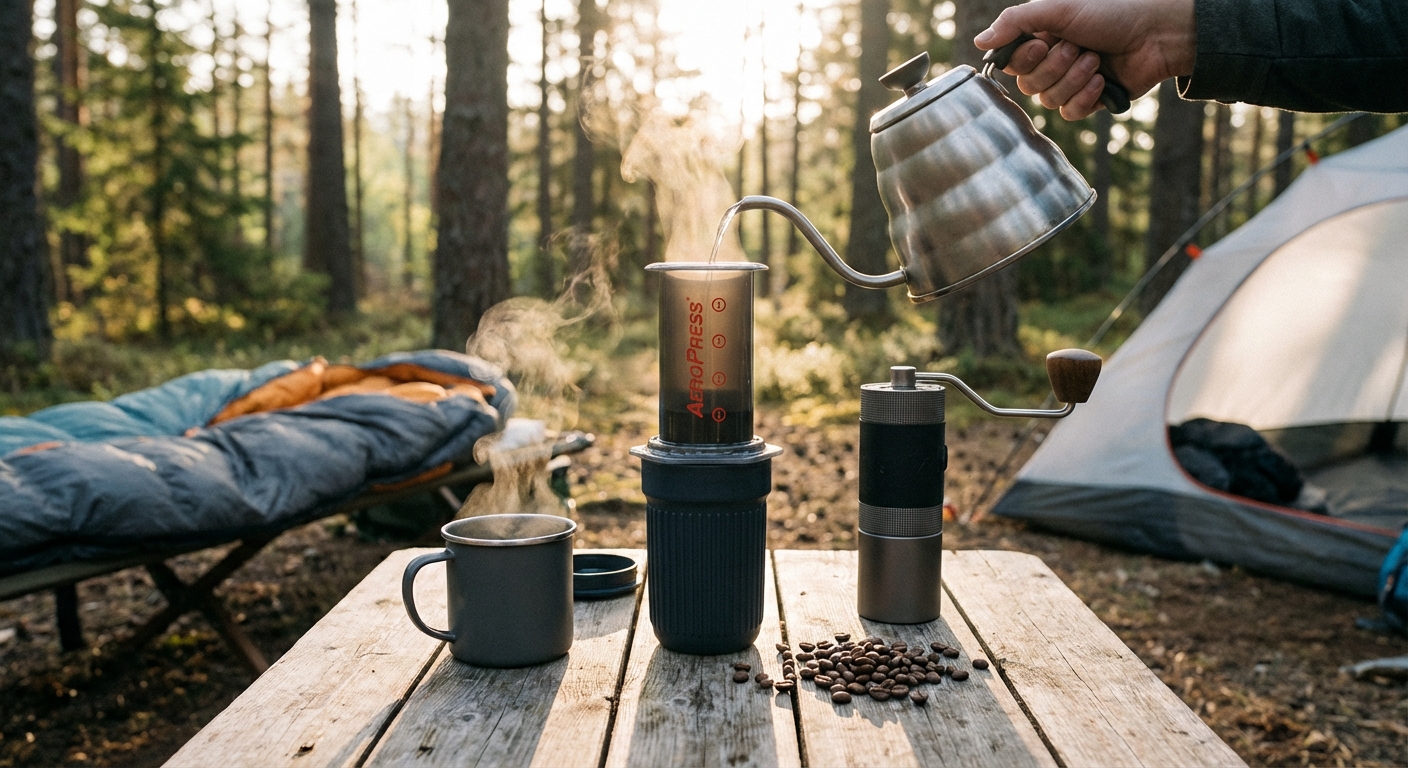
{{PRODUCT_CARD:B0999979M8}} If you are still carrying pre-ground coffee to save weight, the Timemore Chestnut C3 is the upgrade you need. We recommend it as the best entry-level "pro" grinder for travelers. Weighing roughly 430g, it’s not the absolute lightest on the market, but its aluminum alloy body and stainless steel burrs provide a grind consistency that rivals home grinders three times its weight.
It is best for the "flavor-first" nomad who refuses to sacrifice cup quality for a few extra grams. The standout feature is the "Spike-to-Husk" burr set, which makes grinding for pour-over or AeroPress incredibly fast and effortless. The main drawback is the handle—it doesn't fold, though it is easily removable. Compared to plastic-bodied grinders, the C3 is slightly heavier but offers a significantly longer lifespan and better flavor clarity. {{/PRODUCT_CARD}}
Comparison Summary
| Product Name | Weight (g) | Best For | Link |
|---|---|---|---|
| AeroPress Go | 323g | Solo Backpackers | View on Amazon |
| Timemore Chestnut C3 | 430g | Flavor Enthusiasts | View on Amazon |
| Hario V60 Plastic 02 | 80g | Ultralight Purists | View on Amazon |
FAQ
How much should a travel coffee kit ideally weigh?
For a dedicated backpacker, a "minimalist" coffee kit (brewer, 200g beans, and lightweight grinder) should stay under 750 grams (approx. 1.6 lbs). If you are van-dwelling or car-camping, you can afford more luxury, but we still recommend keeping the total kit under 2kg to ensure it remains easy to move and store. Our tool helps you see exactly where you fall on this spectrum so you can make informed cuts.
The "ideal" weight also depends on your brewing method. A plastic pour-over cone weighs almost nothing (under 100g), but it requires a gooseneck kettle for precision, which adds significant weight. Conversely, an AeroPress is heavier as a unit but is much more forgiving with a standard pot of water, potentially saving you the weight of a specialized kettle.
Is glass or ceramic ever okay for off-grid use?
Generally, we advise nomads to avoid glass and ceramic entirely. Beyond the obvious risk of breakage on bumpy roads or rocky trails, these materials are significantly heavier and have poor thermal retention in cold outdoor environments. A ceramic dripper acts as a "heat sink," sucking the temperature out of your brew water before it even hits the grounds.
If you absolutely love the aesthetic of glass, look for borosilicate options with protective silicone sleeves, but be prepared for the weight penalty. Our comparison tool shows that switching from a glass French press to a stainless steel or plastic alternative can save you upwards of 400 grams while significantly increasing the durability of your kitchen setup.
Do I really need a scale for travel brewing?
While a scale is essential for "dialing in" your coffee at home, it is often the first thing we suggest cutting to save weight on the trail. Instead of carrying a 300g digital scale, use our tool to find the "volumetric equivalents" for your gear. For example, once you know that your grinder's cap holds exactly 15g of beans, or that filling your mug to a certain ridge equals 250ml of water, you can leave the scale behind.
However, if you are a precision-focused brewer, there are now "pocket scales" that weigh as little as 100g. Our tool includes a section on these ultralight scales so you can decide if the precision is worth the extra weight in your specific pack setup.
Our Top Picks for 2026
We've spent hours researching and testing to find the absolute best options currently available.

Greater Goods Coffee Scale with Timer – 0.1g Precision Digital Coffee & Espresso Scale for Pour-Over, Coffee Bean Weighing, Barista Brewing, Waterproof Cover, 3kg Capacity (Onyx Black)
- 𝗕𝗮𝗿𝗶𝘀𝘁𝗮-𝗟𝗲𝘃𝗲𝗹 𝗣𝗿𝗲𝗰𝗶𝘀𝗶𝗼𝗻: Featuring a 0.1 g sensor with rapid refresh rates, this coffee weight scale responds instantly to changes, giving you fine control over extraction for consistent pour-over and espresso results.
- 𝗜𝗻𝘁𝗲𝗴𝗿𝗮𝘁𝗲𝗱 𝗕𝗿𝗲𝘄 𝗧𝗶𝗺𝗲𝗿: This espresso weight scale includes a built-in timer to track bloom and extraction with count-up or down control, and auto shutoff extends battery life between sessions.
- 𝗗𝘂𝗿𝗮𝗯𝗹𝗲, 𝗦𝗽𝗶𝗹𝗹-𝗥𝗲𝘀𝗶𝘀𝘁𝗮𝗻𝘁 𝗕𝘂𝗶𝗹𝗱: A heat-resistant, dishwasher-safe silicone cover with an engineered fit shields the platform from spills and hot gear. The grooved surface stabilizes your brewing setup, making it an ideal scale for coffee.

Tuni Rechargeable Mini Coffee Scale with Timer, 2kg/0.1g Accurate Espresso Scale for Espresso and Pour-Over Coffee, Portable Digital Kitchen Scale with Automatic Timing, Black
- [4 Smart Modes and 3 Units] Effortlessly switch between g, ml, oz on the portable electronic coffee scale. With manual timing, automatic mode, powder/water ratio mode, and flow rate mode, you can precisely measure brewing time, weight, ratio, and flow rate for good coffee every time.
- [High-Quality Materials] The espresso scale features a hidden LED display and a high-temperature resistant, waterproof tempered glass surface that seamlessly blends with the body. It also includes non-slip, heat-resistant silicone pads for enhanced durability and easy cleaning. Simply press the power button to wake it up instantly.
- [0.1g High Precision Accuracy] Featuring a high-precision sensor, this tiny digital scale measures from 0.3g to 2000g with 0.1g accuracy. Ideal for espresso, pour-over coffee, kitchen ingredients, jewelry, and more, ensuring you get the exact measurements you need.