
Brewing Coffee at High Altitudes: What to Know
Brewing Coffee at High Altitudes: What to Know
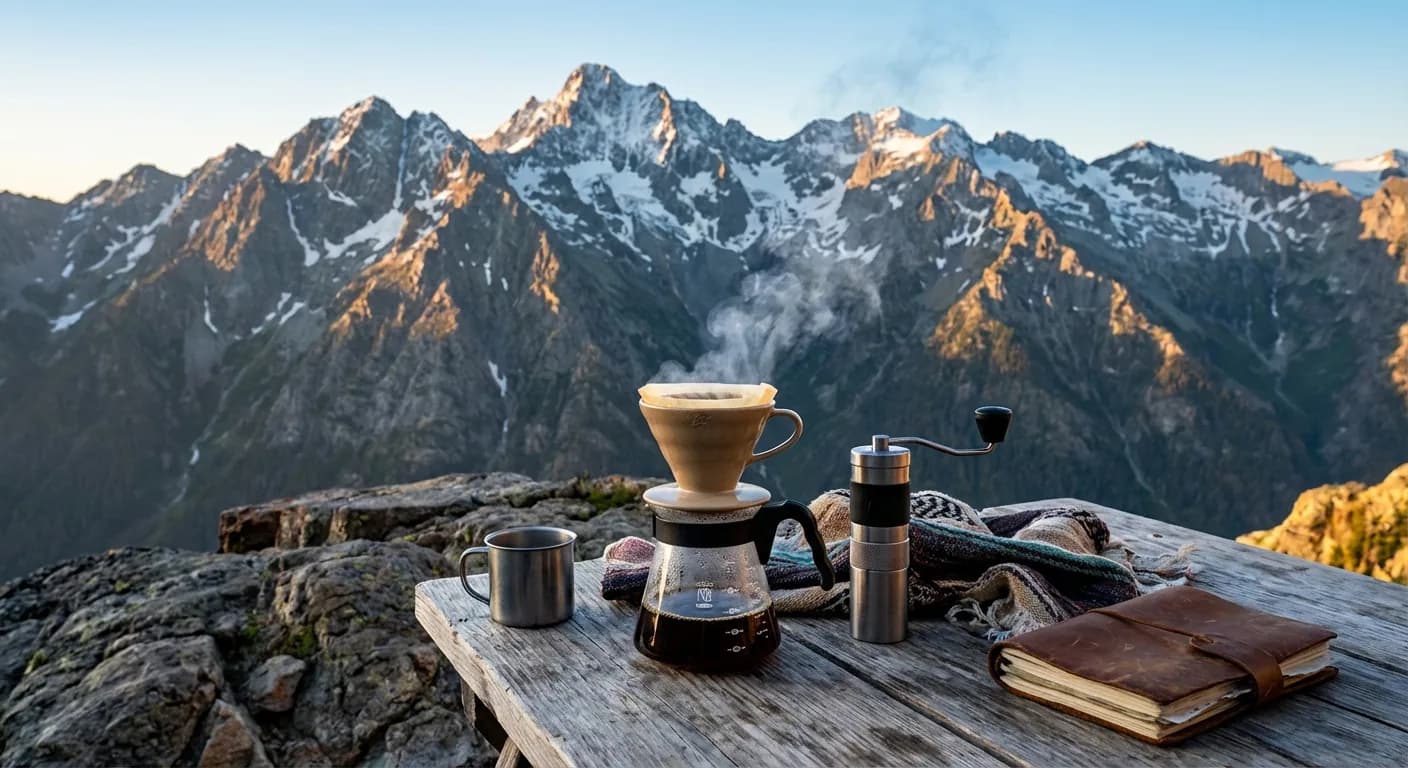
Brewing the perfect cup of coffee is already a delicate balance of science and art, but when you take your setup into the mountains, the rules of physics begin to shift. Whether you are van-lifing through the Rockies, backpacking in the Sierras, or staying in a high-altitude cabin, you have likely noticed that your coffee tastes different—often weaker, sourer, or just plain "off"—compared to your brews at sea level. This isn't just in your head; it is a direct result of how atmospheric pressure affects the boiling point of water and the extraction process of your coffee grounds.
Understanding high-altitude brewing is essential for any off-grid enthusiast who refuses to compromise on quality. At sea level, water boils at 212°F (100°C), which is slightly above the "golden range" for coffee extraction (195°F to 205°F). However, as you gain elevation, the air pressure drops, allowing water molecules to escape into a gaseous state much more easily. This means your water starts boiling at a much lower temperature, often falling below the threshold required to extract the complex sugars and oils from your beans.
In this guide, we will dive deep into the mechanics of high-altitude extraction and provide you with actionable adjustments to your technique. You will learn how to manipulate grind size, contact time, and thermal retention to overcome the challenges of thin mountain air. By the end of this article, you will be equipped with the knowledge to brew a world-class cup of coffee at 10,000 feet just as easily as you would at the beach.
Table of Contents
- The Science: Why Altitude Changes Everything
- Adjusting Your Variables: Grind and Time
- The Best Brewing Methods for High Altitudes
- Thermal Management and Pre-Heating
- Choosing the Right Roast for the Mountains
- Common Pitfalls and Pro Tips
- FAQ
The Science: Why Altitude Changes Everything
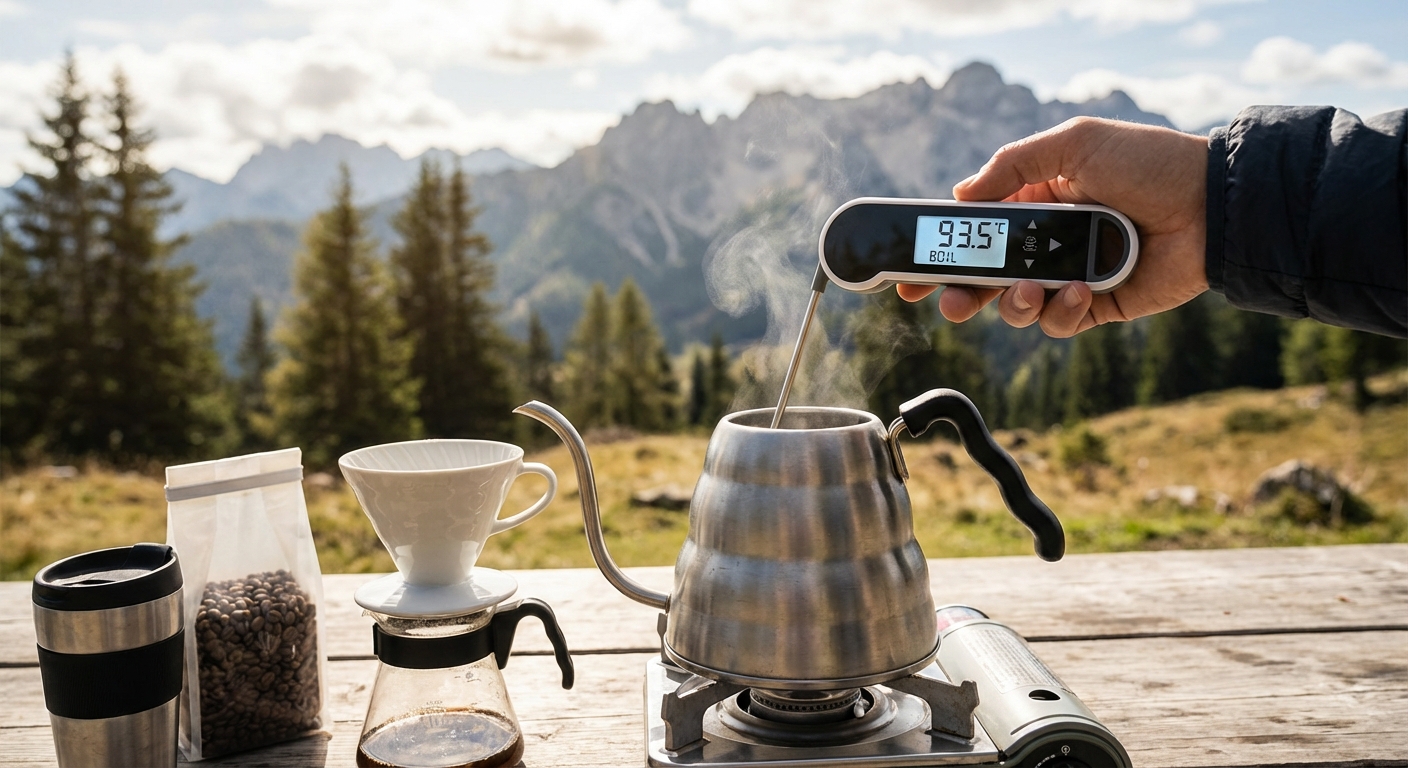
The primary culprit behind a bad mountain brew is the relationship between atmospheric pressure and the boiling point of water. At sea level, the weight of the atmosphere exerts enough pressure on the surface of your water to keep it liquid until it reaches 212°F. As you climb higher, there is less air "pushing down" on the water, which allows it to reach a rolling boil at significantly lower temperatures. For every 500 feet of elevation gain, the boiling point of water drops by approximately one degree Fahrenheit. By the time you reach a mountain pass at 10,000 feet, your water is boiling at a meager 193°F.
This temperature drop is problematic because coffee extraction relies on heat to dissolve the soluble solids within the bean. The industry standard for brewing specialty coffee is between 195°F and 205°F. When your water boils at 193°F, you are effectively starting your brew below the minimum recommended temperature. Because the water cannot get any hotter than its boiling point, you are stuck with "cool" water that struggles to pull out the sweetness and body of the coffee, often leaving you with a thin, acidic, and underextracted cup.
Furthermore, the lower atmospheric pressure affects the "bloom" phase of your coffee. When you pour hot water over fresh grounds, they release carbon dioxide (CO2). At high altitudes, this gas expands more rapidly and aggressively due to the lack of external pressure. This can lead to a more violent bloom that disrupts the coffee bed in a pour-over or causes the grounds to float excessively in an immersion brewer. Understanding that you are working with less heat and more "explosive" gas release is the first step toward mastering the mountain brew.
Adjusting Your Variables: Grind and Time
Since you cannot change the laws of physics to make your water hotter, you must compensate by adjusting the variables you can control: grind size and contact time. In coffee brewing, if the temperature goes down, the surface area must go up to maintain the same level of extraction. By refining your grind, you expose more of the coffee's internal structure to the water, allowing the lower-temperature water to do its job more efficiently.
The Fine Grind Strategy
When brewing at high altitudes, your first move should be to move your grinder one or two notches finer than your standard sea-level setting. If you usually use a medium-coarse grind for a French Press, try a medium grind. If you are doing a pour-over, move toward a medium-fine consistency similar to table salt. This increased surface area compensates for the lack of thermal energy by making it easier for the water to penetrate the grounds and dissolve the flavorful oils and solids.
However, be careful not to go too fine, as this can lead to clogging in paper filters or excessive silt in metal-filtered brewers. The goal is to find the "sweet spot" where the coffee tastes balanced and sweet without becoming bitter or muddy. It often takes a few trial runs at a new elevation to dial this in perfectly. Always remember that a finer grind increases resistance, so if you are using a manual pressurized method, you may need to adjust your physical force accordingly.
Extending Your Contact Time
In addition to adjusting the grind, you should consider extending your total brew time. Because the water is cooler, it takes longer for the chemical reactions of extraction to occur. For immersion methods like the AeroPress or French Press, this might mean adding an extra 30 to 60 seconds to your steep time. For pour-overs, you can slow down your pouring technique or use a pulse-pouring method to keep the water in contact with the grounds for a longer duration.
Extending the contact time allows the water more opportunity to pull out the heavier, sweeter compounds that usually require higher temperatures. If your coffee tastes sour or "salty," it is a clear sign of underextraction, and a longer steep is almost always the remedy. Monitor your brew with a timer and make incremental changes—don't jump from a four-minute steep to a six-minute steep instantly, as you might over-extract and introduce unwanted bitterness.
{{PRODUCT_CARD:B0047VIVVO}}
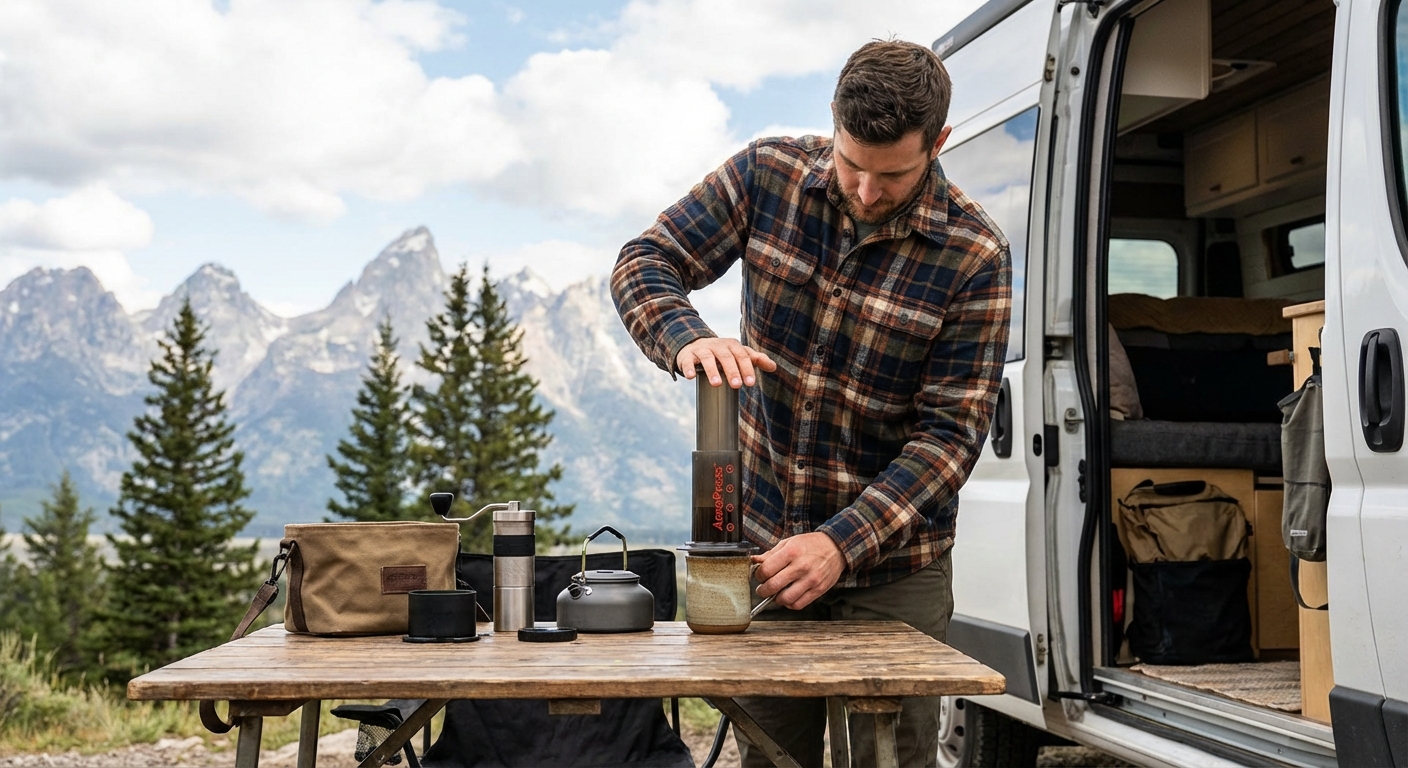
The AeroPress is arguably the most versatile tool for high-altitude brewing because it allows you to control every variable that altitude affects. I recommend it for mountain nomads because its immersion-based design and airtight seal help maintain slurry temperature far better than an open pour-over. It is virtually indestructible, lightweight, and fits easily into a backpack or van drawer.
The standout feature for high-altitude use is the ability to use the "inverted method," which allows for an extended steep time to compensate for lower boiling points. You can also easily adjust your pressure during the plunge to manage the extraction. The only drawback is its limited capacity; if you are brewing for a group, you will need to make multiple batches. Compared to a standard French Press, the AeroPress produces a much cleaner cup with less sediment, which is ideal when you want to taste the nuanced notes of high-elevation beans.
{{/PRODUCT_CARD}}
The Best Brewing Methods for High Altitudes
Not all brewing methods are created equal when you are thousands of feet above sea level. Methods that rely on open-air percolation, such as the V60 or Chemex, are the most challenging to use at high altitudes. This is because the water is constantly losing heat to the thin, cold mountain air as it sits in the dripper and passes through the filter. By the time the water hits the coffee bed, it may have dropped another 5-10 degrees below its already low boiling point, leading to a very weak extraction.
Immersion methods are generally superior for high-altitude environments. Devices like the AeroPress, French Press, or Clever Dripper keep the water and grounds together in a single vessel, which helps retain heat much more effectively. Because the coffee is "soaking" rather than having water pass through it, you have more control over the extraction time. If you find the temperature is too low, you can simply let it sit longer. The AeroPress, in particular, is a favorite among mountain climbers because it is pressurized, which helps force extraction even when the thermal energy is lacking.
If you are a die-hard pour-over fan, you can still get a great cup, but you should opt for an insulated or plastic dripper rather than ceramic or glass. Plastic is a much better insulator and won't "steal" as much heat from your water. Additionally, using a dripper with a lid or placing a small plate over the top during the brew can help trap steam and maintain a higher internal temperature.
Thermal Management and Pre-Heating
In a high-altitude environment, heat is your most precious resource. One of the biggest mistakes off-grid brewers make is pouring hot water into a cold brewing vessel. At 10,000 feet, a cold ceramic mug or a metal French Press can instantly drop your water temperature by 15 degrees or more. When your water is already limited to 193°F, this drop pushes you into the 170s—a range where coffee simply will not extract properly, resulting in a sour, watery mess.
Pre-heating your gear is non-negotiable. You should boil extra water specifically for the purpose of warming up your brewer, your carafe, and even your mug. Pour the boiling water into your vessel and let it sit for at least a minute until the material feels hot to the touch. This ensures that when you start the actual brewing process, every bit of thermal energy in your water is going toward extracting flavor from the beans rather than heating up your equipment.
Furthermore, consider the environment where you are brewing. If you are outside in the wind, your water temperature will plummet. Try to brew in a sheltered area, or use an insulated "cozy" for your French Press or AeroPress. Even a simple towel wrapped around your brewer can make a significant difference in maintaining that crucial heat during a four-minute steep.
Choosing the Right Roast for the Mountains
The type of coffee bean you choose can also help mitigate the effects of high altitude. Generally speaking, darker roasts are easier to extract than lighter roasts. This is because the roasting process breaks down the cellular structure of the bean, making it more porous and soluble. If you are struggling with underextraction at high altitudes, switching from a light-roasted Ethiopian Yirgacheffe to a medium or dark-roasted Latin American blend can make a world of difference.
Light roasts are very dense and require high temperatures (often 200°F+) to pull out their bright, floral notes. At high altitudes, you simply may not be able to reach the temperatures needed to make a light roast shine, often resulting in a cup that tastes like "sour grass." Darker roasts, on the other hand, have already had much of their structure broken down by the roaster’s heat, allowing lower-temperature mountain water to extract the chocolatey, nutty flavors more easily.
If you insist on light roasts, look for beans grown at high altitudes themselves. These beans are naturally denser and often have more complex acidity that can survive the lower-temperature brewing process, provided you use a very fine grind and a long immersion time. However, for most mountain travelers, a "Full City" or medium-dark roast provides the most consistent and satisfying results.
Common Pitfalls and Pro Tips
One of the most common mistakes at high altitude is "over-boiling" the water. Because water boils at a lower temperature, it reaches a rolling boil much faster than you might expect. Many people see the bubbles and assume it's "hot enough," but because the temperature is capped, letting it boil for an extended period doesn't make it hotter—it just boils away your water and concentrates the minerals, which can negatively affect the taste. As soon as you hit a rolling boil, start your brew.
Another pro tip is to use a high-quality, insulated travel kettle. Many standard camping kettles are thin-walled aluminum, which loses heat almost instantly. A double-walled or heavy-duty stainless steel kettle will hold that peak temperature longer, giving you a better chance at a successful extraction. Also, don't forget to check your water source; mountain water is often "soft" (low in minerals), which can lead to over-extraction if you aren't careful. If your coffee tastes muddy, try shortening your brew time slightly.
Finally, pay attention to your beans' freshness. High altitude usually means lower humidity, which can cause your beans to dry out and go stale faster once the bag is opened. Use a vacuum-sealed container or a bag with a one-way valve to keep your coffee fresh. If you are grinding on-site, only grind what you need for that specific brew to preserve the volatile aromatics that are already struggling to stay in the cup due to the low atmospheric pressure.
FAQ
Why does my coffee taste sour when I brew it in the mountains? Sourness is a classic sign of underextraction. Because water boils at a lower temperature at high altitudes, it lacks the thermal energy to fully dissolve the sugars and oils in the coffee grounds. The acids are the first compounds to extract, and if the water isn't hot enough to follow up with the sweet and bitter compounds, you are left with a lopsided, sour flavor profile.
To fix this, you need to increase your extraction. Try using a finer grind size to increase the surface area of the coffee, or extend your brewing time by an extra minute. Additionally, ensure you are pre-heating all of your equipment thoroughly so that you don't lose any more of that precious heat before the water hits the grounds.
Can I use a thermometer to help my high-altitude brewing? Absolutely, a digital thermometer is one of the best tools you can have in your mountain coffee kit. While you can't make the water hotter than its boiling point, a thermometer helps you ensure you aren't letting the temperature drop too far before you start pouring. It also helps you stay consistent; if you know your water boils at 198°F at your current camp, you can adjust your recipe precisely.
Using a thermometer also prevents you from "guessing" when the water is ready. In the cold mountain air, steam can be deceptive. You might see "steam" coming off the kettle when the water is only 160°F, which is far too cold for coffee. A thermometer ensures you are starting at the absolute maximum temperature available to you at that elevation.
Is an AeroPress better than a French Press for high altitudes? Both are immersion brewers, which is good, but the AeroPress generally has the edge. The AeroPress is made of BPA-free plastic, which is a fantastic insulator compared to the glass or thin metal typically used in French Presses. This means the AeroPress holds the water temperature much better during the steep.
Additionally, the AeroPress allows you to use pressure during the plunge. This physical force helps "push" the extraction along, compensating for the lower water temperature. In a French Press, you are relying purely on time and temperature. While you can get a great cup from a French Press at altitude, the AeroPress is more forgiving and consistent in thin air.
Does altitude affect how I should store my coffee beans? Yes, altitude and the accompanying mountain environment can affect bean freshness. High-altitude areas are often very dry, and the low atmospheric pressure can cause the gases inside the coffee beans to escape more quickly. This means your beans might go "flat" or stale faster than they would at sea level.
To combat this, always store your beans in an airtight container, preferably one that allows you to vent CO2 without letting oxygen in. Keep your coffee out of direct sunlight and away from extreme temperature swings (like the dashboard of a van). If possible, buy smaller bags of coffee more frequently rather than one giant bag that will be exposed to the dry air for weeks.
Should I change my water-to-coffee ratio at high altitudes? While grind and time are the most important variables, some brewers find success by slightly increasing the amount of coffee they use (a tighter ratio). If you normally use a 1:16 ratio (1 gram of coffee to 16 grams of water), you might try a 1:15 or 1:14 ratio. This puts more "flavor potential" in the brewer.
By using more coffee, you are ensuring that even if the extraction is less efficient due to the lower temperature, there are enough total solids being dissolved to give the coffee a decent body and strength. However, this can sometimes increase the sourness if you don't also adjust your grind or time, so use this as a secondary adjustment after you've already tried refining your grind.
Our Top Picks for 2026
We've spent hours researching and testing to find the absolute best options currently available.

How To Make The Best Coffee At Home
- Top-tier performance in real-world testing
- Premium materials and exceptional build quality

Peak Performance High Altitude Organic Coffee. Fair Trade, Low Acid, Non GMO, and Beans Full Of Antioxidants. Medium Roast Smooth Tasting USDA Certified Organic Ground Coffee Bag Medium Roast - Ground 12 Ounce (Pack of 1)
- Fair Trade - Low Acid - USDA Certified Organic - Single Origin - High Altitude. If We Could Make This Coffee Any Healthier We Would! Medium Roast. Also Comes With Free Special Report Called "How To Make The Healthiest Cup Of Coffee"
- Healthy Coffee Rule #1) Always Go Organic. Why? Because conventional coffee is one of the most heavily treated crops. One of the many health risks is that they can act as "xenoestrogens" in your body causing unwanted effects for both men and women.
- Healthy Coffee Rule #2) Coffee Grown At High Altitude Is Better. Why? Because the higher the altitude the coffee is grown at, the denser the bean. You may have heard the term "Strictly Hard Bean" (SHB) which denotes an especially dense, high-altitude coffee. This Peak Performance Organic Coffee grown in the Guatemalan Highlands is a perfect example of this. This higher elevation bean is more dense and thus of a higher quality grade. High Altitude Coffee also tends to have more antioxidants!
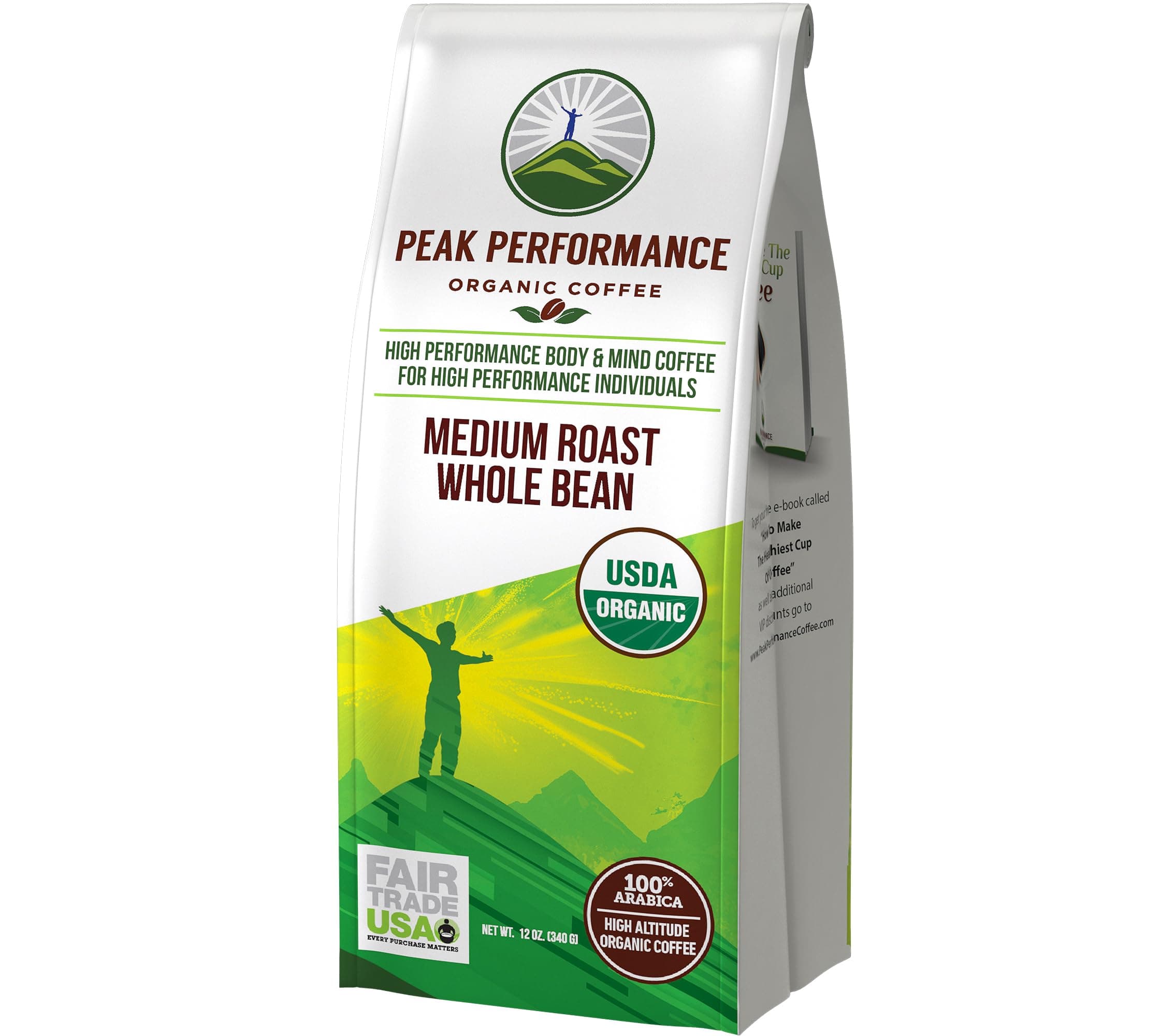
Peak Performance High Altitude Organic Coffee. Fair Trade, Low Acid, Non GMO, and Beans Full Of Antioxidants. Medium Roast Smooth Tasting USDA Certified Organic Whole Bean Coffee Bag Medium Roast - Whole Bean 12 Ounce (Pack of 1)
- Fair Trade - Low Acid - USDA Certified Organic - Single Origin - High Altitude. If We Could Make This Coffee Any Healthier We Would! Medium Roast. Also Comes With Free Special Report Called "How To Make The Healthiest Cup Of Coffee"
- Healthy Coffee Rule #1) Always Go Organic. Why? Because conventional coffee is one of the most heavily treated crops. One of the many health risks with these is that they can act as "xenoestrogens" in your body causing unwanted effects for both men and women.
- Healthy Coffee Rule #2) Coffee Grown At High Altitude Is Better. Why? Because the higher the altitude the coffee is grown at, the denser the bean. You may have heard the term "Strictly Hard Bean" (SHB) which denotes an especially dense, high-altitude coffee. This Peak Performance Organic Coffee grown in the Guatemalan Highlands is a perfect example of this. This higher elevation bean is more dense and thus of a higher quality grade. High Altitude Coffee also tends to have more antioxidants!